
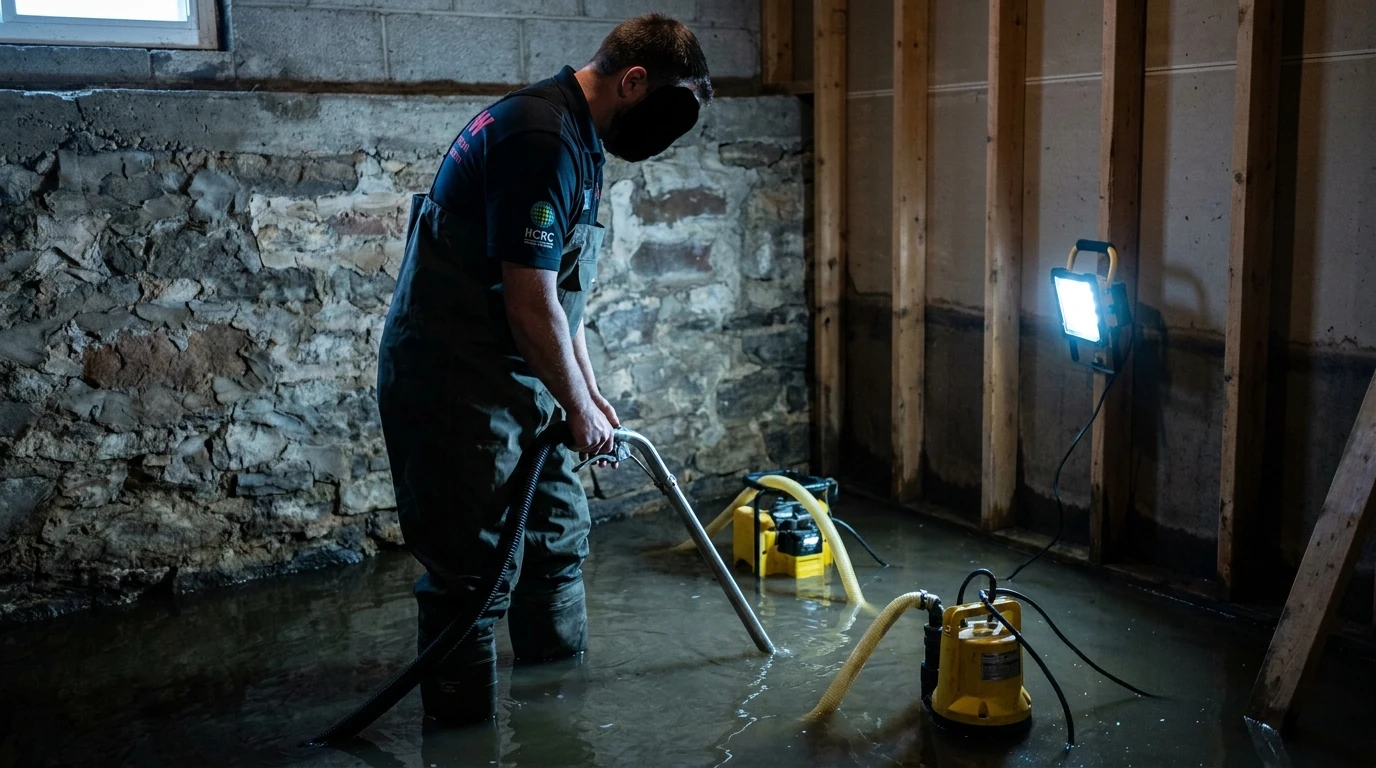
TL;DR: Water shows up in a basement when the soil around the foundation holds more water than it can drain, and that pressure pushes moisture through cracks, mortar joints, or the spot where the floor meets the wall. Clearing gutters, grading the yard away from the house, and testing the sump pump before spring rain are the first fixes. If water has already gotten in, extraction and drying need to start within 24 to 48 hours to keep mold from taking hold.
If you just walked downstairs in your Sioux Falls home and found water creeping along the baseboard, or a damp ring spreading across the concrete near a window well, you’re not alone. Spring tends to reveal water problems in basements, especially after heavy rain. The good news: the causes are predictable, and most of them are fixable before the next storm.
Why Is There Water in My Basement?
Most basement water comes from pressure in the soil around your foundation, not from a pipe failure. When the ground next to your house absorbs more water than it can shed, it pushes against the foundation wall until the water finds a way in.
There are two versions of this. Lateral pressure happens when the soil right against the foundation is loose and water-logged, often because clogged gutters or downspouts are dumping water right next to the house. That saturated soil expands and presses sideways on the wall, which can crack the foundation and open a path for water.
Hydrostatic pressure is the second version. During a long stretch of heavy or steady rain, the whole yard becomes saturated. That buildup of water in the soil pushes straight through basement walls and floors, even ones with no visible crack, because concrete is porous enough to let moisture migrate through over time.
Window wells add a third wrinkle. If a window well drain is clogged with leaves and debris, or the well itself wasn’t sealed correctly during construction, heavy rain turns it into a small pool that overflows straight into your basement.
Where Does the Water Actually Get In?
Water almost always enters through one of three predictable spots: the cove joint where the floor meets the wall, a crack in the foundation wall or slab, or the mortar joints between bricks in an older masonry foundation.
The cove joint is the most common entry point in finished and unfinished basements alike. It’s the seam that forms when the footing and the wall were poured at different times, and it’s exactly where hydrostatic pressure has the shortest path to the inside of your house.
Cracks matter too, even hairline ones. A crack doesn’t have to be visible from across the room to let water through; many homeowners only find them by following a wet trail back to its source. In masonry foundations, the mortar joints between bricks can crack and become the weak point instead of the brick itself.
How Do I Stop Water From Getting Into My Basement?
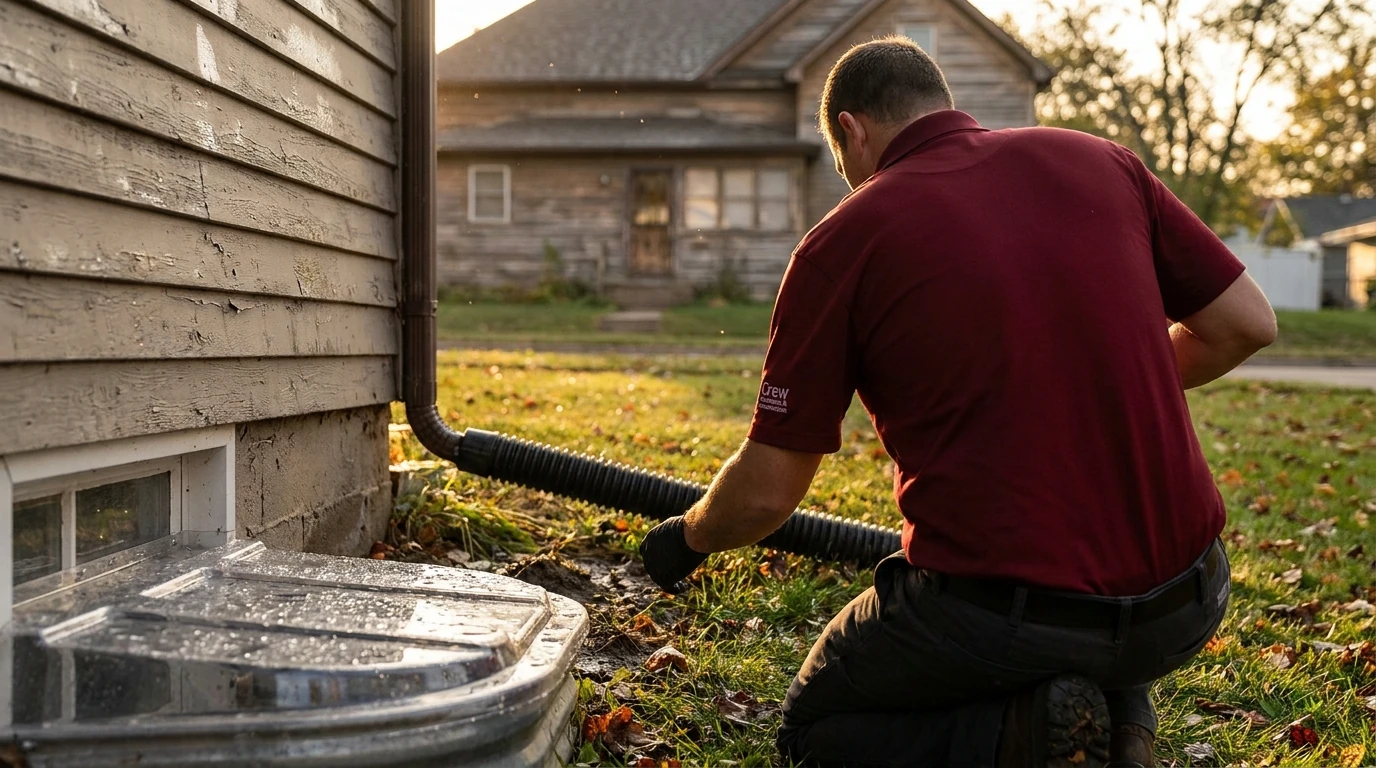
The fastest wins are also the cheapest: clean gutters, redirected downspouts, and a sump pump you’ve actually tested this year.
A few specific steps make the biggest difference:
- Clean gutters and downspouts at least twice a year if you have mature trees, and consider leaf guards, so water keeps flowing away from the foundation instead of pooling against it.
- Install window well covers to keep leaves and debris out of the well drain so water keeps flowing instead of pooling.
- Add an interior or exterior drain tile system along the cove joint, the spot where most leaks start, to intercept water before it reaches the basement floor and route it to a sump pump.
- Check your yard grading. You want roughly 1 inch of drop per foot of distance from the house so rainwater runs away from the foundation instead of toward it.
- Test your sump pump every spring, before the heavy rain starts. Older Sioux Falls homes sometimes don’t have one installed at all; if your basement floods more than once, that’s usually the next step.
If you want a deeper walkthrough of catching a leak before it becomes standing water, see Identifying a Water Leak in Your Home.
When Is It Time to Call a Professional?
It’s time to call a professional once there’s standing water, soaked carpet or drywall, or water that keeps coming back after you’ve tried the basics above. Water sitting on a basement floor for more than a day or two creates the conditions mold needs to start growing, and drywall that’s wicked up moisture usually needs to come out, not just dry out.
Professional extraction and commercial drying equipment pull standing water and dry the structure quickly, which matters because mold can begin colonizing damp material within 24 to 48 hours according to guidance from the EPA. That timeline is also why How Quickly Does Mold Grow After Water Damage? is worth reading if you’re unsure whether your basement needs more than a wet/dry vac.
This is also the point where documentation starts to matter for an insurance claim, if the water came from a sudden event like a sump pump failure rather than gradual seepage. Does Homeowners Insurance Cover Water Damage? breaks down what policies typically cover and what they typically exclude.
Crew Restoration & Construction handles basement flooding cleanup across Sioux Falls and the surrounding area, cleaning and restoring the space after the water is out. For a look at a completed lower-level job, see the case study on structural repair and mold remediation for a Sioux Falls homeowner.
The prep work, clearing gutters, testing the sump pump, covering window wells, is worth doing well before the next heavy rain shows up. A dry basement starts with the yard, not the wall.
About Crew Restoration & Construction
Crew Restoration & Construction is an IICRC-certified company (license #3814) serving Sioux Falls, SD and the surrounding region since 2015. Their crews handle water damage restoration, basement flooding cleanup, flood damage restoration, and mold remediation. This post was written with input from Kyle Eberts and the Crew team.
Need help now? Call Crew Restoration & Construction at (605) 965-2727.