
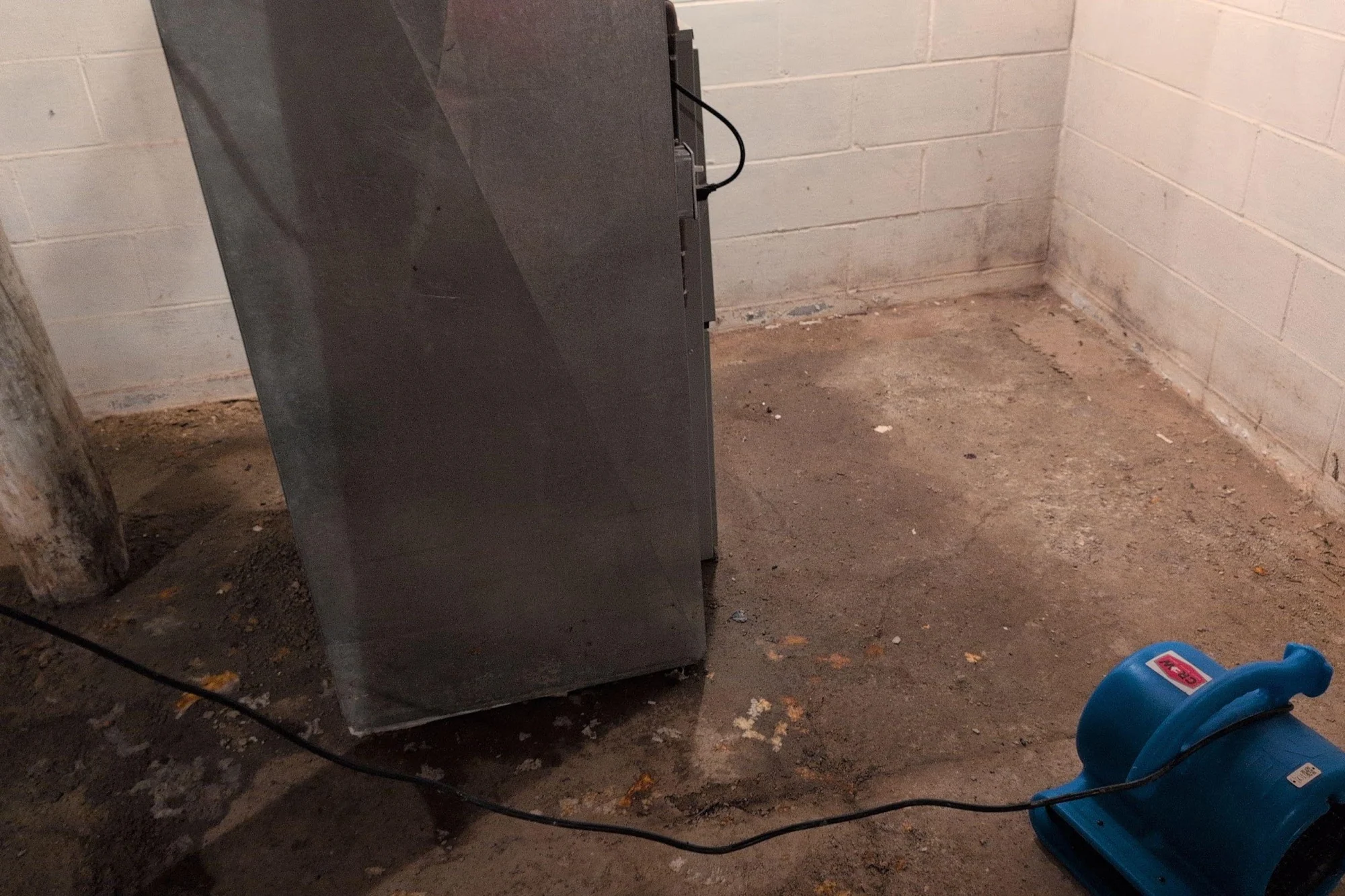
Emergency Basement Flooding Cleanup in Sioux Falls
Emergency basement flooding cleanup in Sioux Falls and surrounding areas. IICRC-certified, insurance billing accepted. Call (605) 965-2727.
Flooded basement in Sioux Falls? Call now for emergency service. Our crew responds fast to pump out the water and start drying.
When a basement floods, the water rarely stays where it lands. It travels along the slab, wicks up into drywall and baseboards, and pools under carpet pad where it’s invisible until you step on it and feel the squish. Whether the cause is a failed sump pump, a sewer backup, or groundwater pushing through a foundation crack after heavy rain, the clock starts immediately: untreated moisture in an enclosed basement space can support mold growth within 24 to 48 hours. Getting water out fast, and getting the space back to a measurable dry standard, is the whole job.
What Basement Flooding Cleanup actually involves
Basement flooding cleanup is different from a burst pipe on the second floor because basements are enclosed, poorly ventilated, and often built with materials that behave differently when wet: poured concrete, concrete block, exposed insulation, and finished framing sitting directly on or near the slab. Standing water has to be pumped or extracted before any drying can start. Once the water is gone, the real work is drying the structure itself, the block or poured walls, the subfloor, the framing, and anything porous that got wet, using a combination of air movers, dehumidifiers, and in some cases negative air setups to keep humidity from migrating upstairs. Depending on how much water was involved and how long it sat, this process typically runs several days, with moisture readings taken at intervals to confirm materials are actually drying rather than just feeling dry to the touch.
Our process
- Source control. Before extraction starts, the source has to be identified and stopped, whether that means shutting off a water supply line, resetting or bypassing a failed sump pump, or confirming a sewer backup has cleared.
- Water extraction. Submersible pumps handle standing water above a couple of inches; truck-mounted or portable extraction units pull the rest from carpet, pad, and any low spots in an uneven slab.
- Moisture mapping. Moisture meters are used on block or poured concrete walls, subfloor, and framing to establish how far the water traveled, which is often further than it looks.
- Structural drying. Air movers and dehumidifiers are placed based on the moisture map, not just the visible wet area, and containment may be used to keep the basement’s humidity from affecting the floor above.
- Monitoring and documentation. Moisture readings are logged over the following days until materials hit a dry standard, which is also the documentation an insurance adjuster will want to see.
What separates a good basement flooding response from a bad one
The most common mistake in basement flooding cleanup is treating it like a surface problem. Drying the visible carpet while leaving saturated pad underneath, or drying drywall without checking the insulation cavity behind it, leaves hidden moisture that turns into a mold problem two weeks later. Block foundation walls are particularly deceptive: they can look dry on the surface within a day while still holding moisture deep in the block cores. A thorough response includes moisture mapping at the start and monitoring throughout, not just a single visit to run some fans. Insurance adjusters generally want to see documented moisture readings, photos of affected materials before removal, and a clear explanation of what was removed and why, which is also why cutting corners on documentation tends to slow down a claim rather than speed it up.
What does Basement Flooding Cleanup cost?
Costs vary widely depending on how much water was involved, how long it sat before cleanup started, and whether drywall, insulation, or flooring need to be removed and replaced. Every loss is different, which is why Crew Restoration & Construction provides a written scope before any work begins. Homeowners insurance often covers sudden and accidental water damage, such as a failed sump pump or a burst pipe, but typically excludes flooding from groundwater or surface water without a separate flood policy, so it’s worth confirming coverage details with your carrier early.
| Scenario | Typical range |
|---|---|
| Sump pump failure, contained to one area | $1,200 - $2,500 |
| Small basement, clean water, minimal contents | $1,500 - $3,000 |
| Moderate flooding with carpet and pad removal | $3,000 - $6,000 |
| Full basement, contaminated water, drywall removal | $6,000 - $12,000 |
| Finished basement with insulation and extensive contents | $10,000 - $20,000+ |
Seasonal & regional considerations
Sioux Falls winters bring freeze-thaw cycles that stress sump pumps and foundation walls right when they’re needed most, and a sump pump that fails during a spring thaw or a heavy summer thunderstorm is one of the more common calls we see. Clay-heavy soil common across the region also holds water against foundation walls longer than sandier soil would, which is part of why groundwater seepage tends to show up in older basements built before modern drainage systems were standard.
Service area
Crew Restoration & Construction handles basement flooding cleanup throughout Sioux Falls and surrounding communities, including areas with older block foundations and newer poured-wall construction alike.
If your basement is holding water right now, don’t wait for it to sit longer than it already has. Call (605) 965-2727 to schedule basement water removal and get a written drying plan started.
Services We Handle
- Basement Flood Cleanup
- Basement Water Cleanup
- Basement Waterproofing
- Flooded Basement
- Flooding Cleanup
- Sump Pit
- Sump Pump
- Sump Pump Cleanup
- Sump Pump Failure
Frequently Asked Questions
Does homeowners insurance cover basement flooding cleanup?
How long does it take to dry out a flooded basement?
Do you have to remove drywall and insulation after a basement flood?
What's the difference between a sump pump failure and groundwater seepage for cleanup purposes?
Can mold start growing in a basement before the water is fully extracted?
Looking for the best basement flooding cleanup company in Sioux Falls?
Crew Restoration & Construction provides licensed and insured basement flooding cleanup in Sioux Falls, SD and the surrounding area, and has served local property owners since 2015. Customers rate us 4.9 out of 5 stars across 643 Google reviews. We answer calls 24/7 — call (605) 965-2727 for immediate help.
Request a Free Basement Flooding Cleanup Estimate
Tell us what happened and we'll get back to you fast — usually within one business hour.
Need Basement Flooding Cleanup now?
We respond 24/7 across Sioux Falls and surrounding SD cities.
Related Coverage
- Our Restoration Services
- Contact Crew Restoration & Construction
- Restoration Services in Adrian
- Restoration Services in Akron
- Restoration Services in Alton
- Restoration Services in Baltic
- Restoration Services in Beresford
- Restoration Services in Brandon
- Restoration Services in Brookings
- Restoration Services in Canton
- Restoration Services in Crooks
- Emergency Basement Flooding Cleanup in Dakota Dunes
- Restoration Services in Dell Rapids
- Restoration Services in Edgerton