When something goes wrong at home, whether it is a flooded basement, storm damage on the roof, or another problem that turns a house upside down, the property owner rarely remembers the technical details months later. What sticks is how the crew treated them, whether anyone explained what was happening, and whether the person standing in their living room actually seemed to care. That is the story behind a recent five-star review left for Crew Restoration & Construction.
Zach is seriously the best! Not only did he help me get my house in order, but his kind and cheerful demeanor made my whole week! 5/5 stars!! I love that guy
, Scott, verified Google review
Scott’s review does not dwell on equipment, timelines, or invoices. It is about two things: a job that got his house back in order, and a technician whose attitude made a hard week easier. Both of those are worth unpacking, because they point to what actually separates a restoration company homeowners trust from one they simply tolerate.
What Does ‘Getting a House Back in Order’ Actually Involve?
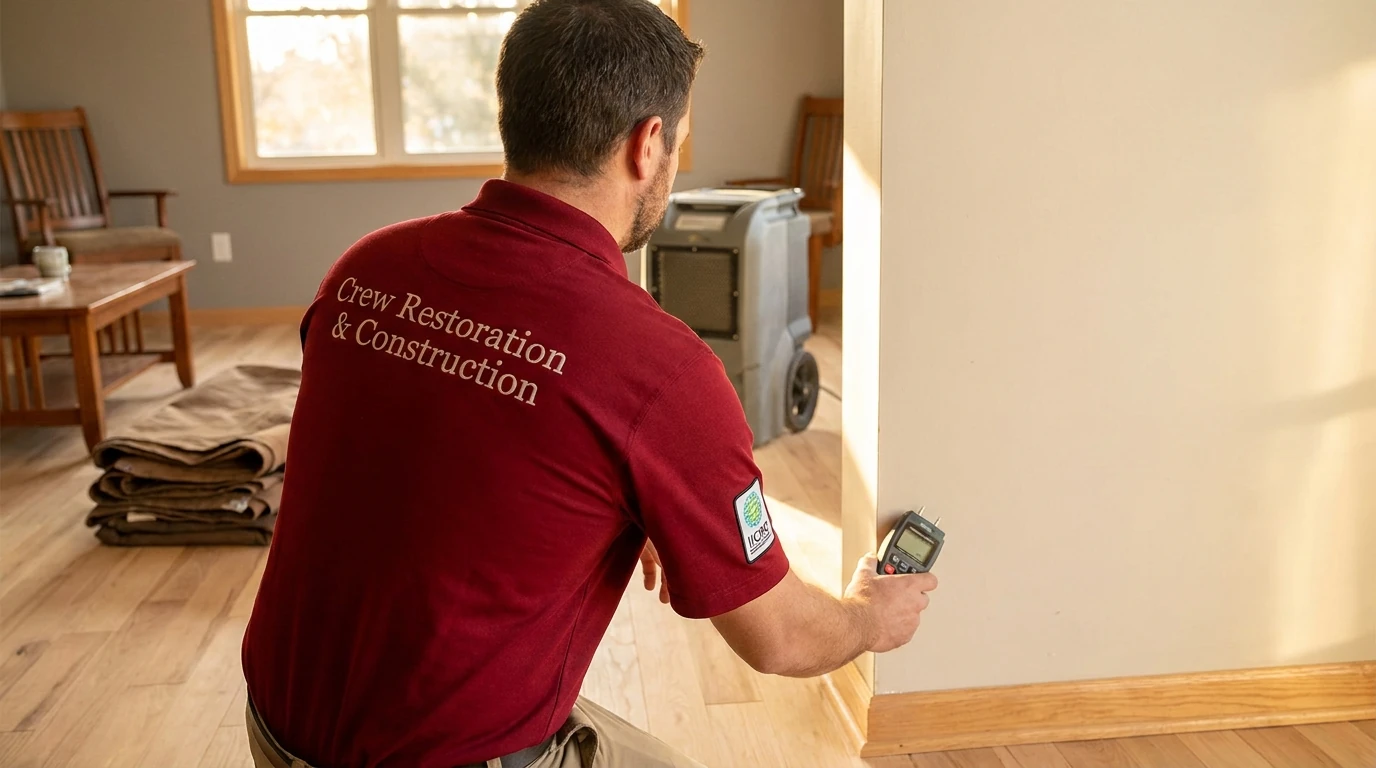
Restoring a home after damage means moving through a sequence of phases, not completing one single task. A project typically opens with an assessment: what is affected, what is salvageable, and what code or insurance requirements apply. From there it moves into mitigation, stopping further damage and removing what cannot be saved, then into cleaning, drying, or rebuilding the affected areas, and finally a walkthrough to confirm the space is safe and livable again.
For the homeowner, that sequence can run from a few days to several weeks depending on scope. What Scott’s review reflects is the far end of that arc: a house that is back in order, meaning the disruption is resolved and daily life has returned to normal. Getting there requires a crew that can move through every phase without leaving the homeowner guessing what happens next or why a plan changed midway through.
If you are in the early stage of that process right now, our burst pipe response checklist and first-24-hours guide walk through what the first steps usually look like before a crew arrives.
Why Does a Technician’s Demeanor Matter as Much as the Technical Work?
A calm, cheerful technician is not a nice-to-have on a restoration job, it is part of the job. Homeowners dealing with property damage are often stressed, frequently handling insurance paperwork for the first time, and worried about cost and timeline in equal measure. A technician who explains what is happening in plain language, shows up when promised, and keeps a level head does more to reduce that stress than any piece of drying equipment ever will.
This is also where real trust in a restoration company gets built. Certifications and equipment matter, and they matter a lot when the work itself is on the line, but they are not usually what a homeowner remembers when writing a five-star review months later. What they remember is whether the person in their house treated the situation, and them, with respect. That is exactly what Scott described.
If you are comparing companies before you hire one, our guide to choosing a restoration company covers what to ask before signing anything, including how a company communicates before a crew ever sets foot on the property.
What Does Good Communication Look Like From First Call to Final Walkthrough?
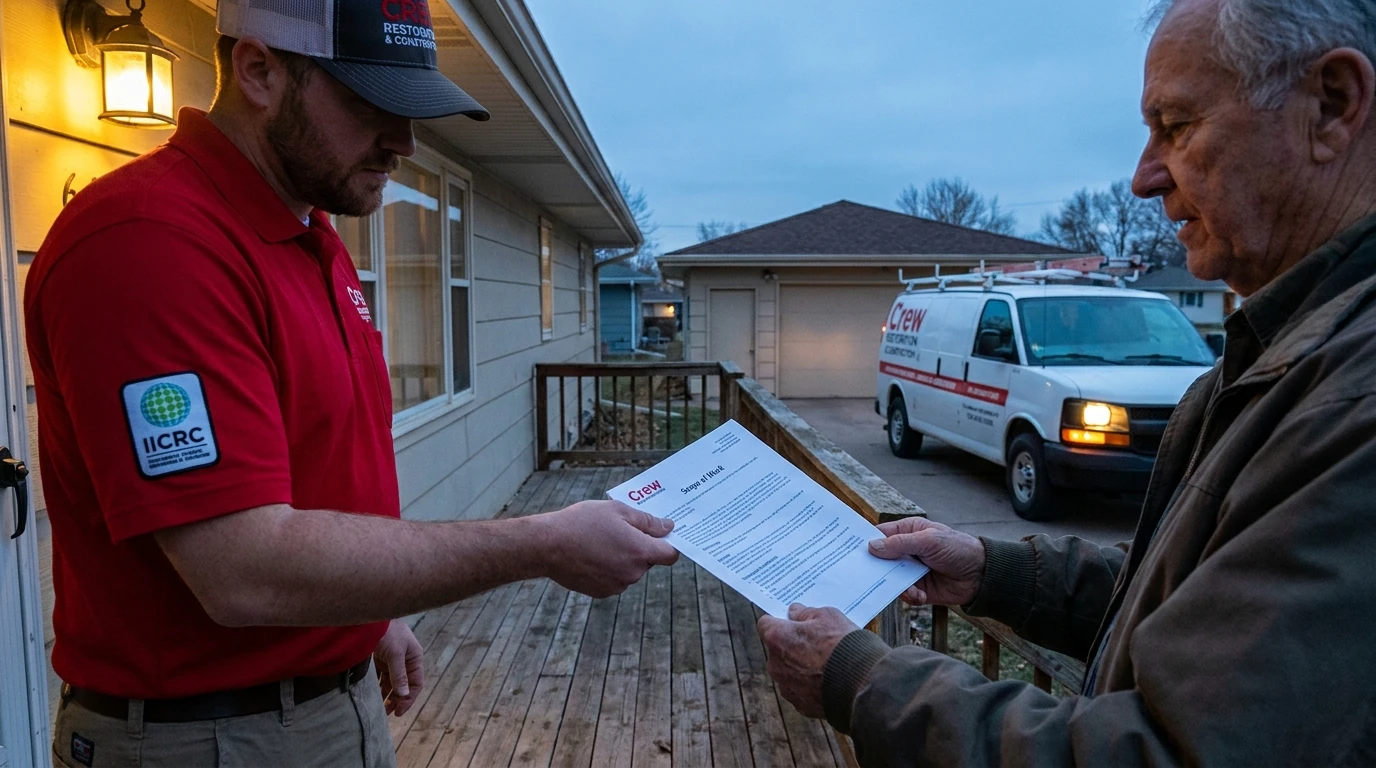
Good communication on a restoration job is not a single phone call, it is a pattern that repeats through every phase of the project. It starts with a clear explanation of the scope of work before anything begins, continues with updates whenever conditions change (a wall opens up and reveals more damage than expected, for example), and ends with a final walkthrough where the homeowner can ask questions before signing off.
Crews that skip that pattern leave homeowners guessing, and that is usually when frustration, disputes, and stalled insurance claims start. Crews that keep it up all the way through, the kind of experience Scott described, turn a stressful project into one the homeowner can actually follow and trust.
What Should You Look for If You’re Facing a Restoration Job Right Now?
Look for a company that treats communication as part of the scope of work, not an afterthought that happens if there is time. Ask how updates are delivered, who your point of contact is for the length of the job, and what the final walkthrough looks like before you sign anything.
Crew Restoration & Construction is an IICRC-certified, licensed and insured company (license #3814) that has served Sioux Falls, South Dakota since 2015. The crew handles water damage restoration, fire damage restoration, mold remediation, storm damage restoration, sewage cleanup, biohazard cleanup, asbestos abatement, contents restoration, roofing, siding and gutters, and general contracting across the Sioux Falls metro and surrounding communities.
If your house needs to get back in order, request an estimate and ask what the communication plan looks like before a crew ever shows up.
About Crew Restoration & Construction
Crew Restoration & Construction is an IICRC-certified, licensed (license #3814) and insured restoration and construction company serving Sioux Falls, South Dakota and the surrounding region since 2015. Their crews handle water damage restoration, fire damage restoration, mold remediation, storm damage restoration, sewage cleanup, biohazard cleanup, asbestos abatement, contents restoration and storage, emergency board-up and tarping, roofing, siding and gutters, post-construction cleaning, and general contracting across southeastern South Dakota, southwestern Minnesota, and northwestern Iowa.