
TL;DR: A hidden water leak usually announces itself through a musty odor, a soft or bubbling patch on drywall, discoloration on a ceiling or wall, loose tile, or wood flooring that buckles or cups. Check under sinks, around water heaters, and behind large furniture every few months. Any of these signs mean moisture has likely been sitting for a while and should be checked before it causes structural or mold damage.
If you have noticed a faint musty smell in a bathroom that will not go away no matter how much you clean, or a brown ring forming on the ceiling below an upstairs bathroom, you are probably dealing with a leak that has already been running for days or weeks. Leaks are often hidden in places that are out of sight, and the sooner one is found, the less damage it does to flooring, walls, and the belongings around it. Here is what to actually look for, room by room.
What does a hidden water leak smell like?
A hidden leak typically produces a stale, musty odor, similar to a damp basement, that lingers even after cleaning. This smell shows up because standing water that never gets a chance to dry starts growing mold and mildew within 24 to 48 hours.
If you catch this odor in a specific room and cannot trace it to anything visible, it is worth pulling back rugs, checking baseboards, and opening the cabinet under the sink. The smell is almost always stronger near the actual source, even if the water itself has already soaked into subfloor or wall cavities where you cannot see it.
Don’t ignore it just because you cannot see standing water: a smell like this means the water has been sitting long enough to go stale, and leaving it makes the mold and mildew problem worse.
Does mold or mildew mean I have a plumbing leak?
Visible mold or mildew on a wall or floor is one of the clearest signs of a leaking pipe, especially when it appears in a spot with no obvious outside moisture source. Mold needs sustained moisture to establish itself, so its presence points to water that has been accumulating behind the surface.
You might see this as dark spotting along a baseboard, a greenish tint creeping up from the floor, or fuzzy growth in a cabinet corner. When moisture gets trapped behind drywall or under flooring, mold and mildew flourish out of sight before they ever reach a surface you can see.
Mold tied to a hidden leak is also a health consideration, not just a cosmetic one. The EPA notes that molds can cause allergic reactions and can trigger asthma attacks in people who are sensitive to them. If you spot mold growth near a plumbing wall, it is worth reading our guide on signs of hidden mold and having both the leak and the mold addressed together, since drying the area without fixing the source just invites regrowth.
Why is my drywall bubbling or my paint peeling?
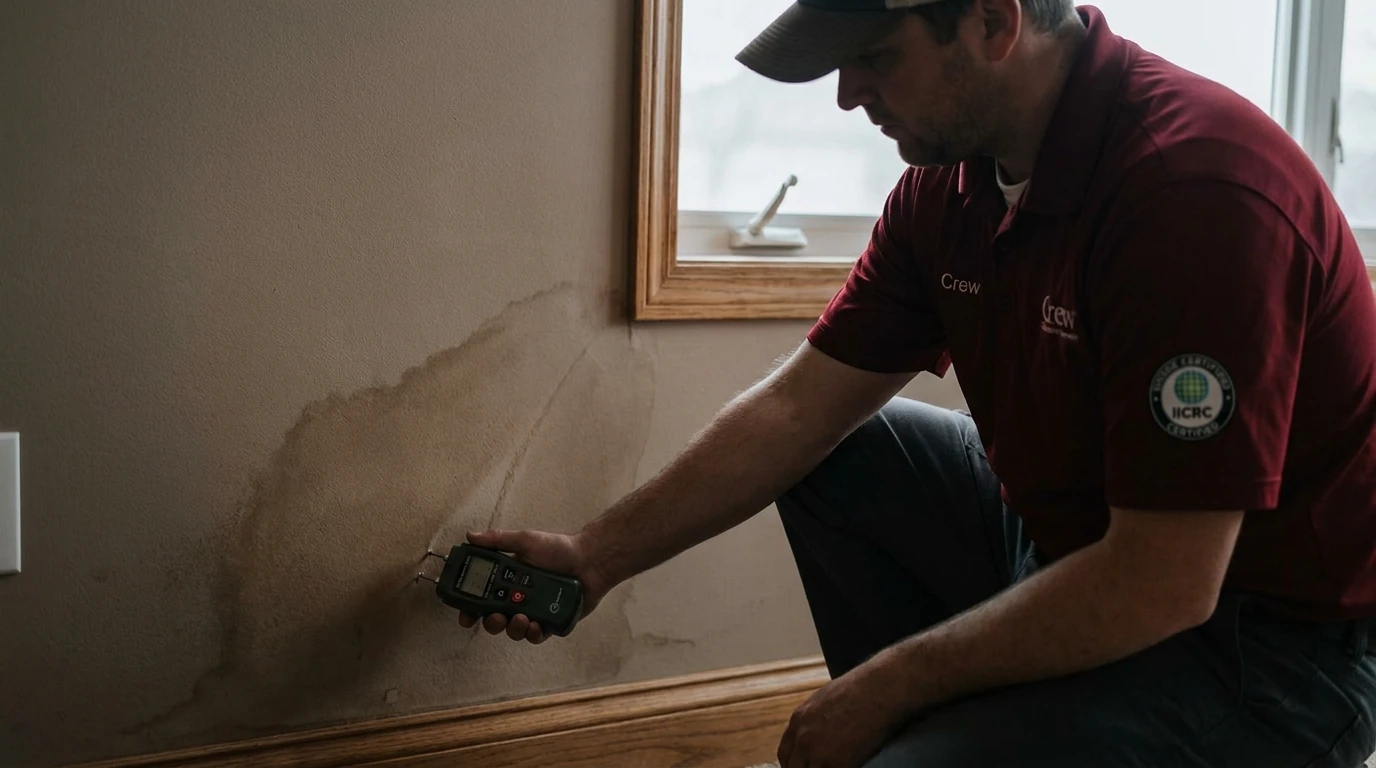
Bubbling, peeling, or rippling on a wall almost always means moisture has gotten behind the paint or wallpaper and broken its bond with the surface. Drywall absorbs water readily, and once it does, it softens, discolors, and eventually starts to crumble.
Look for a brownish or yellowish stain spreading outward from one point, paint that looks like it is lifting in a bubble, or wallpaper seams that have started to separate. On a ceiling, this is often the first visible sign of a leak from a bathroom or roof above. The shape of the stain usually traces back toward the actual leak point, even if it appears several feet away on the ceiling or wall.
Ceiling staining is one of the more urgent signs on this list, since water pooling above a ceiling can eventually lead to a section giving way. If you are seeing active sagging along with discoloration, that ceiling needs attention before the water finds a way through on its own.
Why is my floor buckling, cupping, or loose?
Floor damage like buckling, cupping, or loose tile usually means water has gotten underneath the flooring material, often from a supply line or drain running below or beside it. Wood floors swell and warp when they absorb moisture, and tile loses its bond with the subfloor once moisture gets trapped underneath.
In a kitchen or bathroom, this is frequently traced to a slow leak at a supply line connection, a toilet wax ring that has failed, or a dishwasher line that has been dripping for months. You might notice stains forming around the edges of tile grout, a soft spot when you walk across hardwood, or a section of laminate that has started to lift at the seams.
This kind of damage tends to worsen gradually rather than all at once, which is exactly why it is easy to miss until the flooring itself needs replacing, not just drying out.
When is it time to call a professional for a water leak?
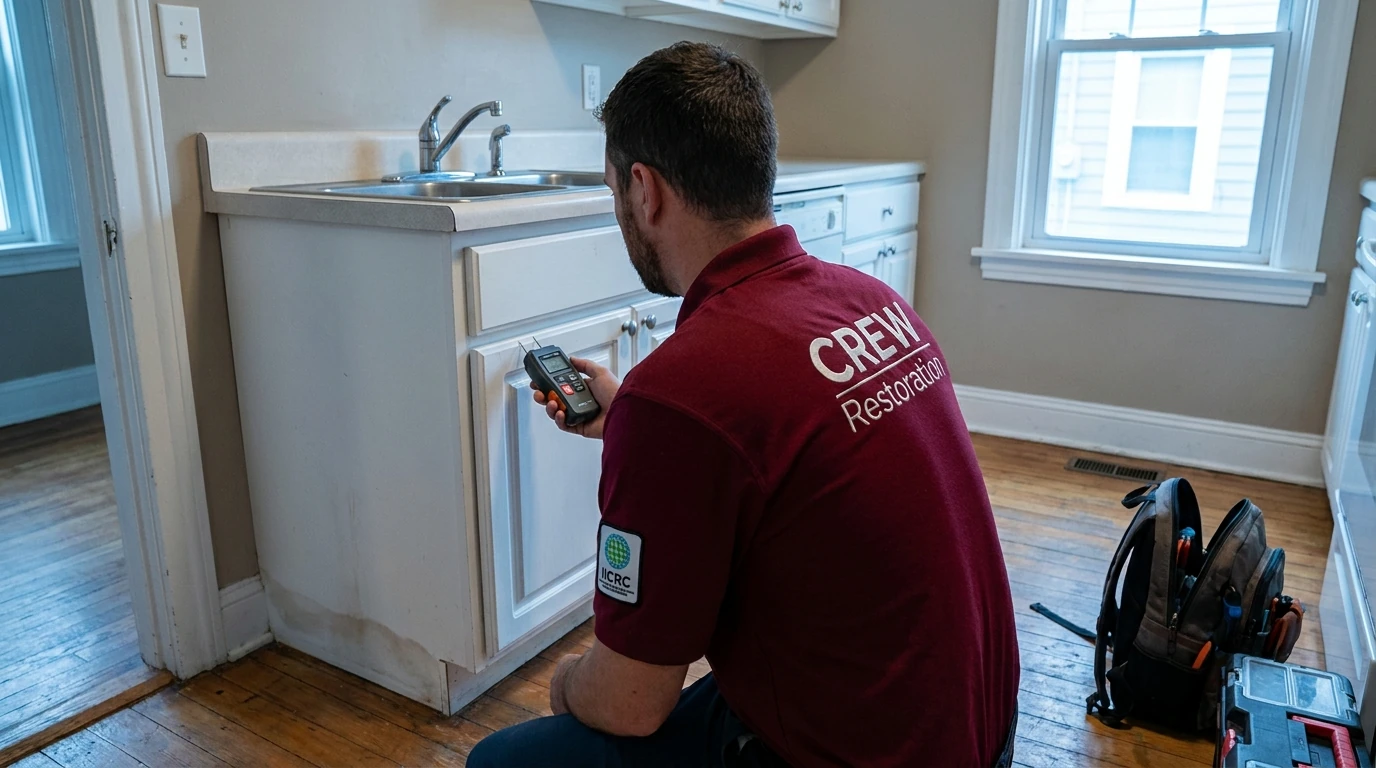
It is time to call a professional once you notice any combination of these signs, a musty smell, visible mold, wall discoloration, or floor damage, because pinpointing the exact source behind a wall or under a floor usually requires equipment most homeowners do not own. Moisture meters and thermal imaging can confirm where water is actually traveling, which is often not directly below the visible stain.
Crew Restoration & Construction uses this kind of equipment for water leak detection across the Sioux Falls area, locating the source before any wall or flooring gets opened up unnecessarily. That matters for keeping repair costs down and for documenting the damage properly if you end up filing an insurance claim.
Routinely checking under bathroom and kitchen sinks, around the water heater, and behind large furniture takes a few minutes, and having your plumbing inspected from time to time helps catch problems before they spread. A leak caught early is far less drying and repair work than one that has been running for weeks.
If you find standing water, soft drywall, or a smell you cannot place, call Crew Restoration & Construction at (605) 965-2727 for a water leak assessment. Our team is available 24/7 and can trace the source before it turns into a larger repair.
About Crew Restoration & Construction
Crew Restoration & Construction is an IICRC-certified company (license #3814) that has served Sioux Falls, SD since 2015. The team handles water damage restoration, water leak detection, mold remediation, and related reconstruction work across the Sioux Falls metro and surrounding South Dakota, Iowa, and Minnesota communities. Written with the Crew team by owner Kyle Eberts.