
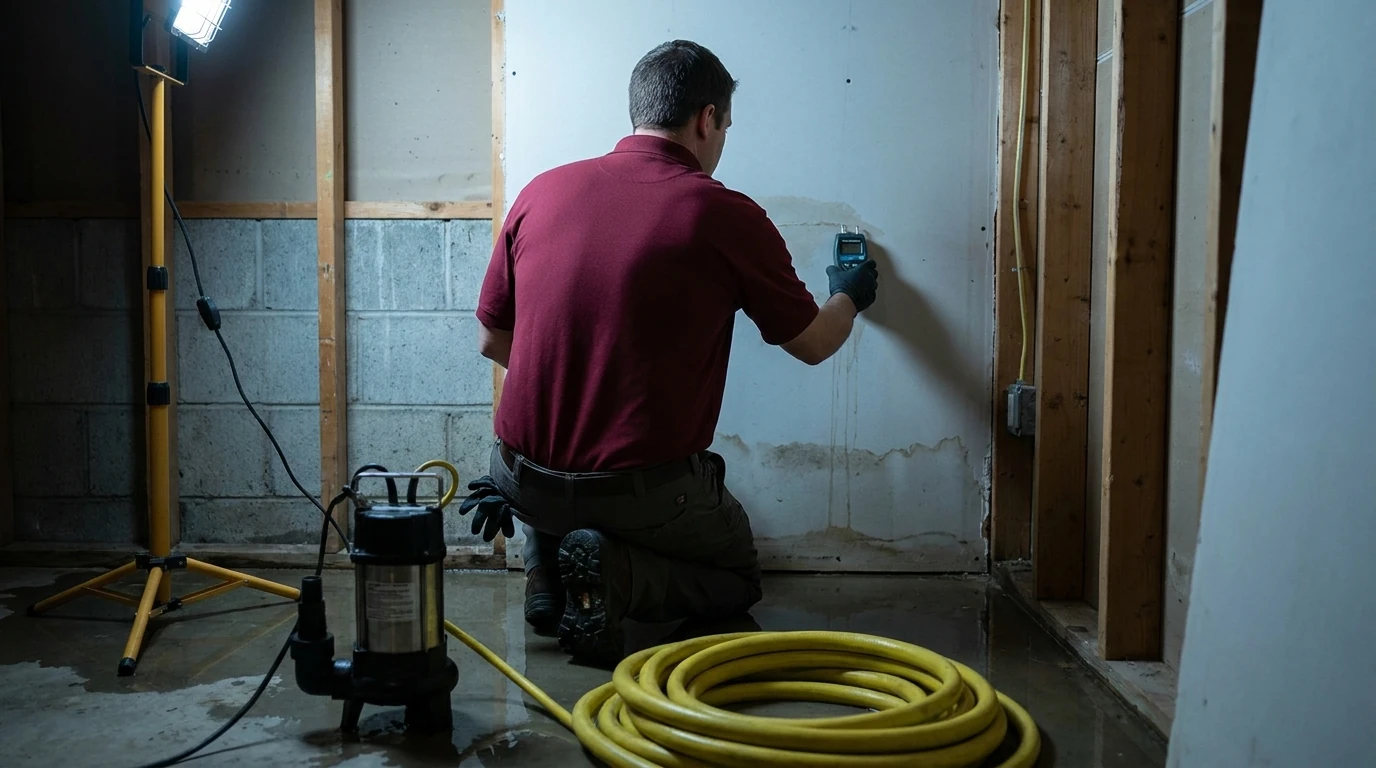
If water is spreading across your basement floor right now, call a 24/7 water damage restoration contractor first, not your insurance company. Crew Restoration & Construction answers around the clock at (605) 965-2727 and can get extraction equipment running in Sioux Falls and the surrounding area before standing water soaks deeper into drywall, insulation, and subfloor. A plumber is still part of the picture, but only if the water is still actively flowing from a pipe, fixture, or failed sump pump.
Is it a plumber or a restoration company you need first?
Call a plumber first only when water is still actively entering the basement from a source they can shut off, like a burst supply line, a failed water heater connection, or a sump pump that’s stopped pumping. Call a restoration contractor first for everything else: standing water that’s already stopped flowing, a sewer or floor drain backup, or groundwater seeping through the foundation after heavy rain.
In a lot of real Sioux Falls basement floods, you need both, and the order matters. A plumber’s job is stopping or redirecting the source: replacing a cracked pipe fitting, clearing a line, or swapping a dead sump pump. A restoration contractor’s job is everything after the water stops: extracting it, drying the structure to the IICRC S500 standard, and preventing the mold growth that can start within 24 to 48 hours on wet drywall and framing per the EPA. Neither one replaces the other.
One detail homeowners miss: the type of water changes what happens next. A supply line break starts as clean water, but groundwater seeping in through foundation cracks under hydrostatic pressure is classified as Category 2 (gray) water, and anything coming up through a floor drain or sewer line is Category 3 (black) water, which needs antimicrobial treatment and more material removal, not just drying.
What should you do before anyone arrives?
Cut power to the affected area at the breaker if you can reach it safely, and never wade into standing water near an outlet or a plugged-in appliance. Then stop touching the problem and start documenting it.
Take photos and a short video of the water level, the source if you can identify it, and any items sitting in the water. Move furniture, rugs, and boxes off the floor if you can do it without stepping into deep water. This documentation matters later for your insurance claim, whether or not that claim ultimately gets paid.
If the water is rising fast, from a sewer backup, or has any sewage smell, stay out of the basement entirely and wait for a crew in protective gear. That’s a Category 3 loss, and it’s not a cleanup job for anyone without the right PPE.
When do you call your insurance company?
Call your insurance company after you’ve stopped the source and started mitigation, not before. Most homeowners policies require you to take reasonable steps to limit further damage, and documenting that you acted quickly protects the claim.
What gets covered depends heavily on the cause. A sudden pipe burst is typically covered under a standard policy. A sump pump failure or a sewer backup is usually NOT covered unless you’ve added a water backup (sewer/sump) endorsement, and overland flooding from rain or snowmelt generally needs a separate flood policy through the NFIP, not your homeowners policy. If you’re not sure which one applies to your situation, our guide on whether homeowners insurance covers water damage breaks down the distinctions in more detail, and our sewage cleanup page covers what a Category 3 loss involves specifically.
What happens when you call a restoration company?
A restoration crew that answers the phone will ask a handful of questions before they arrive: roughly how deep the water is, whether it’s still flowing, what the likely source is, and whether there’s a sewage smell. Have that information ready along with your address and the best entry point to the basement.
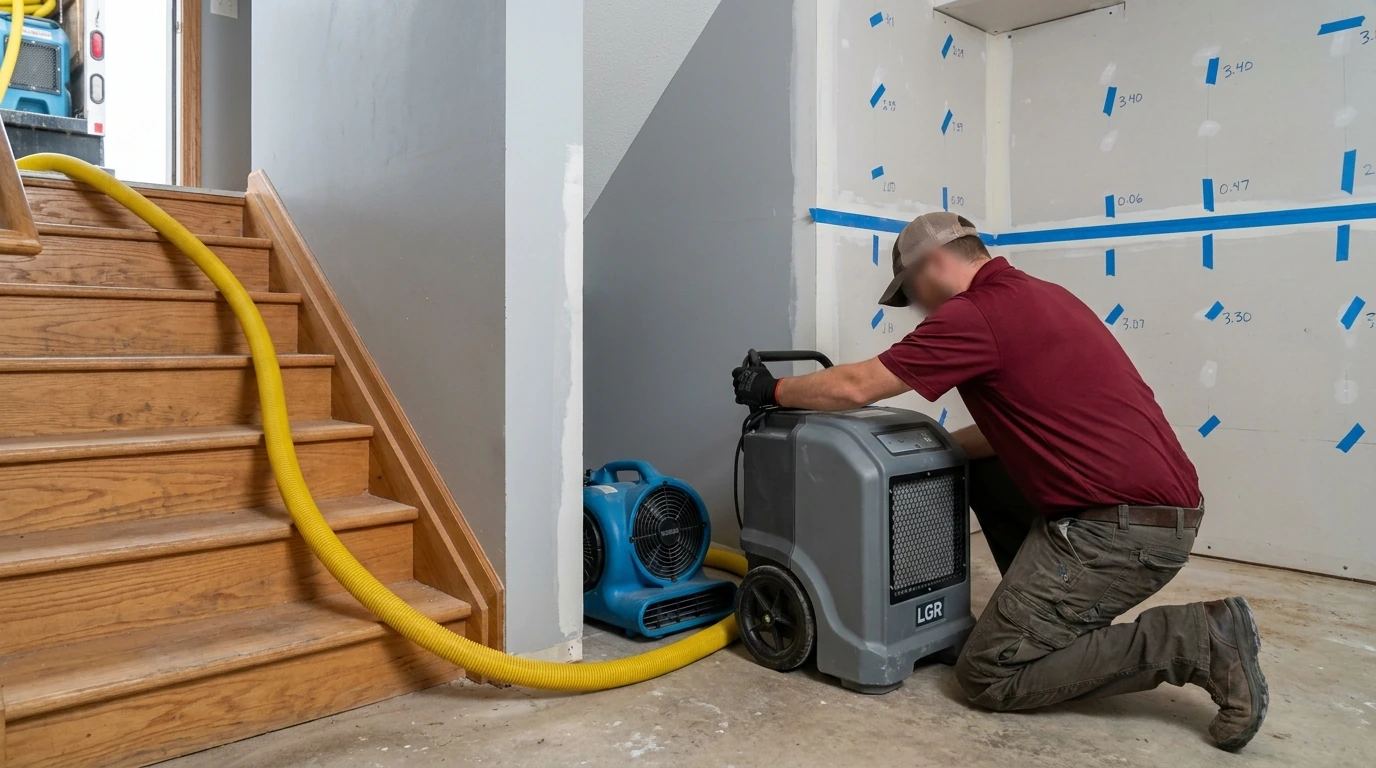
On arrival, the crew assesses the water category and class, starts extraction with truck-mounted or portable pumps, and sets moisture meters into the walls and subfloor to map how far the water traveled. Air movers and dehumidifiers go in once standing water is gone, and drying is monitored over several days against documented moisture targets, not a guess. If you’ve been through this before, our post on what to do when there’s water in your basement walks through the first hour in more detail.
For a basement flood in Sioux Falls, McKennan Park, or anywhere across the metro, call Crew Restoration & Construction at (605) 965-2727 for 24/7 extraction and drying, and loop in a plumber in parallel if the source is still active. Every loss is different, and a written scope of work before anything beyond emergency mitigation begins is worth asking for.