
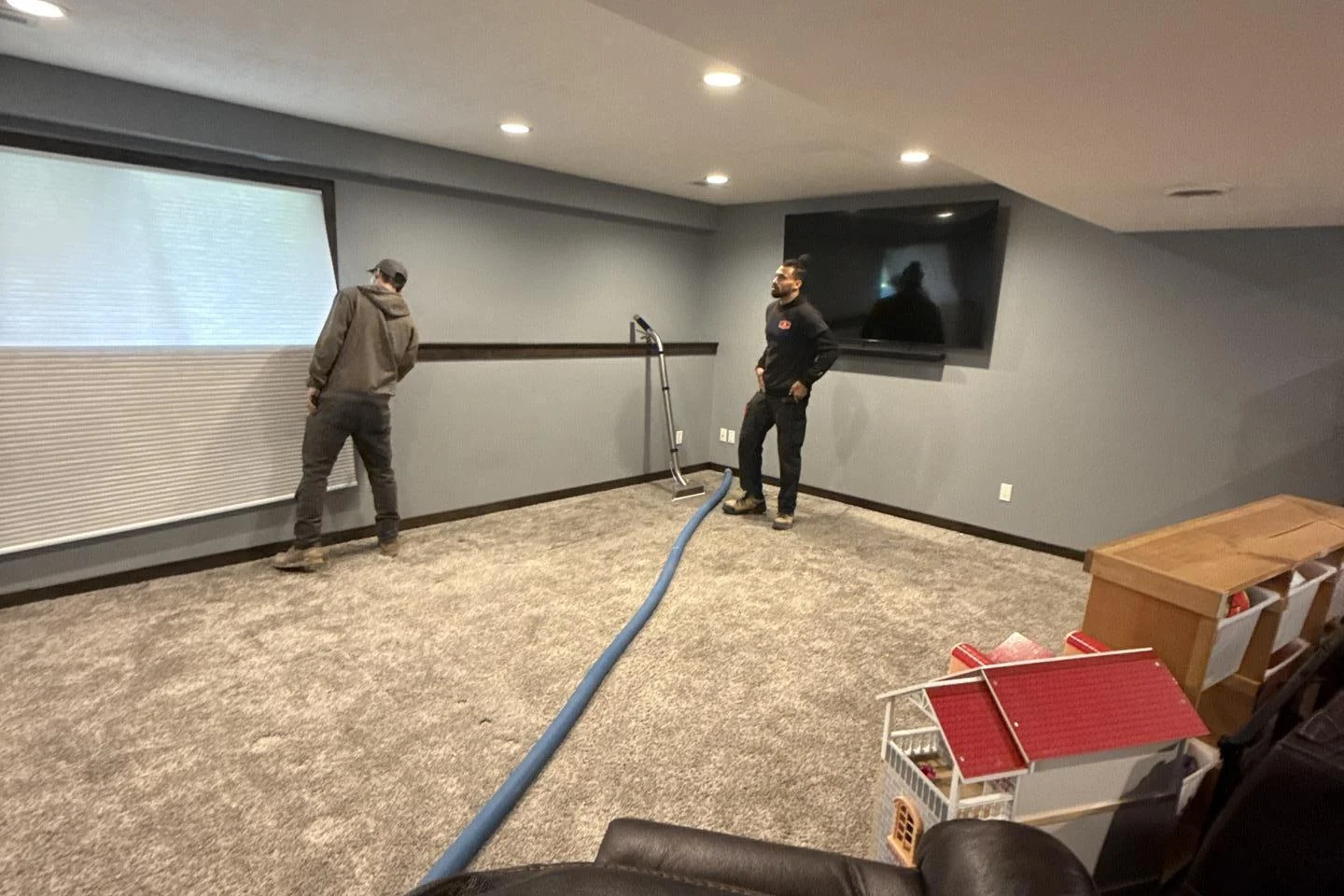
Emergency Water Removal & Cleanup in Akron
emergency water removal and cleanup in Akron, IA. IICRC-certified, insurance billing accepted. Call (605) 965-2727.
Our IICRC-certified technicians are dispatched from our Sioux City, IA office and are typically on-site in Akron within 60 minutes of your call.
When the Big Sioux River backs up after a heavy rain or a supply line lets go inside a century-old farmhouse near Downtown Akron, standing water doesn’t wait for business hours. Akron sits right at the Iowa-South Dakota border in Plymouth County, where spring snowmelt and summer thunderstorms can push the river out of its banks with little warning. Crew Restoration & Construction responds to emergency water removal calls in the 51001 ZIP code, bringing IICRC-certified technicians and professional-grade extraction equipment to properties that can’t afford to sit wet.
Why Akron Properties See Water Damage Issues
Akron’s location on the Big Sioux River floodplain is the single biggest factor shaping how water damage plays out here. The river corridor through the River District can experience rapid rises after upstream precipitation in South Dakota, and low-lying lots along those banks have limited natural drainage. That geography is compounded by the town’s housing stock: many homes in and around Downtown Akron were built in the early to mid-1900s, when basement walls were poured with a lower concrete mix strength and drainage tile systems that have long since deteriorated or clogged. Older cast-iron and galvanized supply lines in those same homes are also prone to pinhole leaks and sudden failures, especially after a hard freeze.
Soil composition in Plymouth County tends toward clay-heavy profiles that don’t absorb surface water quickly. When the ground is already saturated from snowmelt or prolonged rain, even a modest storm can send water toward foundations rather than away from them. That slow percolation means water finds its way through foundation cracks and window wells before a homeowner realizes anything is wrong.
Our Emergency Water Removal Process in Akron
The first priority when a crew arrives is stopping the source if it hasn’t been addressed yet, whether that’s shutting off the main supply or sandbagging a basement window. From there, the process follows the IICRC S500 standard for water removal and cleanup:
- Water extraction: Truck-mounted and portable extractors pull standing water from floors, carpet, and crawl spaces. In older Akron homes with plank subfloors rather than OSB, extraction takes longer because water migrates between boards and into the joist bays below.
- Moisture mapping: Thermal imaging and calibrated moisture meters locate water that has wicked into wall cavities, plaster, and insulation. Plaster walls, common in pre-1960 construction throughout Downtown Akron, can feel dry at the surface while the lath behind them stays saturated for days.
- Pumping and standing water removal: Industrial pumps clear deeper standing water in basements and crawl spaces, working alongside air movers positioned in a calculated pattern based on the room’s cubic footage and the measured moisture load. We monitor readings daily and adjust equipment placement until materials reach acceptable dryness levels.
- Documentation: Every affected area is photographed and logged with moisture readings, which becomes the foundation of your insurance claim file.
Reaching Akron from Sioux Falls
Crew Restoration & Construction is headquartered in Sioux Falls, SD, which puts Akron on a straightforward route down I-29 South and across the border into northwest Iowa. The drive follows a direct corridor that keeps travel time predictable under normal road conditions. During winter months, that same stretch of I-29 can see blowing snow and reduced visibility, but the route avoids the more complicated county road networks that slow access to some other Plymouth County communities. When you call (605) 965-2727, the team can give you a realistic arrival estimate based on current conditions rather than a number that assumes clear roads.
Akron Insurance Coordination
Most standard homeowner policies cover sudden and accidental water damage, which includes burst pipes and appliance failures. Flood damage from the Big Sioux River overflowing its banks is a different category and typically requires a separate flood insurance policy through the National Flood Insurance Program. Knowing which type of loss you have matters before the claim is filed, because the documentation requirements differ. Crew Restoration & Construction photographs affected materials, records moisture readings, and prepares a scope of work that carriers can review directly, reducing the back-and-forth that slows claim approval.
Local Note
Homes near the Akron-Westfield School district and along the older residential streets feeding into Downtown Akron frequently have full or partial basements with original clay tile drain systems. These systems were designed for a different era of water volume and often collapse or root-intrude over decades. When a sump pump fails during a storm event and water enters through a compromised tile drain, the water carries fine silt that settles into carpet backing and subfloor seams. That silt layer traps moisture long after the visible standing water has been removed, which is why surface-dry doesn’t mean structurally dry in these homes. Extraction alone isn’t enough; the cleanup phase has to account for that embedded material.
If your Akron property is showing signs of water intrusion, whether it’s a soaked basement after a Big Sioux River event or a pipe failure inside the walls, call Crew Restoration & Construction at (605) 965-2727. The sooner extraction begins, the smaller the scope of standing water removal and the lower the risk of secondary damage to materials that were dry when the day started.
Serving Akron from our Sioux City office · ★ 4.9 · 643 Google reviews
“Zach is the man. Goes above and beyond to help in every situation!!” — Jake, October 2026Read our reviews on Google →
Emergency Water Removal & Cleanup in Akron: Service Coverage
Frequently Asked Questions
How fast can you arrive for emergency water removal & cleanup in Akron?
How quickly can Crew Restoration & Construction reach Downtown Akron for an emergency water removal call?
Does the Big Sioux River flooding affect what type of insurance claim I should file?
Are older homes in the River District more vulnerable to hidden water damage after a flood event?
What does the water extraction and pumping process actually involve for a flooded Akron basement?
How long does emergency water removal and cleanup typically take for a home in the 51001 ZIP code?
Emergency Water Removal & Cleanup response in Akron
Most Akron calls see a technician on-site within 60 minutes from our Sioux City office.