
TL;DR: Water restoration is the structured process of removing standing water, drying the building’s framing and materials to a safe moisture level, and repairing anything that got damaged along the way. A typical residential job runs 3 to 7 days from extraction to final dry-out, longer if framing or flooring needs replacing. Most homeowners policies cover sudden water damage (a burst pipe, a failed appliance) but exclude gradual leaks, so documentation matters from the first phone call.
If a pipe just split in a crawl space off McKennan Park or your sump pump quit during an October downpour and you’re standing in a Sioux Falls basement looking at an inch of water, you don’t need a history lesson on water restoration. You need to know what happens next, how long it takes, and whether your insurance is going to pay for it. Here’s the straight version.
What Does Water Restoration Actually Involve?
Water restoration is a sequence of four steps: stop the water source, extract standing water, dry the structure, and repair or rebuild what didn’t survive. Skipping or rushing any step is how homeowners end up with mold six weeks later.
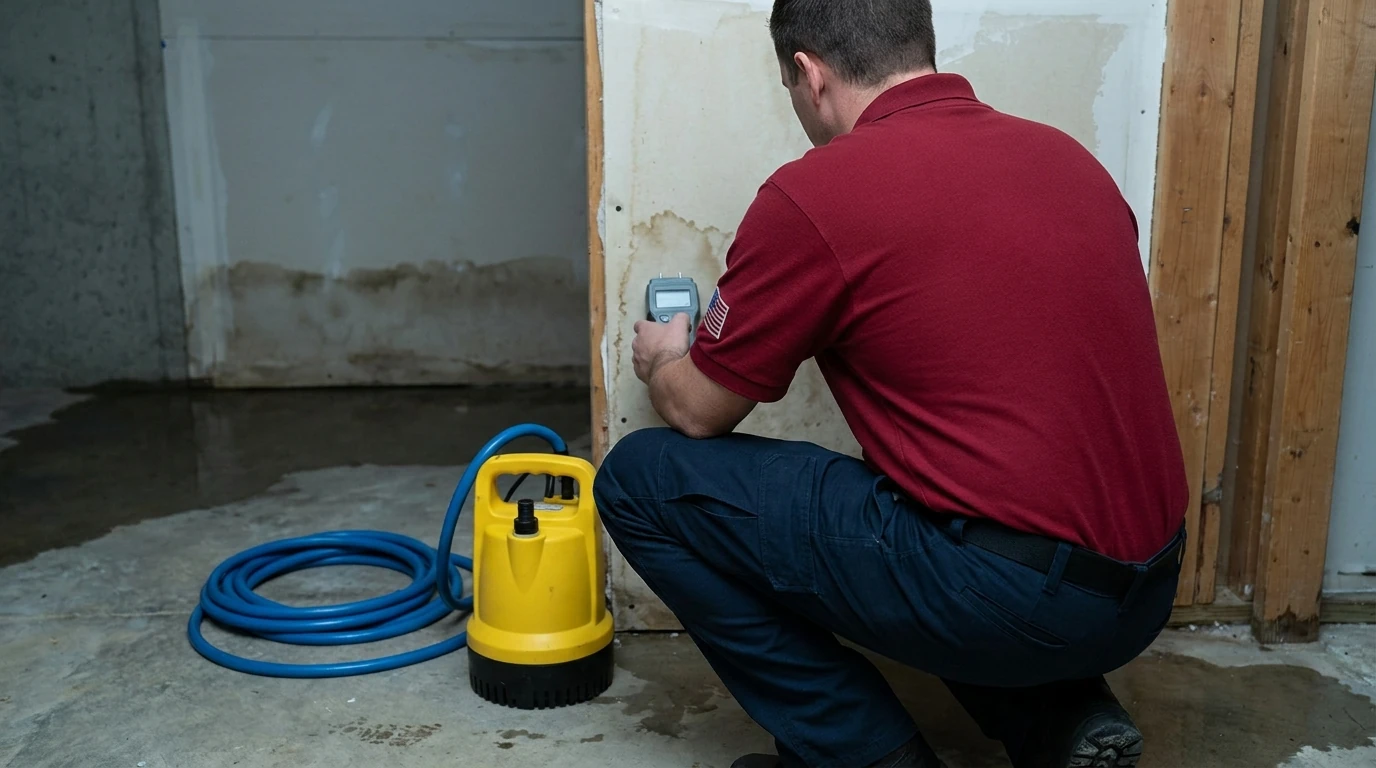
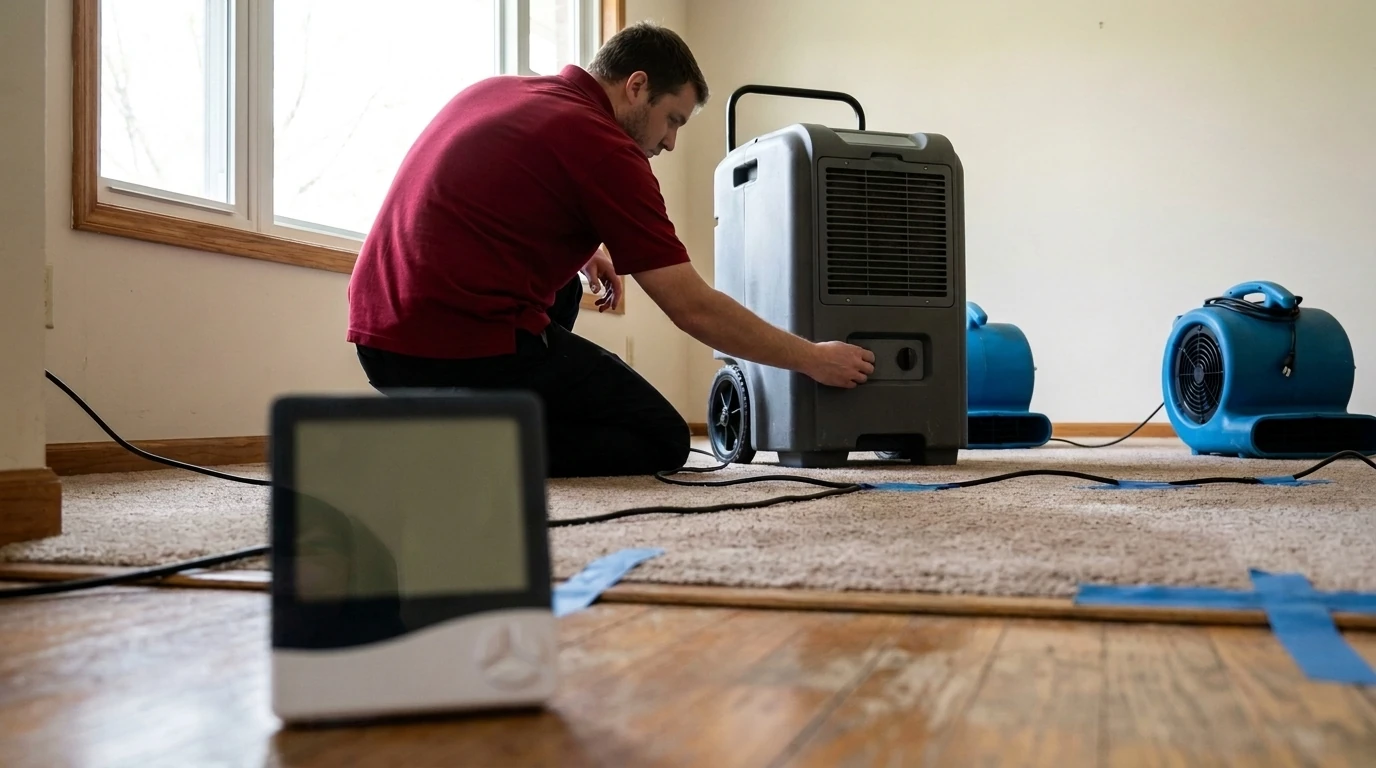
The first visit usually includes a moisture assessment with a penetrating or non-penetrating meter to map how far water traveled behind walls and under flooring, since visible wet spots are rarely the whole story. Crews then extract standing water with truck-mounted or portable pumps, remove materials that can’t be saved (soaked carpet pad, swollen baseboards), and set air movers and low-grain-refrigerant dehumidifiers to bring the structure down to a dry standard, typically measured against the drywall and framing’s normal, unaffected moisture content. Drying is monitored daily, not guessed at. The process generally follows the ANSI/IICRC S500 Standard for Professional Water Damage Restoration, which governs how water category (clean, gray, or black water) and the extent of saturation determine the drying and sanitation approach.
How Long Does Water Restoration Take?
Most residential water restoration jobs take 3 to 7 days from the first extraction visit to a verified dry reading, assuming the water was clean or gray and caught within 24 to 48 hours. Category 3 (black) water, hidden saturation inside wall cavities, or hardwood flooring that needs to come up can push that timeline past two weeks.
The drying phase itself is the long part, not the initial cleanup. Air movers and dehumidifiers typically run for 3 to 5 days while a technician logs moisture readings to confirm the material is actually drying, not just feeling dry to the touch. If framing or drywall was compromised, reconstruction is a separate phase that starts once the dry certificate is issued. For a fuller breakdown of what happens day by day, see our guide on how long water damage restoration actually takes.
Will Insurance Cover Water Restoration?
Most standard homeowners policies cover water damage that is sudden and accidental, like a burst pipe or a failed water heater, but they generally exclude damage from a leak that was gradual or went unaddressed. The distinction between those two categories is where most claim disputes start.
Adjusters look for evidence of how long the water was present. That’s why documentation from the first visit, photos, moisture logs, a written scope of work, matters as much as the drying itself. According to the Insurance Information Institute, standard homeowners coverage typically treats sudden discharge of water from plumbing as covered, while flood water from outside the home requires separate flood insurance. If a river or heavy rain event caused the intrusion rather than a pipe, check whether you carry a separate flood policy, since standard homeowners insurance won’t pay for that scenario.
How Do You Choose a Water Restoration Company in Sioux Falls?
Look for IICRC certification, a documented drying process, and a company that will put the scope of work in writing before starting demolition. Those three things separate a crew that dries a building correctly from one that just runs fans and hopes.
Ask whether the technicians working your job are IICRC-trained in water damage restoration specifically, not just general cleaning. Ask for daily moisture logs, not a verbal “it’s drying fine.” And ask who handles the insurance paperwork, since a company experienced with South Dakota adjusters can save you weeks of back-and-forth. In the Sioux Falls metro, areas near the Big Sioux River and older neighborhoods like Whittier and the Cathedral Historic District see a disproportionate share of basement and crawl space intrusion, so local experience with those housing types is worth asking about directly. Crew Restoration & Construction answers around the clock at (605) 965-2727 and provides a written scope before any demolition starts, which is the standard you should hold any company to whether you call them or someone else.
If you’re not sure whether what you’re dealing with needs full restoration or just a mop and a fan, our burst pipe checklist walks through the first-hour decisions.
Water sitting in a structure for more than 24 to 48 hours starts creating conditions for mold growth, so the restoration window is shorter than most people assume. Getting extraction and drying started quickly matters more than finding the cheapest estimate.
About Crew Restoration & Construction
Crew Restoration & Construction is an IICRC-certified, licensed (SD #3814) and insured restoration company based in Sioux Falls, SD, serving the metro and surrounding communities since 2015. The team handles water, flood, fire, smoke, mold, storm, and biohazard restoration along with reconstruction and general contracting, and is rated 4.9 stars across 649 Google reviews.
Need help now? Call Crew Restoration & Construction at (605) 965-2727.