TL;DR: Black mold (Stachybotrys chartarum) exposure most often causes allergy-like symptoms: coughing, nasal congestion, eye and throat irritation, and worsened asthma. Claims that it causes cancer, lupus, or infertility are not supported by current research from the EPA or CDC. That doesn’t make it harmless. Symptoms can escalate the longer exposure continues, and people with asthma, allergies, or weakened immune systems can react more severely. The fix starts with finding and removing the moisture source, not just the mold you can see.
If you’ve got a musty smell in your basement, or a persistent cough that only shows up at home, you’re probably here because someone mentioned “black mold” and the search results got alarming fast. Before you panic, it helps to separate what’s actually documented from what’s internet folklore. Here’s what’s real, what isn’t, and what to do about a suspected problem in a Sioux Falls home.
What health problems does black mold actually cause?
Black mold exposure most commonly causes allergic and respiratory symptoms: nasal stuffiness, coughing, wheezing, sore throat, and eye or skin irritation. The EPA and CDC describe these as the well-established effects of mold exposure generally, not specific to Stachybotrys.
People with mold allergies or asthma tend to react more strongly, and people with chronic lung disease or weakened immune systems are at higher risk of actual fungal infections in rare cases. Some older articles have linked black mold to cancer, lupus, and fertility problems. Those claims aren’t supported by the EPA or CDC. That’s worth knowing, because overstating the danger can be just as unhelpful as ignoring it: it leads people to panic-demolish a bathroom instead of calmly finding and fixing the leak.
How does mold exposure actually happen in a home?
Mold exposure happens through breathing airborne spores, through direct skin contact, and occasionally by eating contaminated food left in a humid environment. Of the three, inhaling spores circulated through a building’s air is by far the most common path in a residential setting.
Mold grows in areas exposed to high humidity or wetness, and it doesn’t need a flood to take hold. A slow window leak, an underused crawlspace, or a bathroom fan that vents into the attic instead of outside can feed a colony for months before anyone notices the smell. For a closer look at what visible and hidden warning signs look like, see 7 Signs You Have Hidden Mold.
How do you treat mold-related symptoms?
Treating mold symptoms starts with a doctor visit, not a cleaning product. Tell your physician you suspect mold exposure so they can rule out or treat allergic and respiratory causes directly, since mold symptoms overlap heavily with seasonal allergies and sinus infections.
Medical treatment alone won’t resolve anything if the exposure continues. The source has to be found and removed, which usually means identifying the moisture problem behind the growth (a leaking pipe, poor grading, a failed vapor barrier) and replacing any porous material the mold has colonized, like drywall, insulation, or carpet padding. Painting over visible mold or wiping it with bleach on a non-porous surface might mask it temporarily, but it does nothing for growth inside a wall cavity. If you’re unsure whether what you’re looking at is actually black mold, Black Mold vs Regular Mold: How To Tell the Difference walks through the visual and testing differences, and How To Test for Mold in Your Home covers DIY kits versus a lab-verified inspection.
When is it a job for a professional instead of a DIY fix?
It’s time to call a professional when mold covers more than about 10 square feet, keeps returning after cleaning, or is tied to a water event like a slow leak or past flooding. At that point, surface cleaning won’t address what’s happening inside the wall or subfloor.
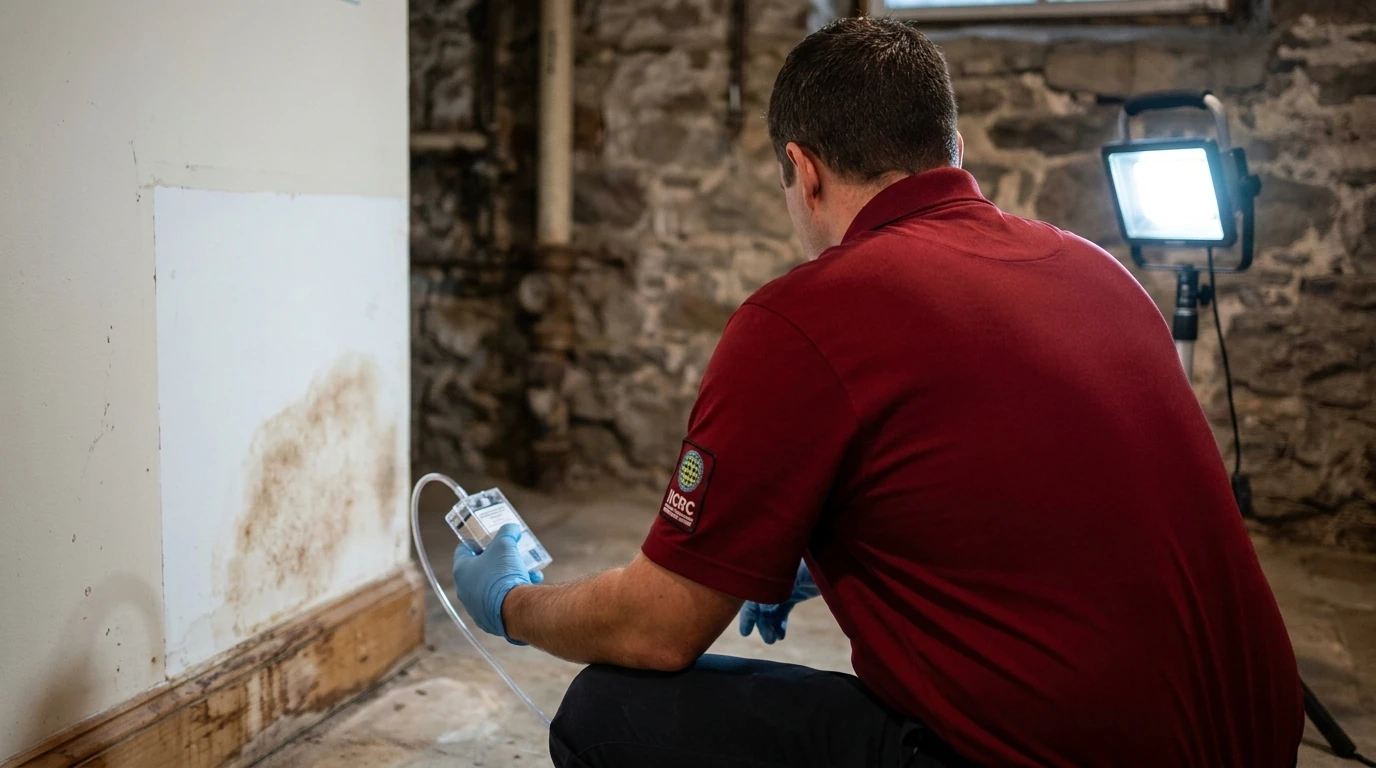
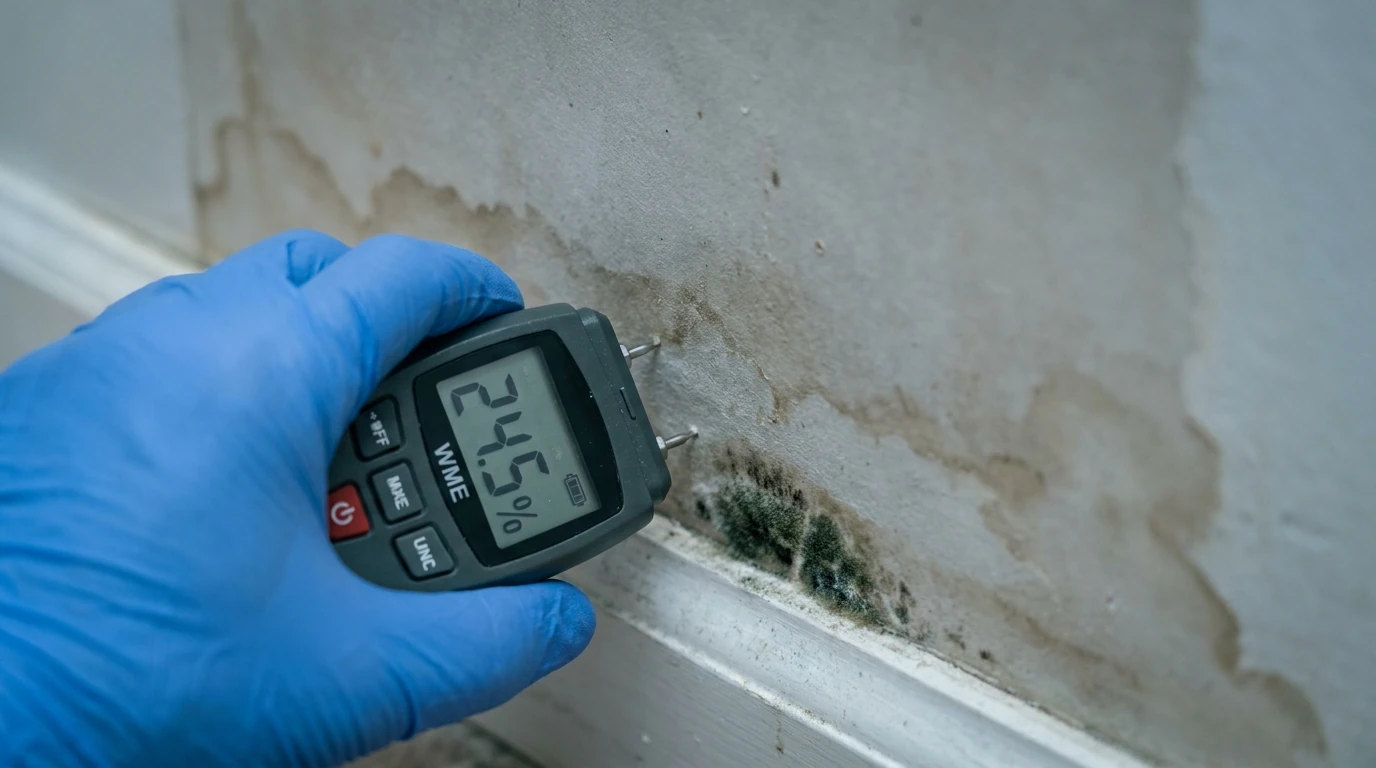
A professional inspection typically includes air or surface sampling, a moisture survey with a meter to map how far water has traveled, and a written remediation plan before any work starts. Containment (sealed plastic barriers and negative air pressure) keeps spores from spreading to the rest of the house during removal, which is a step DIY cleaning almost never includes. Crew Restoration & Construction handles mold inspection and remediation for homes across Sioux Falls, with crews wearing protective gear and taking steps to prevent cross-contamination during removal. If you want to see what a completed mold job actually looks like, the case study on structural repair and mold remediation for a Sioux Falls homeowner shows the process start to finish.
If you’re dealing with ongoing symptoms and a musty smell you can’t source, getting an inspection scheduled is a more productive next step than researching symptoms online. A clear answer, one way or the other, ends the guessing.
About Crew Restoration & Construction
Crew Restoration & Construction is an IICRC-certified company (license #3814) serving Sioux Falls, SD and the surrounding region since 2015. The team handles mold inspection and testing, mold remediation, water damage restoration, fire and smoke restoration, and related reconstruction work for homeowners and commercial properties across the metro.
Need help now? Call Crew Restoration & Construction at (605) 965-2727.