TL;DR: In South Dakota, biohazard cleanup typically costs $1,500 to $10,000, depending on the type of contamination, how many rooms are affected, and how much porous material (carpet, drywall, subfloor) has to be removed and disposed of as regulated waste. A small, contained job in one room usually lands near the lower end. A sewage backup or biological spill that spreads across a basement or multiple rooms, and requires tear-out, pushes toward the upper end.
If you’re standing in a Sioux Falls basement or bathroom looking at the aftermath of a sewage backup, an injury, or an animal-waste situation and wondering what a professional cleanup crew is going to charge, the honest answer is a range, not a flat number. What moves the price for your specific job is mostly three things: what the contamination actually is, how much square footage it touched, and how much material has to be removed versus just cleaned and disinfected in place.
How Much Does Biohazard Cleanup Cost in Sioux Falls, SD?
Most Sioux Falls biohazard cleanups fall between $1,500 and $10,000, with the midpoint for a typical single-area job landing around $3,000 to $5,000. The table below breaks out typical scenarios.
| Scenario | Typical Cost Range |
|---|---|
| Contained cleanup, single room, under 100 sq ft (blood or bodily fluid on non-porous surfaces) | $1,500 - $3,000 |
| Sewage backup, one bathroom or basement area, Category 3 water | $2,500 - $5,000 |
| Multi-room contamination requiring carpet, pad, drywall, or subfloor removal | $4,000 - $7,500 |
| Larger-scale contamination (whole basement level, significant structural tear-out) | $6,000 - $10,000+ |
| Regulated biohazard waste disposal and transport (add-on) | $300 - $800 |
| Containment setup and air scrubbing for larger jobs (add-on) | $500 - $1,500 |
These are typical industry ranges for the Sioux Falls and southeastern South Dakota market, not a quote. Every job gets a written scope before work starts, because the real cost depends on what’s actually behind the walls and under the flooring once containment goes up.
What Factors Drive the Cost of Biohazard Cleanup?
Four things move the number more than anything else: what the contaminant is, how far it spread, what materials absorbed it, and how fast the job started.
Contamination type. A sewage backup is classified as Category 3, or “black water,” under the ANSI/IICRC S500 standard, meaning it’s treated as grossly contaminated and everything it touched gets evaluated for removal rather than just drying. Blood, bodily fluid, or animal waste cleanups follow bloodborne-pathogen handling protocols regardless of square footage, which affects labor time and disposal cost more than it affects materials.
Square footage and spread. A contained spill in one bathroom costs far less than a sewage backup that traveled across a finished basement in an older McKennan Park or Cathedral Historic District home with a single low drain point.
Materials affected. Non-porous surfaces like tile, sealed concrete, or metal can often be cleaned and disinfected in place. Porous materials, carpet, carpet pad, drywall, insulation, and subflooring, usually have to be cut out and discarded, because they can’t be fully decontaminated. Tear-out and disposal are where the biggest cost swings happen.
Response time. The longer contamination sits, the more it spreads into porous material and the more has to come out. A same-day response on a sewage backup or spill almost always costs less than one left for a few days.
Does Homeowners Insurance Cover Biohazard Cleanup?
It depends on the cause, not the cleanup itself. Most homeowners policies cover biohazard cleanup when it results from a sudden, accidental event, like a sewer backup or an accidental injury, but many policies specifically exclude sewer and drain backups unless you’ve added a backup endorsement.
According to the Insurance Information Institute, standard homeowners coverage is built around sudden and accidental damage, which is why documentation matters: photos of the affected area before cleanup starts, a written scope of work, and an itemized invoice that separates labor, disposal, and materials. That paperwork is what an adjuster needs to process the claim, and it’s worth asking your cleanup company to provide it as a standard part of the job rather than an afterthought.
What Happens During a Professional Biohazard Cleanup?
A biohazard cleanup follows a set sequence, regardless of the specific contaminant, because the goal is the same: remove the hazard, decontaminate the space, and confirm it’s safe to reoccupy.
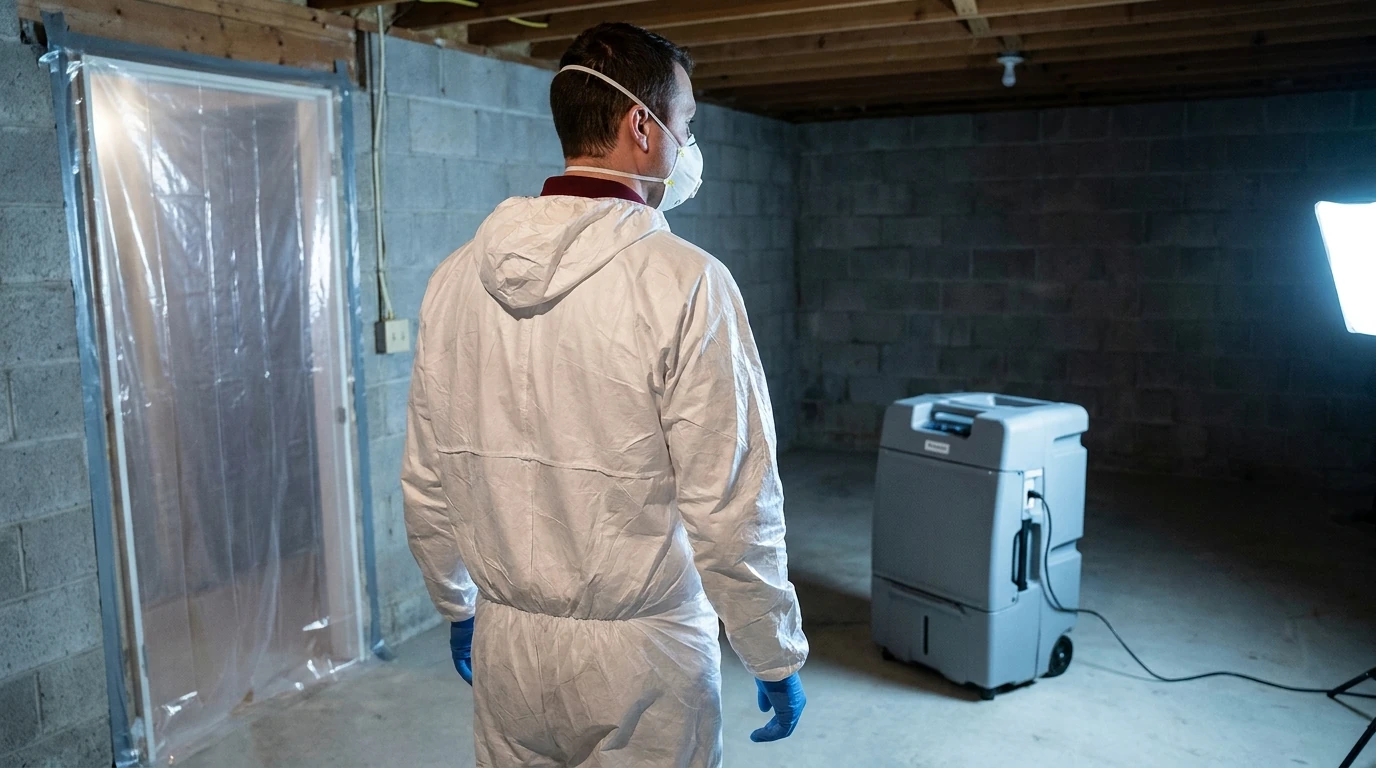
- Assessment and containment. The crew evaluates the extent of contamination and seals off the work area with poly sheeting to stop cross-contamination into clean parts of the house.
- PPE and site prep. Technicians suit up in Tyvek, respirators, and double gloves per OSHA’s bloodborne pathogen standard, and staging areas go in for clean versus contaminated equipment.
- Removal of contaminated materials. Porous materials that can’t be fully disinfected, carpet, pad, affected drywall, come out and go into sealed, labeled biohazard waste containers for proper disposal.
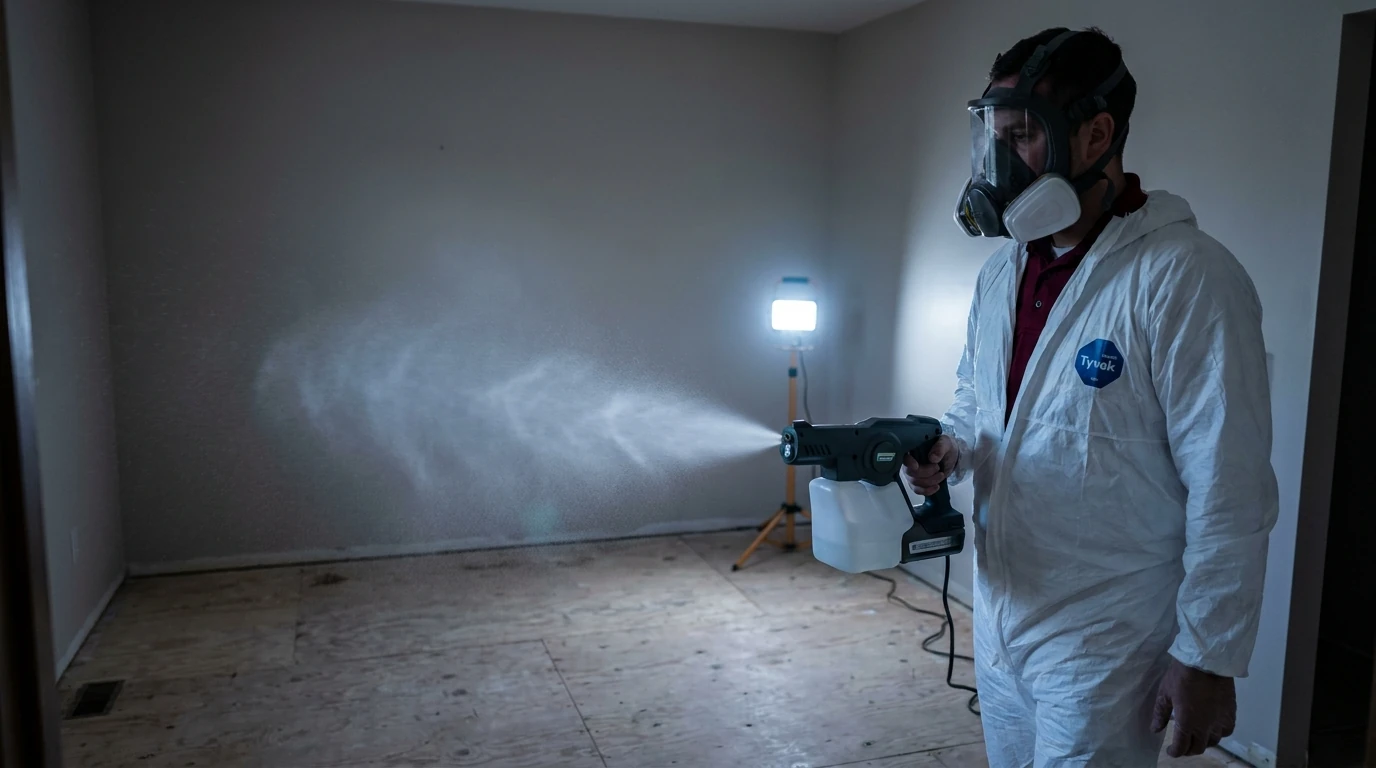
- Cleaning and disinfection. Remaining surfaces are cleaned with EPA-registered disinfectants appropriate for the contaminant, often applied with electrostatic sprayers for even coverage in hard-to-reach areas.
- Deodorization and drying. Air scrubbers and, when needed, dehumidifiers run to clear odor and residual moisture, especially after a sewage event.
- Final check. The crew does a visual and, when warranted, a verification pass before clearing the space for normal use.
For details specific to the sewage side of this work, see how sewage cleanup is scoped and priced separately from standard biohazard jobs.
Who Should You Call for Biohazard Cleanup in Sioux Falls?
For a biohazard situation in Sioux Falls, look for a crew that’s IICRC certified, insured, and set up to handle regulated waste disposal correctly, since an incomplete cleanup can leave contamination behind in subfloors or wall cavities. Crew Restoration & Construction is a locally based, IICRC-certified team founded in 2015, licensed under South Dakota license #3814, available 24/7, with a 4.9-star Google rating across 647 reviews. You can see how a similar environmental cleanup played out in a recent Sioux Falls case study.
Before work starts, ask for a written scope that separates labor, materials removed, and disposal fees, and confirm the crew will document the job for your insurance file whether or not the claim is covered.
A clear scope up front is what keeps a biohazard cleanup from turning into a surprise invoice later. Request a biohazard cleanup estimate by calling (605) 965-2727, or submit details through the contact page and describe what you’re dealing with so the crew can plan containment before they arrive.
About Crew Restoration & Construction
Crew Restoration & Construction is an IICRC-certified company serving Sioux Falls, SD and the surrounding region since 2015, operating under South Dakota license #3814. Their crews handle biohazard cleanup, sewage cleanup, water and fire damage restoration, mold remediation, and reconstruction across Sioux Falls, Brookings, Brandon, and the broader southeastern South Dakota, southwest Minnesota, and northwest Iowa service area.