TL;DR: The best commercial mold remediation company in Sioux Falls, SD trains technicians to the IICRC S520 standard, follows the EPA’s guidance for mold remediation in schools and commercial buildings, and uses phased containment so your tenants, staff, or customers can keep the rest of the building running. Just as important: they hand over the air-quality results, clearance testing, and photo documentation your insurer and your own liability file will need, and they can rebuild what gets removed without bringing in a second contractor.
If you manage an office building near Falls Park or a restaurant kitchen downtown and someone just reported a musty smell near the walk-in cooler, you’re not shopping for the cheapest bid. You need a vendor who can scope the job correctly, contain it so the dining room or the floor above stays open, and leave you with paperwork that holds up if an insurer, a health inspector, or a tenant’s attorney ever asks questions. Here’s what separates a qualified commercial remediation company from a crew that only does houses.
What Certifications Should a Commercial Mold Remediation Company Hold?
Look for technicians trained to the ANSI/IICRC S520 Standard for Professional Mold Remediation, the industry’s reference protocol for containment, negative air pressure, and post-remediation verification. A company that cites S520 by name, rather than a vague “certified” claim, usually has the actual training behind the containment plan they propose.
The EPA’s mold remediation guide for schools and commercial buildings is the other document worth asking about. It lays out containment levels by square footage and sets expectations property managers can hold a contractor to, things like negative air machines for larger jobs and limited access to the work area while it’s open. A company that references both S520 and the EPA guide in its proposal is speaking the same language your insurer and your facilities team will expect.
How Does Phased Containment Keep a Business Open During Remediation?
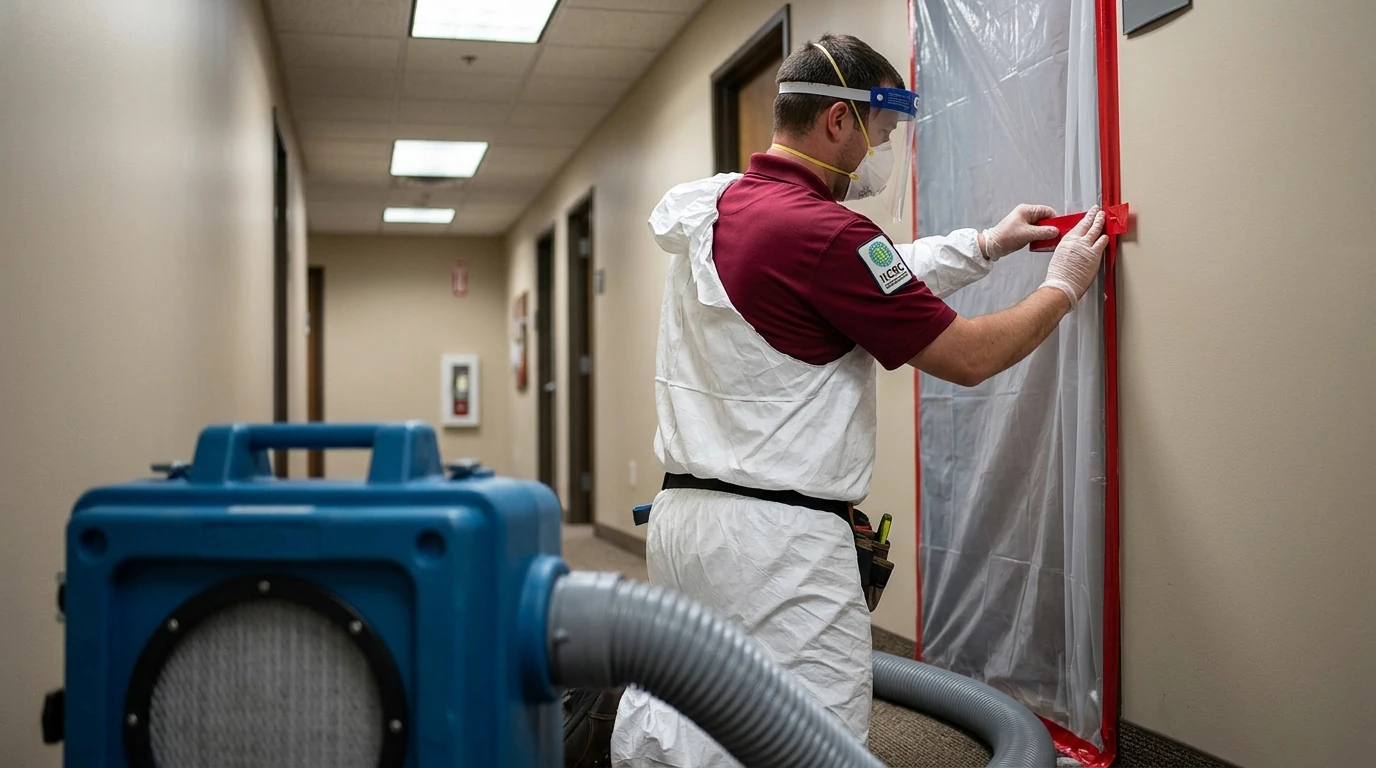
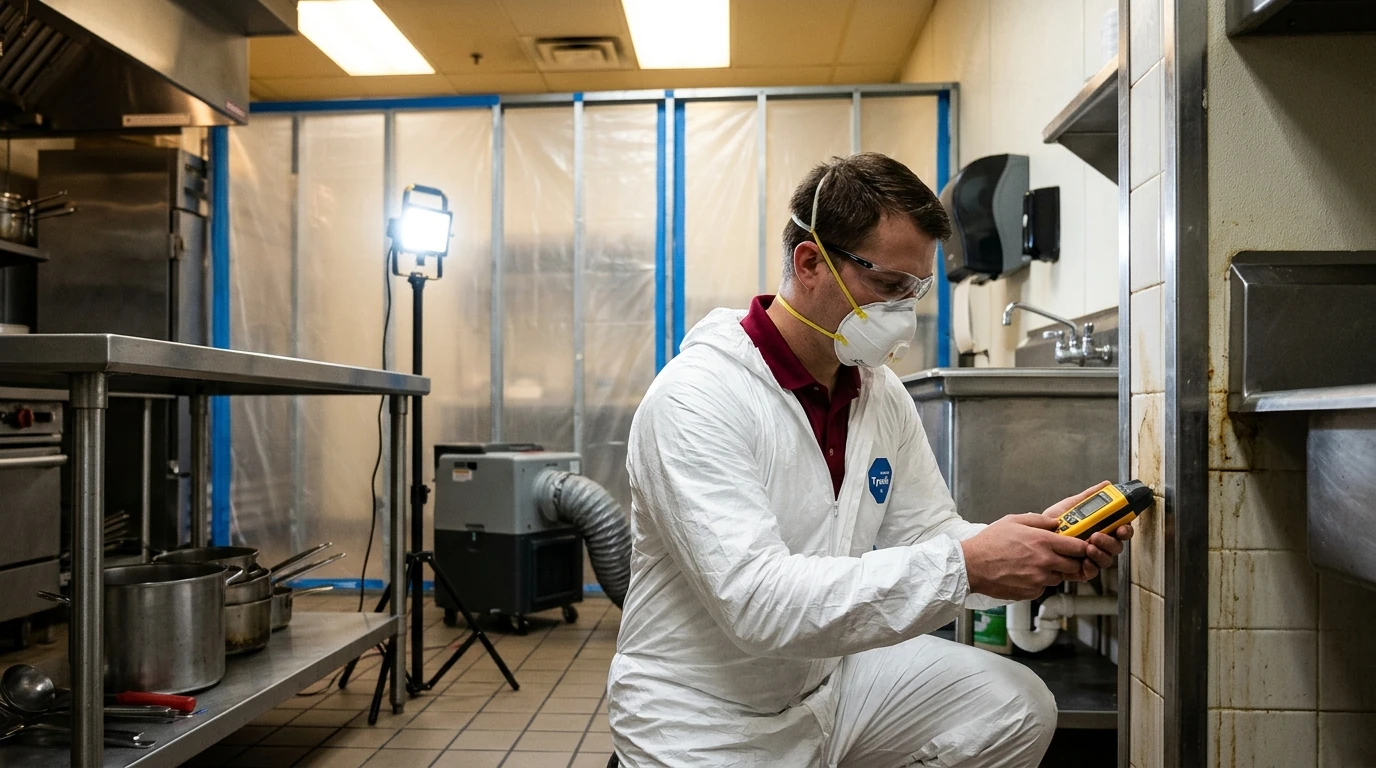
Phased containment means the crew isolates one section of the building at a time behind poly sheeting and negative air machines, so the rest of the space keeps operating while that section is worked on. For a restaurant, that might mean the kitchen closes for the containment phase while the dining room stays open; for an office building, it might mean one floor or wing is sealed off at a time.
Ask specifically whether the company will work after business hours or overnight for the noisiest or dustiest phases, like demolition of affected drywall or ceiling tile. A crew used to commercial work plans around your operating hours instead of asking you to close.
Our mold remediation and commercial restoration teams follow this phased approach on office buildings and food-service spaces, which is the same angle we covered in what to do about mold issues in a restaurant kitchen if that’s the type of space you’re managing.
What Documentation Should the Company Hand Over for Insurance and Liability?
A commercial mold remediation company should provide a written scope of work before starting, then a closing package once the job is done: pre- and post-remediation photos, air-quality or clearance testing results if sampling was used, a log of materials removed, and itemized invoices that match standard insurance claim categories.
This matters for two reasons. First, homeowners and commercial property policies typically limit mold coverage and usually only pay out when the mold traces back to a sudden, covered loss like a burst supply line, not long-term moisture or a maintenance issue, so your insurer will want proof of cause and extent before approving anything (see the Insurance Information Institute’s overview of what standard policies cover for the general pattern commercial policies tend to follow). Second, if a tenant or employee later raises a health concern, clearance documentation is what shows the space was verified clean before reoccupancy.
What Should Property Managers Ask Before Signing a Contract?
Before you sign anything, get straight answers to these questions:
- Are the technicians trained to the IICRC S520 standard specifically, not just general water or fire restoration certifications?
- Will the work be phased so the building, or at least part of it, stays open?
- Does the proposal include a written scope of work and a closing documentation package?
- Can they provide clearance testing, or coordinate with a third-party indoor air quality tester, before you sign off on reoccupancy?
- Do they handle the reconstruction (drywall, ceiling tile, cabinetry) in-house, or will you need a second contractor once the moldy materials are removed?
- Who is the single point of contact for updates while the building has an active containment zone?
A contractor who answers all six without hedging is usually the one who has done this at commercial scale before, not just in single-family basements.
If your building needs mold remediation and you want a crew that handles the containment, the documentation, and the rebuild under one contract, call Crew Restoration & Construction at (605) 965-2727 to schedule a commercial mold assessment. If the same building also has an open water damage claim, our commercial water damage checklist covers the same vetting questions for that side of the job.
About the Company
Founded in 2015, Crew Restoration & Construction is an IICRC-certified company (license 3814) based in Sioux Falls, SD, serving the Sioux Empire including Brandon, Tea, Harrisburg, and Dell Rapids. The team handles mold remediation, mold inspection and testing, commercial restoration, water and fire damage restoration, and reconstruction, holding a 4.9 average rating across 630 Google reviews as of late 2026.