
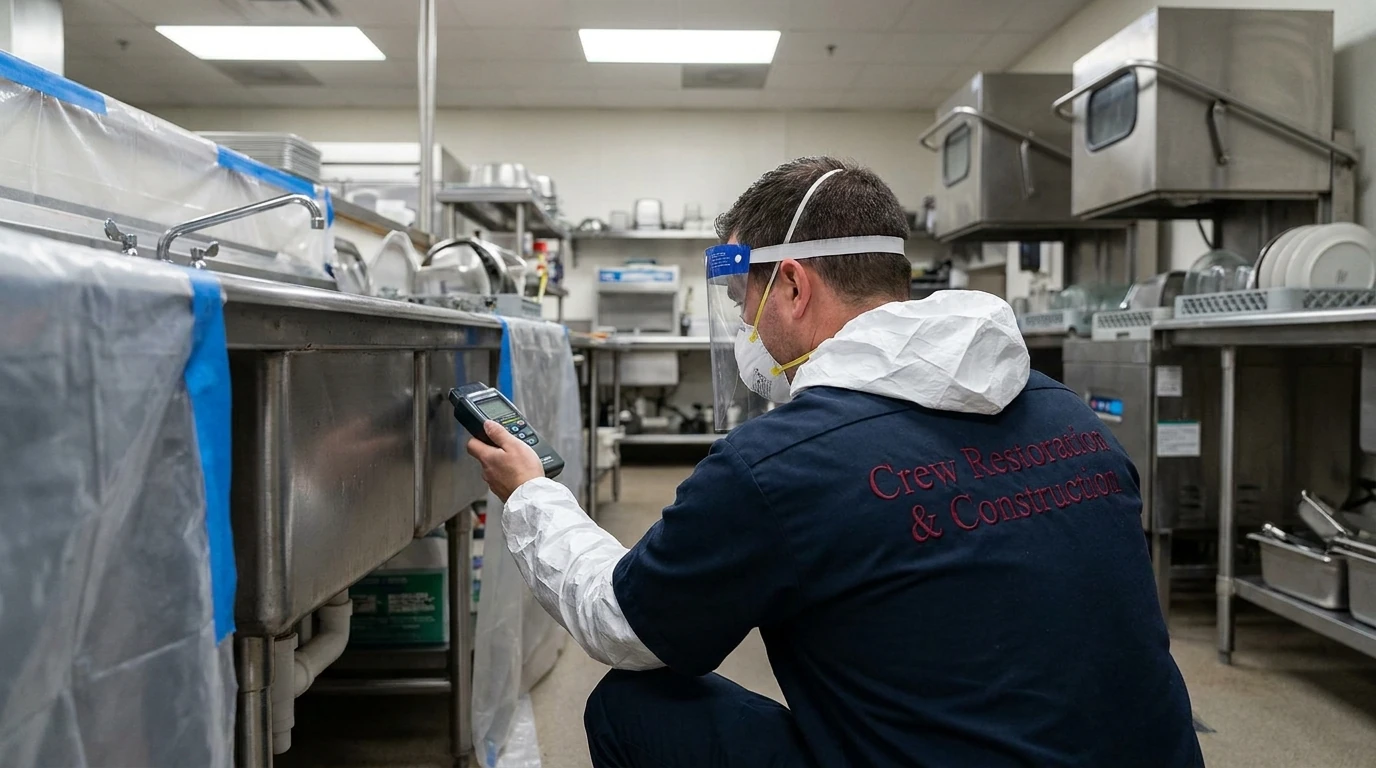
TL;DR: Mold in a restaurant kitchen most often grows under sinks, behind walk-in coolers, inside dish pits, and in pantries and storage rooms where humidity stays high and airflow is poor. A health inspector who finds it can fail the inspection, and failing can mean a shutdown. The fix is professional mold remediation, not a spray bottle and a rag, because disturbing mold without containment spreads spores through the HVAC system into the dining room. Keeping indoor humidity between 30 and 50 percent and scheduling routine inspections is what keeps it from coming back.
If you manage a restaurant and just spotted a dark patch behind the ice machine or under the three-compartment sink, you already know what’s at stake: a failed health inspection, a shutdown order, and lost revenue while you figure out what to do. Commercial kitchens are built for exactly the conditions mold needs, warm, wet, and humid air trapped in tight spaces around appliances. Here’s what actually needs to happen before an inspector finds it for you.
Where does mold actually hide in a restaurant kitchen?
Mold in a commercial kitchen hides in the spots nobody deep-cleans every shift: under sinks, behind refrigeration units, and inside storage areas with poor air circulation. These are the areas a health inspector checks first, and the areas restaurant staff check last.
The most common spots to check are:
- Under prep sinks and three-compartment sinks, where slow drips go unnoticed for weeks
- Behind and underneath walk-in freezers and reach-in coolers, where condensation collects against the wall
- Inside dry storage pantries, especially if the room shares a wall with a dishwashing area
- Around and under the dish machine, where steam and standing water are a daily event
- In employee bathrooms and back-of-house storage rooms with no exhaust fan
- Inside or around ductwork near microwaves and steam equipment
Mold is airborne. It might start in the kitchen, but it won’t take long for it to make its way into the public space, which is where the risk to your customers comes in.
How do you get rid of mold in a commercial kitchen safely?
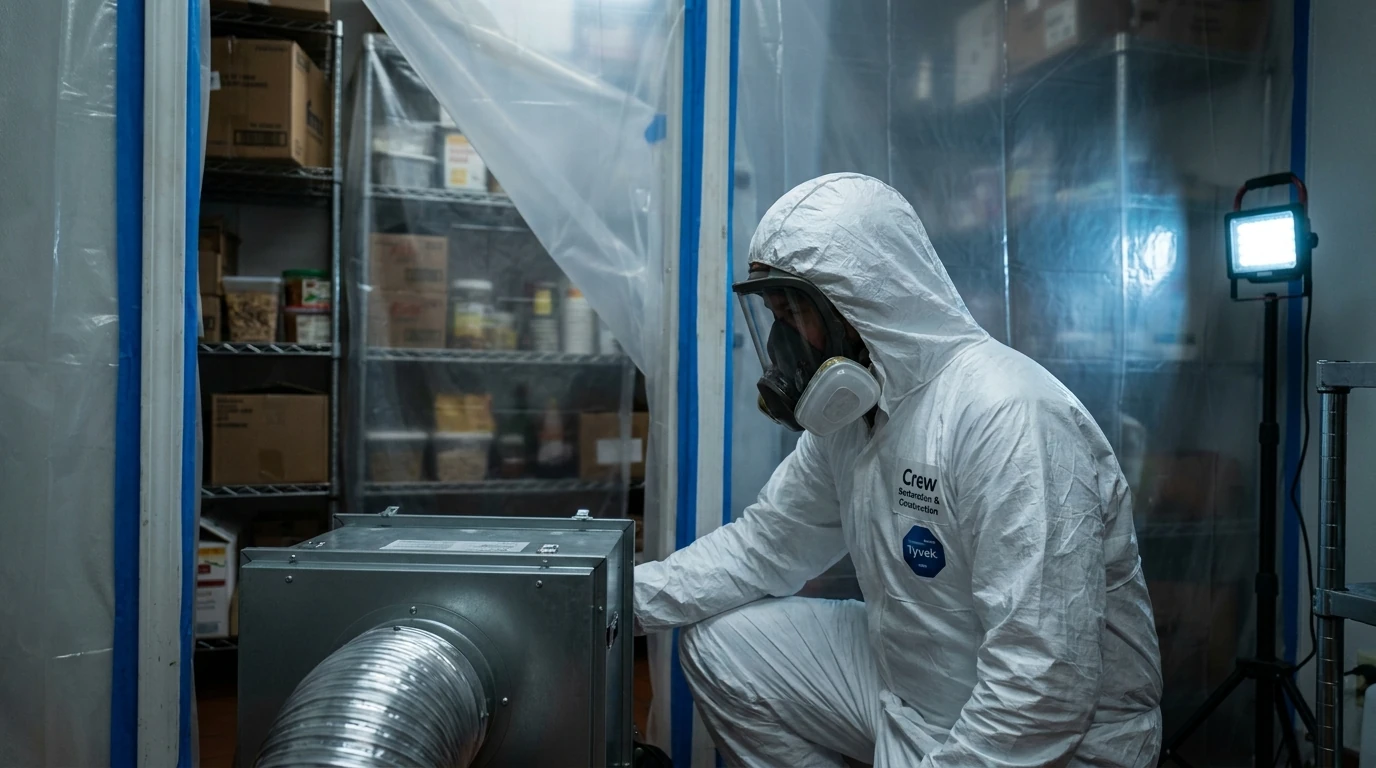
Mold removal in a working kitchen needs containment, not a quick wipe-down, because disturbing a colony without sealing off the area releases spores into the air you’re still cooking food in. That’s the reason restaurant owners call a remediation crew instead of handling it with the nightly cleaning staff.
A proper job starts with an inspection to find the source of moisture, not just the visible mold. A leaking supply line under a sink or a condensation line dripping behind a cooler will grow the problem back if nobody fixes it. Professional remediation follows the IICRC S520 standard for mold remediation: isolate the affected area with containment barriers, run HEPA air scrubbers to control airborne spores, remove and dispose of porous materials that can’t be cleaned, and treat remaining surfaces with antimicrobial solutions before anyone opens the containment back up.
Handling it in-house, especially with bleach and a sponge, tends to make things worse. Bleach doesn’t penetrate porous surfaces like drywall or subflooring, and scrubbing a colony without containment is how a sink-cabinet problem becomes a walk-in and dining room problem. If you’re not sure whether what you’re looking at is actually mold, our mold testing and inspection service can confirm it and tell you how far it’s spread before anyone starts cutting into cabinetry.
How do you keep mold from coming back in a commercial kitchen?
Prevention comes down to controlling humidity, fixing overlooked spaces, and running ventilation that actually keeps up with a working kitchen. Most repeat mold problems in restaurants trace back to one of these three things being ignored after the first cleanup.
A few specifics that matter:
- Keep indoor humidity between 30 and 50 percent. The EPA cites this range as the threshold that slows mold growth indoors. A cheap hygrometer in the back of house tells you in seconds if you’re over it.
- Check the spaces an inspector would check, not just the line. Floors, ceiling tiles, wall cavities near plumbing, and inside duct runs are where mold establishes before anyone notices a smell.
- Run kitchen exhaust hoods and make-up air systems as designed. A kitchen built for proper ventilation but running an undersized or clogged hood system traps moisture exactly where cooking happens.
- Schedule routine inspections instead of waiting for a health inspector to find a problem. Having the restaurant inspected on a routine basis lets you take care of issues before they get out of hand.
Owners put most of their attention into the dining room, the menu, the atmosphere. The back of house is where the actual risk to the business sits. Our post on 7 signs you have hidden mold covers the early warning signs worth checking for on a weekly basis, even if nothing looks wrong yet.
When does a mold problem need a professional instead of the cleaning crew?
A mold problem needs a professional the moment it covers more than a small, easily visible patch, returns after cleaning, or you can’t identify where the moisture is coming from. At that point, a cleaning crew with bleach is treating a symptom, not the cause.
Crew Restoration & Construction handles mold remediation for homes and businesses across Sioux Falls. If you’re dealing with a mold problem in a kitchen, dish area, or storage room right now, call Crew Restoration & Construction at (605) 965-2727 to schedule an inspection before a health inspector finds it first. Our team is available 24/7 for jobs that can’t wait for a Monday morning callback.
A restaurant can’t afford to guess on this one: mold doesn’t stay contained to the one cabinet where you first saw it.
About Crew Restoration & Construction
Crew Restoration & Construction is an IICRC-certified restoration company serving Sioux Falls, SD and the surrounding region since 2015 (license #3814). Their crews handle mold inspection, testing, and remediation along with water, fire, and storm damage restoration for homes and commercial properties across the Sioux Falls metro.