TL;DR: In Sioux Falls, SD, asbestos abatement typically costs $1,500 to $4,500 for a single room (popcorn ceiling, floor tile, or pipe wrap) and $8,000 to $20,000 or more for a whole-house or commercial job. Testing a suspect material first runs $10 to $50 per lab sample, or $300 to $950 for a full inspection. The biggest cost drivers are material type, square footage, and whether the area needs full containment with negative air pressure.
If you just pulled up a corner of 9x9 vinyl floor tile in a McKennan Park bungalow, or a contractor stopped mid-remodel in the Cathedral Historic District because the popcorn ceiling “might be ACM,” you’re probably trying to figure out what this is actually going to cost before you commit to anything. Sioux Falls has a lot of housing stock built before 1980, when asbestos-containing floor tile, ceiling texture, and pipe insulation were standard materials. The good news: once a lab confirms what you’re dealing with, pricing follows a predictable pattern.
How much does asbestos abatement cost in Sioux Falls?
Most homeowners in the Sioux Falls area pay between $1,500 and $4,500 for a contained, single-area abatement job, such as one room of popcorn ceiling or a kitchen and hallway of floor tile. Larger projects, like a full basement with pipe insulation and floor tile, or a commercial building, typically run $8,000 to $20,000 and up.
The spread is wide because abatement pricing scales with square footage, the type of material, and how much containment and disposal the job requires. A single bathroom’s worth of asbestos floor tile is a different project than stripping pipe insulation through an entire mechanical room.
| Scenario | Typical Cost Range |
|---|---|
| Asbestos lab sample (per sample) | $10 - $50 |
| Full home inspection with multiple samples | $300 - $950 |
| Popcorn ceiling removal (per sq ft) | $3 - $7 |
| Vinyl floor tile and mastic removal (per sq ft) | $2 - $7 |
| Pipe insulation removal (per linear ft) | $5 - $15 |
| Small single-room abatement | $1,500 - $4,500 |
| Whole-house or commercial abatement | $8,000 - $20,000+ |
What drives the price up or down?
The price depends mostly on whether the material is friable, how much square footage is affected, and what disposal and containment the job legally requires. Non-friable material (floor tile that’s still intact, for example) is generally less expensive to abate than friable material (crumbling pipe wrap or textured ceiling that releases fibers when disturbed) because friable asbestos demands stricter containment.
A few specifics that move the number:
- Material type. Pipe insulation and sprayed-on ceiling texture are usually friable and require full negative-pressure containment. Floor tile and mastic are usually non-friable and can sometimes be abated with lighter controls, which costs less.
- Square footage and number of layers. Older Sioux Falls homes sometimes have two or three layers of flooring stacked over the original asbestos tile. Each layer adds labor time.
- Containment setup. A job requiring full poly sheeting, negative air machines, and a decontamination chamber costs more than a smaller job that can be isolated with simpler controls.
- Disposal fees. Asbestos waste is regulated and has to go to a licensed disposal facility with a manifest trail, which adds a line item most people don’t expect.
- Air clearance testing. A third-party clearance sample after the work is done (confirming the area is safe to reoccupy) typically adds a few hundred dollars but is a standard part of a legitimate abatement job, not an upsell.
If your project was flagged during a popcorn ceiling removal, our guide to replacing popcorn ceilings covers what to expect if the texture does come back clean.
Does insurance cover asbestos removal?
A standard homeowners policy usually does NOT cover asbestos abatement on its own, because removing an aging building material is considered maintenance, not sudden damage. Insurers generally treat this the same way they treat other wear-and-tear exclusions, as described in the Insurance Information Institute’s overview of what homeowners policies cover.
Where coverage sometimes applies is when asbestos-containing material has to be disturbed or removed because of a covered loss, such as fire damage that requires tearing out a wall with asbestos-wrapped pipe behind it, or storm damage that exposes insulation. In those cases, the abatement cost may be rolled into the claim as part of the repair, though every policy and adjuster handles this differently.
Because coverage depends so heavily on the cause of the damage, it’s worth asking your adjuster directly whether abatement tied to a covered loss is included, and getting that answer in writing before work starts.
What does the testing and removal process actually look like?
The process runs in a fixed sequence: test first, then abate under containment, then confirm with clearance testing, then rebuild. Skipping the testing step is the most common and most expensive mistake, since you can’t scope or price a job until a lab confirms what’s actually in the material.
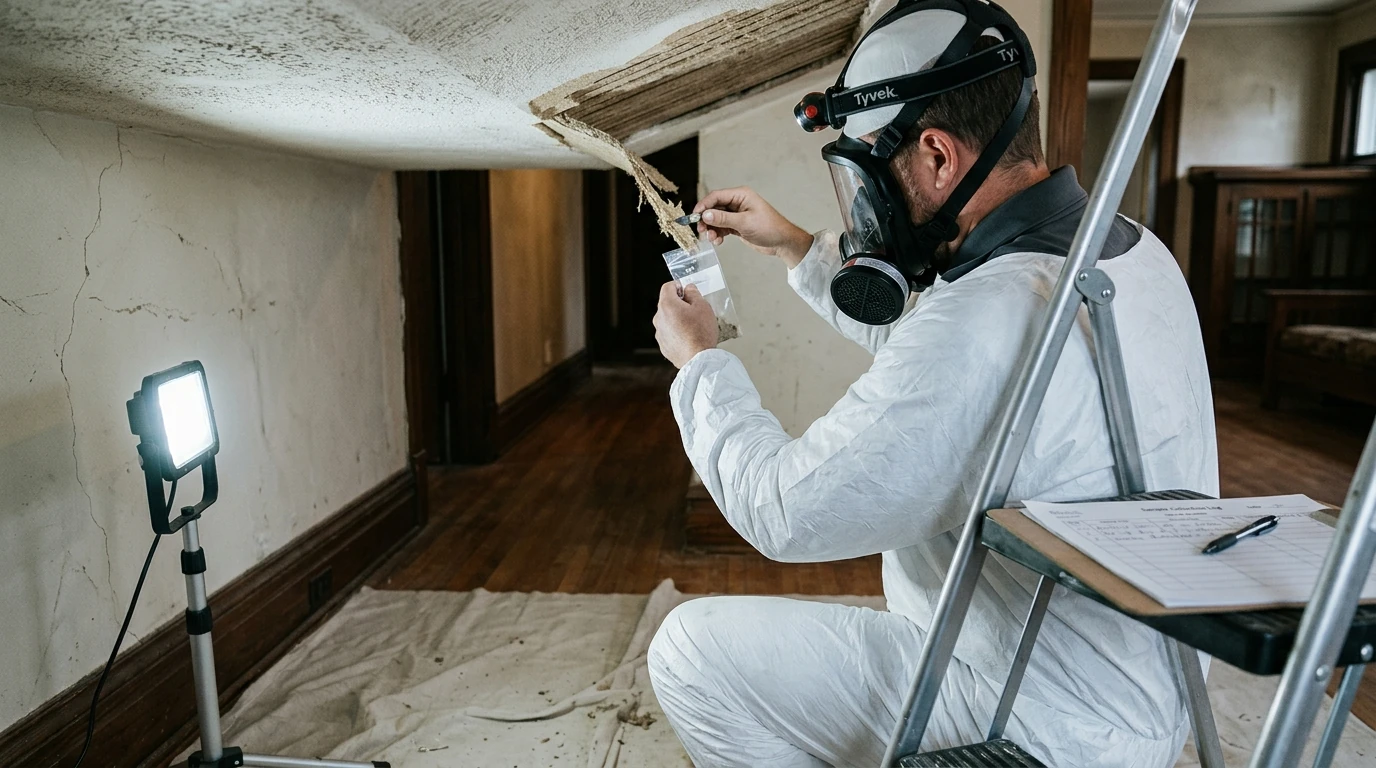
- Sampling and lab analysis. A technician collects small samples of the suspect material (floor tile, ceiling texture, pipe wrap) and sends them to an accredited lab. Results typically take a few business days.
- Written scope and containment plan. If the lab confirms asbestos, the abatement plan specifies the containment method, the PPE level, and the disposal plan before anyone touches the material.
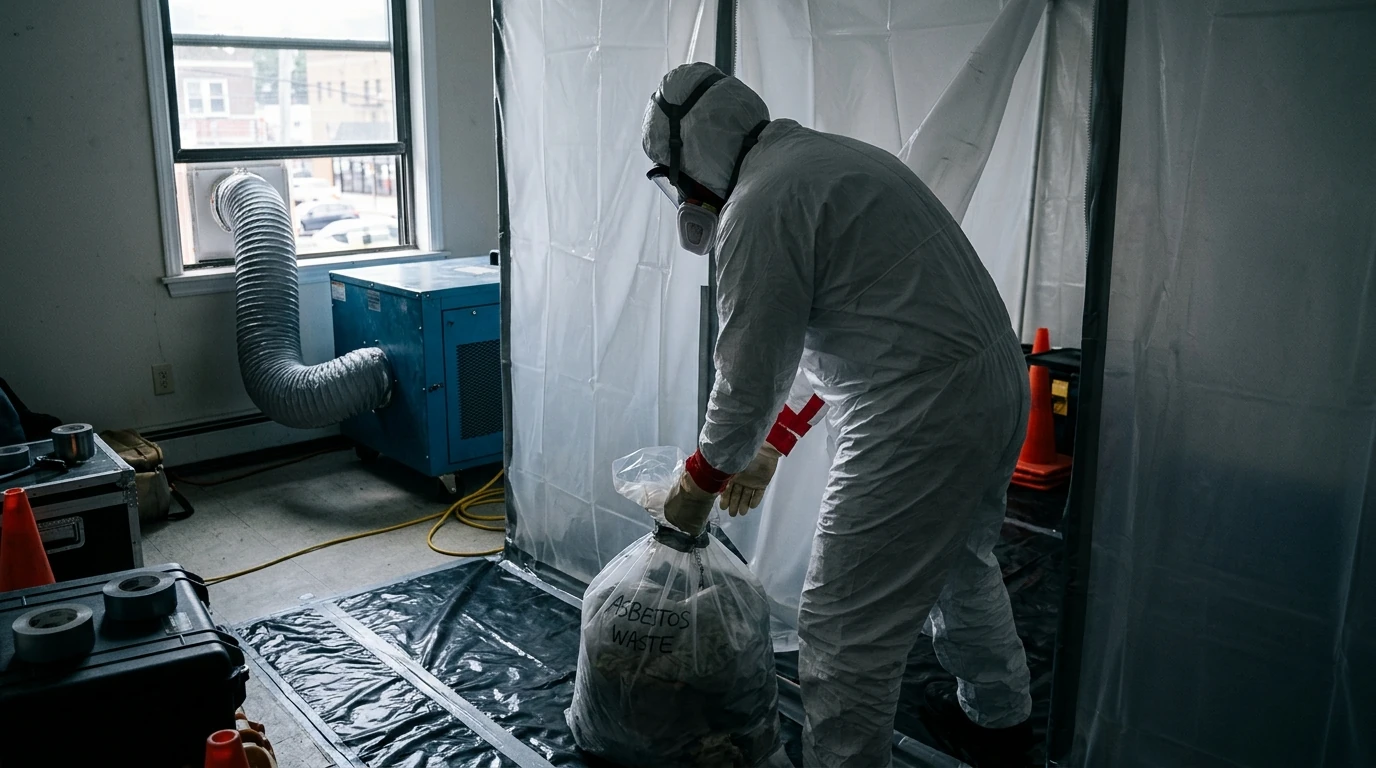
- Containment setup. Poly sheeting seals the work area; a negative air machine keeps fiber-laden air from migrating into the rest of the building.
- Removal under full PPE. Crews work in sealed Tyvek suits with P100 respirators, wetting material to limit fiber release, and bagging waste in labeled containers as it comes down.
- HEPA cleaning and clearance testing. The contained area gets HEPA-vacuumed and wiped down, then an independent clearance sample confirms air quality before containment comes down.
- Rebuild. Once the area clears, flooring, ceiling texture, or insulation gets replaced. Having the same company handle reconstruction after abatement avoids a second handoff and a second scheduling wait.
What should you do if you suspect asbestos in your home?
Stop disturbing the material and get it tested before you do anything else, including sanding, cutting, or dry-sweeping. Disturbing suspect material is what turns a simple removal into an air-quality problem, per the EPA’s asbestos guidance.
If you’re mid-renovation and a contractor has already paused work, request a written scope with the lab results attached before approving any abatement cost. Crew Restoration & Construction coordinates the testing, the abatement, and the rebuild as one sequence, which is usually faster than managing three separate vendors.
Every home and every material situation is different, and the ranges above are typical figures, not a quote. Request a written scope from Crew Restoration & Construction before any work begins, and you’ll know the real number for your specific project, not just the range.
About Crew Restoration & Construction
Crew Restoration & Construction is an IICRC-certified company (license #3814) that has served Sioux Falls, SD since 2015. Their crews handle asbestos and lead paint abatement along with the water, fire, mold, and storm restoration work that often surfaces it, followed by the reconstruction to put the space back together. Crew holds a 4.9 Google rating across 631 reviews from homeowners across the Sioux Falls metro.
Need help now? Call Crew Restoration & Construction at (605) 965-2727.