
Emergency Flood Damage Restoration in Sioux Falls
Emergency flood damage restoration in Sioux Falls and surrounding areas. IICRC-certified, insurance billing accepted. Call (605) 965-2727.
Flooding emergency in Sioux Falls? Call now for emergency service. Our crew responds fast to pump out the water and stop the damage from spreading.
Flood water rarely arrives from a single, obvious source. In Sioux Falls it’s often the Big Sioux River pushing past its banks after a fast spring thaw, or heavy rain overwhelming a window well and a sump pump that can’t keep pace. Within hours, that water carries silt, lawn chemicals, and sometimes sewage into finished basements and crawlspaces, which changes everything about how it has to be cleaned up compared to a clean supply-line leak.
What flood damage restoration actually involves
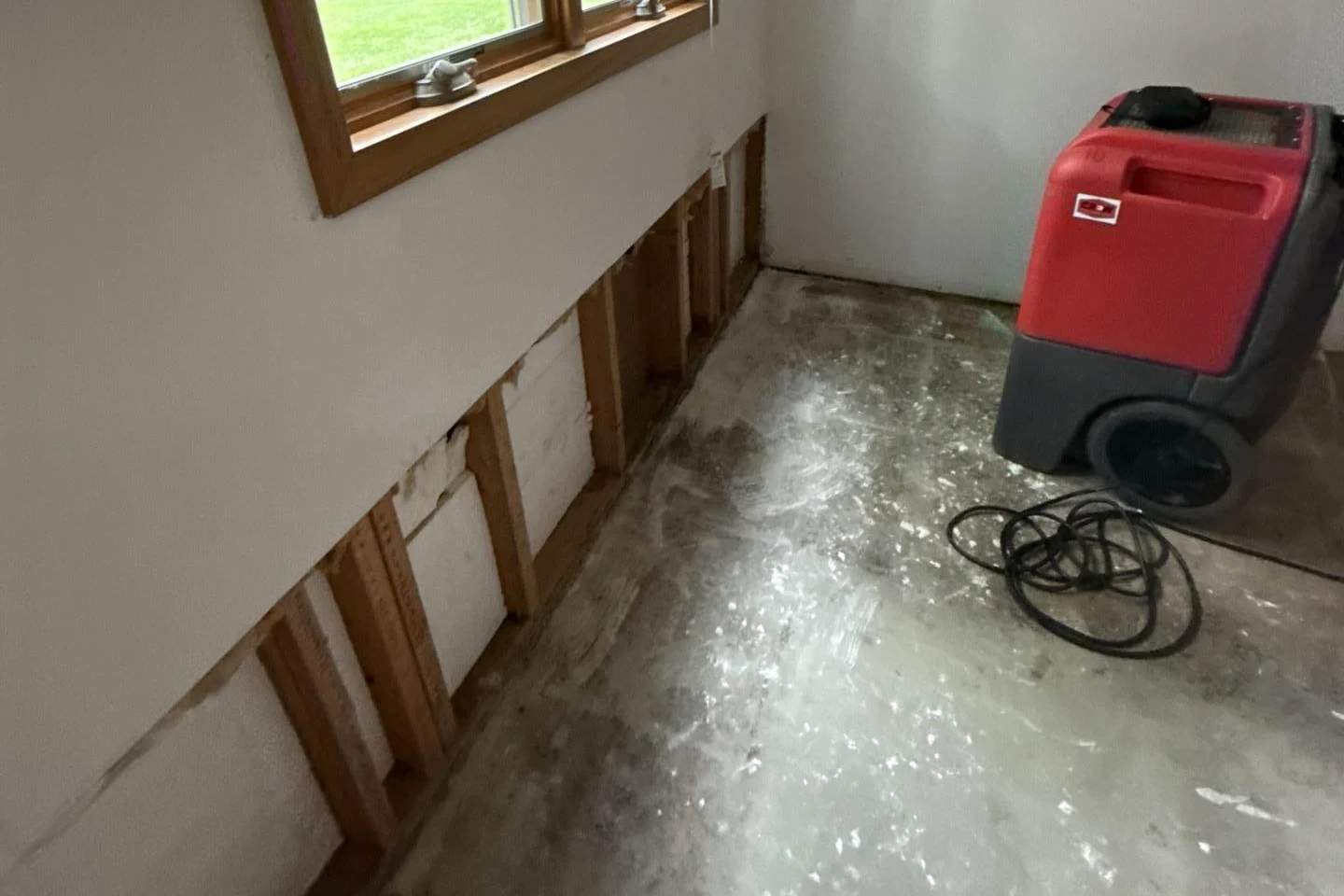
Flood water restoration starts from a different baseline than a typical water loss because the water itself is contaminated. Anything that touched river water, storm runoff, or a backed-up sewer line is treated as Category 3 water under IICRC S500 guidelines, meaning porous materials it soaked into (drywall, carpet padding, insulation, particleboard) usually can’t be dried and saved. The work involves pumping out standing water, removing the materials that can’t be salvaged, disinfecting the structure, and then running commercial dehumidification and air movement until moisture readings in the framing and subfloor return to normal. Depending on how deep the water sat and how long it was there before extraction started, that drying phase typically runs several days to just over a week, with daily moisture checks along the way.
Our process
- Safety shutoff and water categorization. Before anyone enters, we confirm electrical systems are safe and identify the water source, since river overflow, storm surface water, and sewer backup each carry different contamination risks and different documentation needs for your claim.
- Extraction and debris removal. Standing water and the silt or sediment it leaves behind get pumped and removed first, since sediment trapped under flooring or behind baseboards keeps materials wet long after the visible water is gone.
- Removal of unsalvageable materials. Drywall, insulation, carpet, and padding that absorbed contaminated water are cut out and disposed of rather than dried in place. This step is where inexperienced crews often cut corners, and it’s one of the first things an insurance adjuster checks.
- Disinfection and structural drying. Affected surfaces are treated with an antimicrobial, then dried with commercial air movers and dehumidifiers while we log moisture content daily until the structure reads dry per IICRC S500 benchmarks.
- Handoff to reconstruction. Once drying is verified, we provide a written scope for rebuilding removed drywall, flooring, or trim, so there’s no guesswork about what comes next.
What separates a good flood response from a bad one
The biggest technical mistake in flood cleanup is trying to dry materials that were exposed to Category 3 water instead of removing them. Carpet padding, in particular, holds contaminated water long after the surface looks dry, and drying it in place instead of pulling it out is a common shortcut that leads to odor and mold problems weeks later. A thorough response also documents everything: moisture readings, photos of affected materials before removal, and a clear timeline of when water entered and when extraction began, since insurance adjusters rely on that documentation to distinguish flood damage from pre-existing conditions or normal wear. Our IICRC-certified team keeps that documentation as part of the job, not as an afterthought, and our contractor’s license (#3814) covers the reconstruction work that follows.
What does flood damage restoration cost?
Costs vary widely based on how much water intruded, how long it sat, and whether the water was clean groundwater or contaminated Category 3 water requiring material removal. Every loss is different, which is why Crew Restoration & Construction provides a written scope of work before any demolition or drying begins. Homeowners insurance typically does not cover flooding from rising surface water or a river overflow unless you carry a separate flood policy, though many policies do cover sudden sewer backup or discharge if you have that endorsement.
| Scenario | Typical range |
|---|---|
| Single room, clean water intrusion | $1,500 - $4,000 |
| Crawlspace flood with insulation removal | $2,500 - $6,000 |
| Basement flood, Category 3 water, partial finish | $6,000 - $15,000 |
| Whole basement flood with contents loss, full finish | $15,000 - $40,000+ |
| Multi-level flood damage extending to main floor | $20,000 - $60,000+ |
Seasonal & regional considerations
Spring is the season to watch here. As snowpack melts fast across the region and combines with spring rain, the Big Sioux River and its tributaries can rise quickly, and Sioux Falls’s clay-heavy soil doesn’t drain that water away fast, which pushes it toward window wells and foundation cracks in older basements. Neighborhoods built before modern grading standards, along with homes near the river corridor, tend to see repeat flooding in wet years, which makes a documented, category-specific cleanup even more important for future claims.
Service area
We respond to flood damage throughout Sioux Falls and the surrounding communities, including Brandon, Tea, Harrisburg, Baltic, and Dell Rapids.
If your basement or lower level has taken on flood water, don’t wait on the drying clock. Call (605) 965-2727 to schedule your flood damage assessment and get a written scope before any work starts.
Services We Handle
- Flood Damage
- Flood Damage Cleaning
- Flood Restoration
- House Flood Emergency
Frequently Asked Questions
Does homeowners insurance cover flood damage restoration?
Why does floodwater get classified differently than a burst pipe?
What should I do with a flooded basement before help arrives?
How long does flood cleanup and structural drying usually take?
Do I need mold testing after a flood even if the water is gone quickly?
Looking for the best flood damage restoration company in Sioux Falls?
Crew Restoration & Construction provides licensed and insured flood damage restoration in Sioux Falls, SD and the surrounding area, and has served local property owners since 2015. Customers rate us 4.9 out of 5 stars across 643 Google reviews. We answer calls 24/7 — call (605) 965-2727 for immediate help.
Request a Free Flood Damage Restoration Estimate
Tell us what happened and we'll get back to you fast — usually within one business hour.
Need Flood Damage Restoration now?
We respond 24/7 across Sioux Falls and surrounding SD cities.
Related Coverage
- Our Restoration Services
- Contact Crew Restoration & Construction
- Restoration Services in Adrian
- Emergency Flood Damage Restoration in Akron
- Restoration Services in Alton
- Restoration Services in Baltic
- Restoration Services in Beresford
- Restoration Services in Brandon
- Restoration Services in Brookings
- Emergency Flood Damage Restoration in Canton
- Restoration Services in Crooks
- Emergency Flood Damage Restoration in Dakota Dunes
- Emergency Flood Damage Restoration in Dell Rapids
- Restoration Services in Edgerton