For mold in Sioux Falls, SD, call Crew Restoration & Construction at (605) 965-2727. Crew is IICRC certified, holds a 4.9-star Google rating from 632 reviews, and answers 24/7. But not every patch of mold needs a crew on day one. If what you’re looking at is smaller than about 10 square feet, roughly a card table’s footprint, EPA guidance says a homeowner can usually clean it themselves with soap, water, and good ventilation. Bigger than that, tied to a water leak, growing inside ductwork, or coming back in the same spot? That’s when you bring in a professional.
Sioux Falls homes see a predictable pattern. Finished basements near McKennan Park and Prairie Green trap humidity against framing long after a leak dries on the surface. Spring snowmelt pushes groundwater against foundations close to the Big Sioux River. Older homes near the Cathedral Historic District with single-pane or poorly sealed windows get persistent condensation on the sill every winter, and that moisture feeds mold on the surrounding trim and drywall long before anyone notices a smell.
Do you need a mold inspector or a mold remediation company?
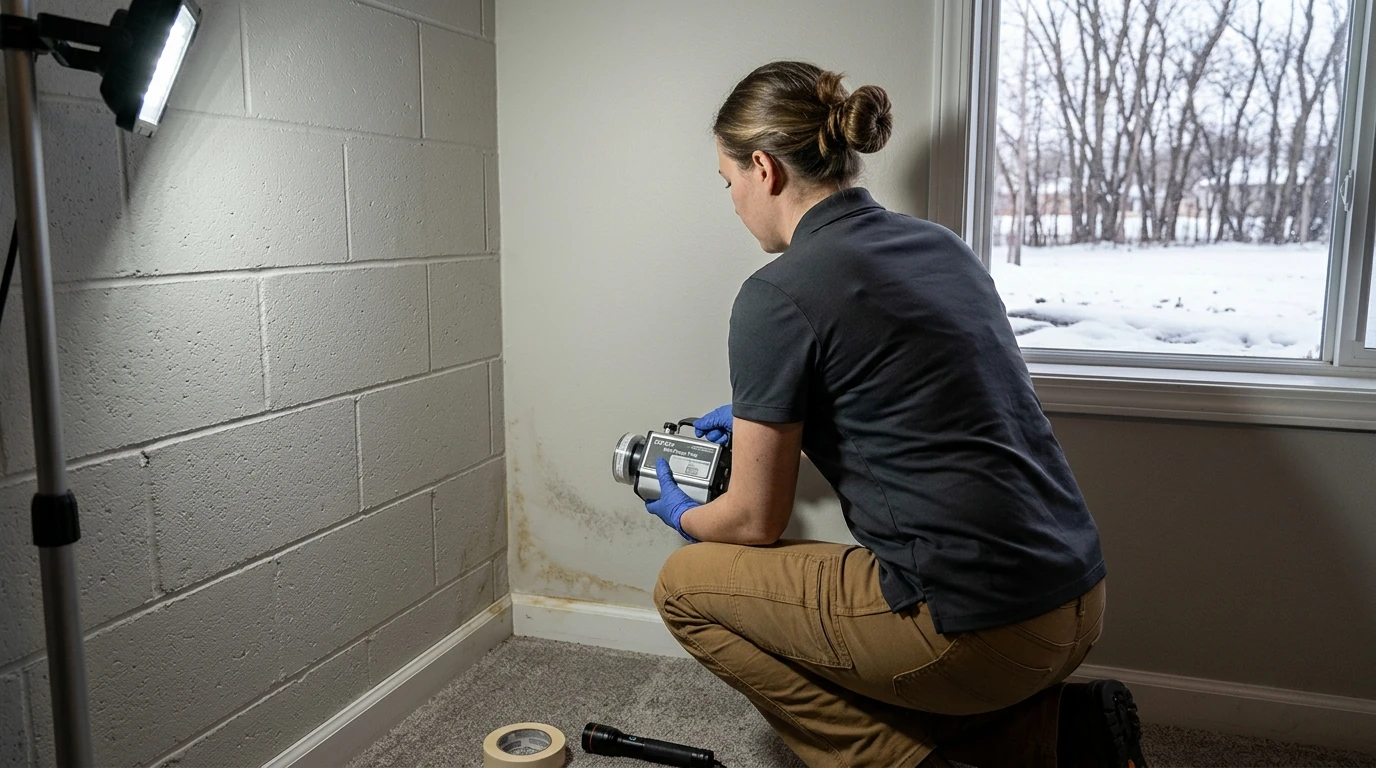
A mold inspector tests and documents what’s growing and how far it has spread; a remediation company removes it and fixes the moisture feeding it. If you can already see the mold, smell it, and know the water source, a leaking supply line, a failed sump pump, a wet window sill, you can usually skip straight to remediation. If you’re not sure whether what you’re looking at is actually mold, or you need documentation for an insurance claim, a lease dispute, or a home sale, start with an inspection.
That said, when the same company both tests and remediates, ask how they handle the handoff. A fair way to close out a job is a written clearance protocol: before-and-after moisture readings, visual documentation, and air or surface sampling that shows the area is back within normal range, not just a verbal assurance from the crew that did the work. For larger or insurance-involved jobs, a separate third-party clearance test is worth the extra cost, since it removes any question about a company grading its own work. If you’re unsure what you’re even looking at, 7 Signs You Have Hidden Mold walks through what to check before you call anyone.
When is mold remediation actually required, not optional?
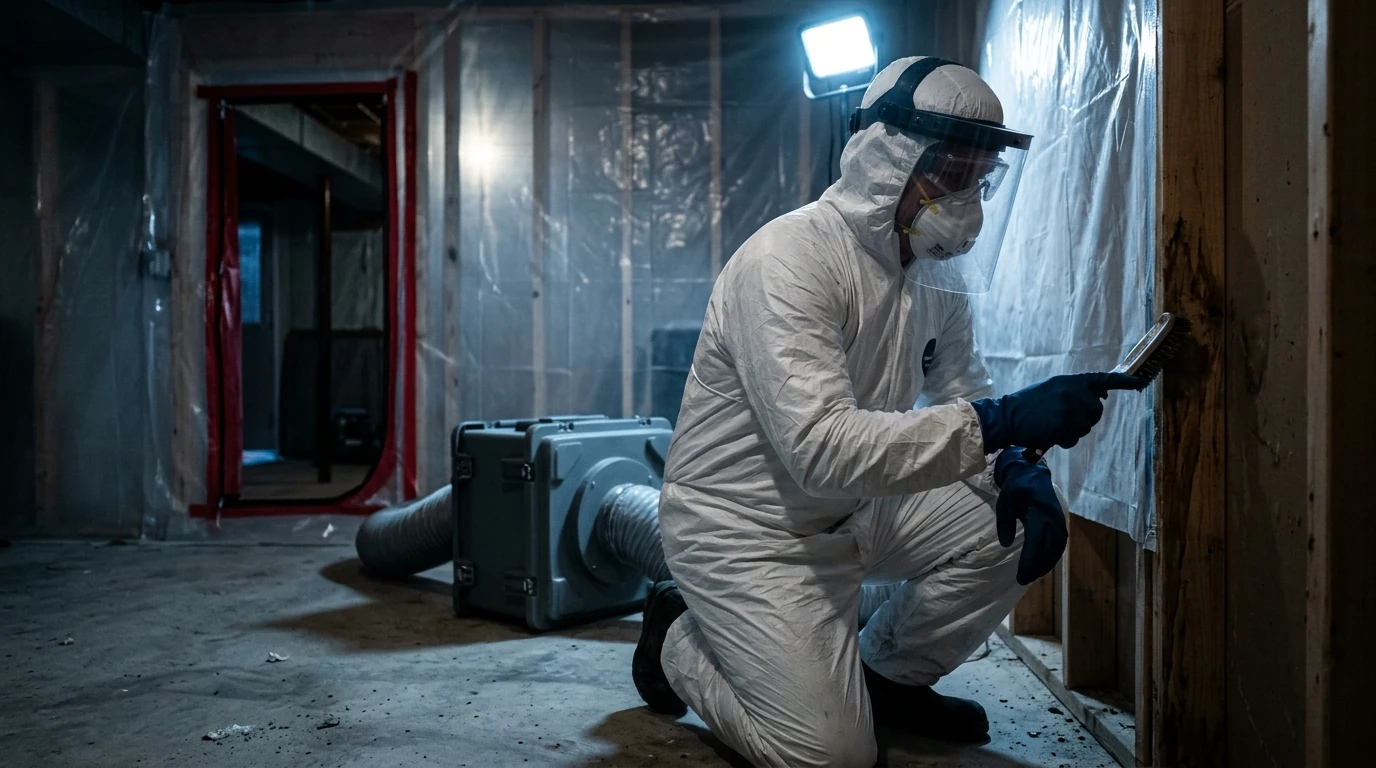
Remediation becomes necessary once mold passes roughly 10 square feet, follows a water event, or shows up inside the HVAC system. The IICRC S520 standard, the industry benchmark for mold remediation, treats anything beyond a small, isolated patch as a job that needs containment, negative air pressure, and removal of affected porous materials rather than surface cleaning.
Mold doesn’t wait for you to decide. It can start growing on a wet surface within 24 to 48 hours, which is also why mold shows up fast after a basement flood or a slow leak nobody caught right away; How Quickly Does Mold Grow After Water Damage? covers that timeline in more detail. If you had a recent pipe burst, sump pump failure, or roof leak and you’re now seeing spotting on drywall or framing, treat it as a remediation job, not a cleanup project.
Who pays, you or your insurance company?
Most homeowners policies only cover mold that results from a sudden, covered water loss, like a burst pipe, not from a slow leak or long-term moisture nobody addressed. Coverage amounts are often capped even when mold is covered at all, and insurers expect documentation: photos, a written scope, and proof you acted quickly to mitigate the damage. Does Homeowners Insurance Cover Mold? breaks down what South Dakota policies typically pay for and what they usually exclude.
If you’re renting, South Dakota generally holds landlords responsible for keeping a rental unit fit to live in, which can include addressing persistent moisture or mold tied to a building defect like a roof or plumbing failure. Responsibility gets murkier when the mold is tied to tenant behavior, like not using a bathroom fan. Put the issue in writing to your landlord, keep photos and dates, and check your lease. This isn’t legal advice, and specifics depend on the cause and your lease terms.
What happens when you call?
The first call is mostly information gathering: where you’re seeing mold, roughly how large the area is, whether there’s been a recent leak or flood, and whether you’re filing an insurance claim. Having that ready speeds up scheduling and lets the crew bring the right equipment on the first visit.
On arrival, a technician typically walks the affected area with a moisture meter to map how far water has traveled behind walls or under flooring, not just where mold is visible. For confirmed remediation work, that usually means setting up poly sheeting containment and negative air pressure before any material is disturbed, so spores don’t spread to the rest of the house. You should get a written scope before work starts, not a verbal estimate, especially if an insurance claim is involved.
If you want to understand the testing side first, How To Test for Mold in Your Home compares DIY kits to a professional inspection and when each one actually tells you something useful.
If you’re staring at a damp patch in a basement near McKennan Park or dark spotting around a window in an older All Saints-area home, don’t wait to see if it spreads. Call Crew Restoration & Construction at (605) 965-2727 for a mold inspection or a remediation estimate, or start at the mold remediation service page to see how the process works.
About Crew Restoration & Construction
Crew Restoration & Construction is an IICRC-certified company (license #3814) serving Sioux Falls, SD and the surrounding region since 2015. Their crews handle mold inspection and testing, mold remediation, water damage restoration, and fire and storm restoration across South Dakota, Iowa, and Minnesota, backed by a 4.9-star Google rating from 632 reviews.