TL;DR: Mold restoration removes active mold growth and the moisture source behind it; reconstruction rebuilds whatever had to be cut out to get there, drywall, subfloor, cabinetry, framing. A single mold job often needs both, especially when growth has been active for weeks behind a wall or under flooring. Homeowners in Sioux County towns like Alton, IA should expect a documented inspection, a contained remediation phase, and then a separate rebuild scope, ideally from one crew that can hand off cleanly between the two.
If you pulled up a water-stained baseboard in a house near Downtown Alton or East Alton and found black or green growth creeping up the drywall, you’re past the point of a spray bottle and bleach. Once mold has colonized porous material like drywall paper or wood framing, the material itself usually has to come out, not just get cleaned. That’s where remediation and reconstruction stop being two separate projects and become one continuous scope: assess, contain, remove, then rebuild.
What Does Full Mold Restoration and Reconstruction Actually Involve?
Full-scope mold work means removing contaminated material under containment, then rebuilding the affected area to match the original structure. It’s not one visit; it’s typically two distinct phases handled under one project plan.
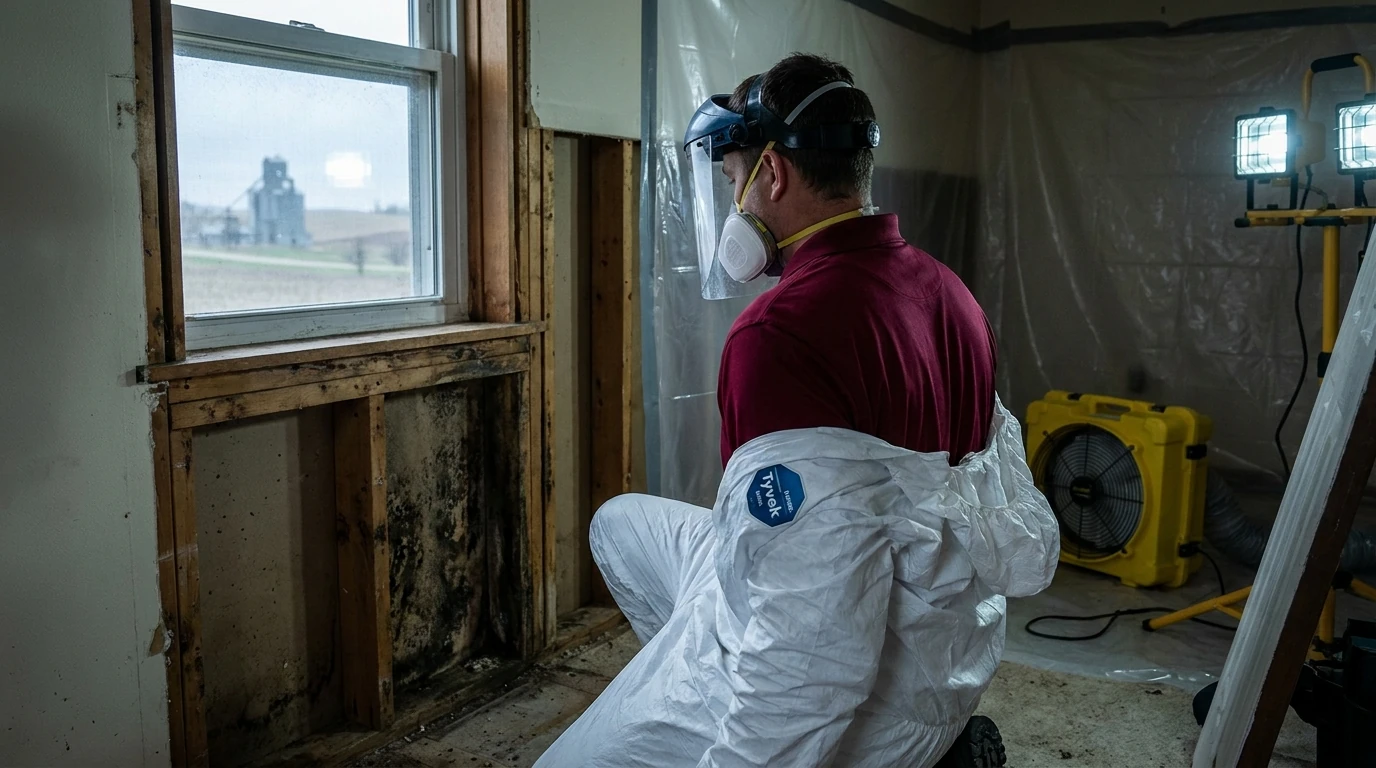
The remediation phase follows the IICRC S520 standard for mold remediation: containment with poly sheeting and negative air pressure, HEPA-filtered air scrubbing, removal of unsalvageable porous materials, and a post-remediation verification check before anyone touches a hammer. Only after that verification passes does reconstruction start, framing repairs, drywall hang and finish, subfloor replacement, cabinetry reinstall, paint. Skipping the verification step and rebuilding over a space that still has active moisture is how homeowners end up with the same problem eighteen months later behind a brand-new wall.
For a Floyd River-adjacent property, that moisture source is often a crawlspace or basement that took on water during spring runoff, then sat long enough for mold to establish itself in the framing before anyone noticed. The restoration side stops the growth; the reconstruction side puts the house back together structurally sound.
How Do You Know If Mold Damage Requires Reconstruction, Not Just Remediation?
Reconstruction becomes necessary once mold has compromised structural or load-bearing material, not just surface finishes. A visual check and a moisture meter reading usually settle it quickly.
Signs that point toward rebuild work, not just cleaning:
- Drywall that’s soft, bubbled, or crumbling when pressed
- Subfloor with visible staining, sponginess, or a hollow sound when walked on
- Wood framing with surface mold AND elevated moisture content on a meter reading (not just discoloration)
- Cabinetry or baseboard that’s swollen or delaminating at the bottom edge
- A musty smell that persists after surface cleaning, which usually means growth is still active inside a wall cavity
Surface mold on a non-porous material like tile or sealed concrete can often be cleaned and disinfected without demolition. Mold embedded in drywall paper, particleboard, or untreated framing almost never can; the material has to be cut out to the sound substrate. A proper inspection with a moisture meter and, where warranted, an air sample determines which category you’re actually in before anyone quotes a scope. If you want to understand the signs before an inspector even arrives, our post on signs of hidden mold covers what to look for room by room.
What Should You Watch Out For When Hiring for This Kind of Combined Job?
The biggest risk is hiring a remediation-only crew that can’t finish the rebuild, or a general contractor who isn’t trained to handle containment and air quality first. Either gap leaves the homeowner managing a second hire mid-project.
Ask directly whether the company holds IICRC training for mold remediation and also carries in-house reconstruction crews, framing, drywall, flooring, rather than subcontracting the rebuild out blind. Ask for a written scope that separates remediation line items from reconstruction line items; this matters for insurance, since many policies treat mold remediation and structural repair differently (our breakdown on whether homeowners insurance covers mold walks through how South Dakota and Iowa policies typically handle this). And ask what happens if they find more damage once walls are opened, a clear change-order process protects you from surprise invoices mid-job.
A company that’s licensed and insured, and that documents moisture readings before and after remediation, gives you a paper trail that matters later, whether for an insurance claim or a future home sale disclosure.
What’s the Process for Getting Mold Removed and the Space Rebuilt?
A combined mold restoration and reconstruction job generally runs through five stages, start to finish:
- Inspection and moisture mapping. A technician checks affected areas with a moisture meter and, if needed, collects air or surface samples to confirm the scope.
- Containment setup. Poly barriers and negative air machines isolate the work area so spores don’t spread to the rest of the home during demolition.
- Removal and remediation. Contaminated porous materials are cut out and disposed of properly; remaining surfaces are HEPA vacuumed and treated with an EPA-recognized antimicrobial.
- Post-remediation verification. A clearance check confirms moisture levels and visible conditions meet the project’s completion criteria before rebuild starts.
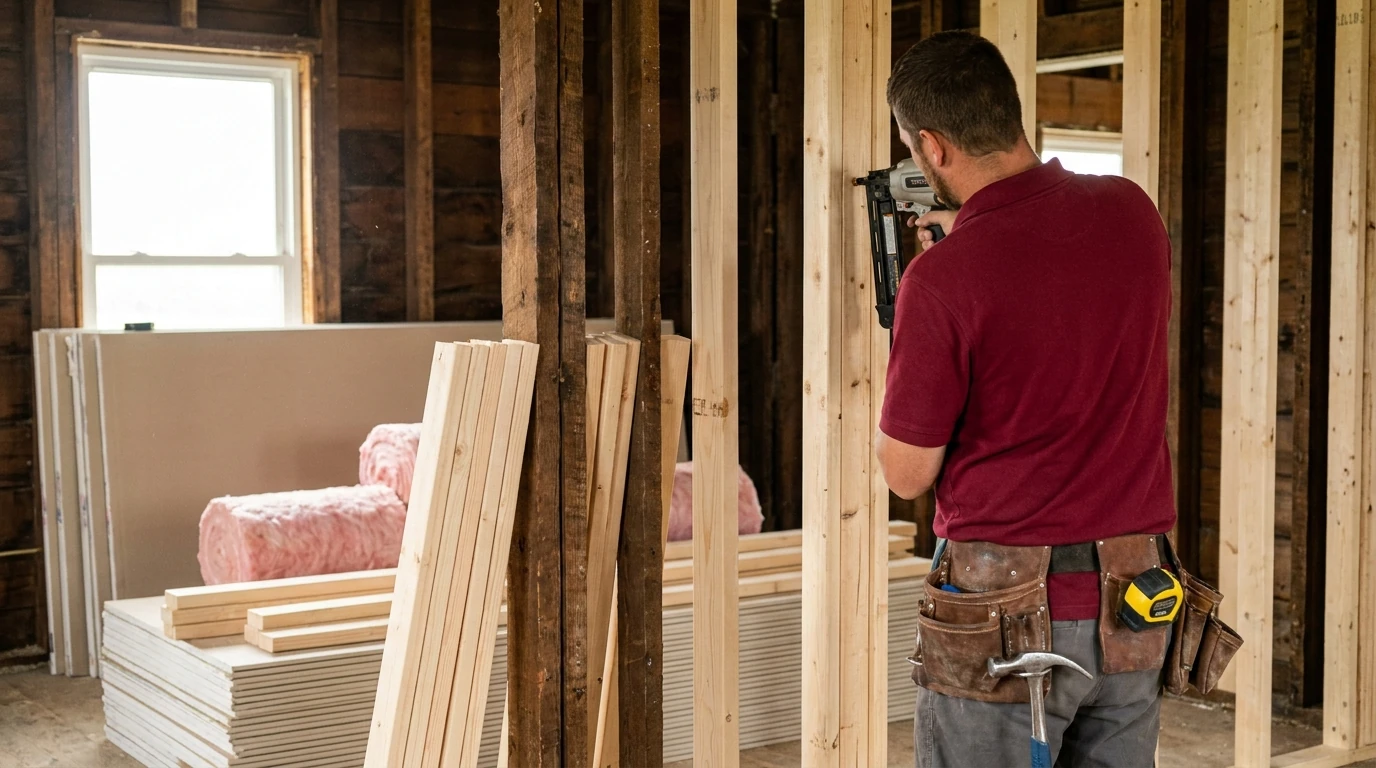
- Reconstruction. Framing repairs, drywall, insulation, subfloor, trim, and paint bring the space back to pre-loss condition.
For a typical single-room mold loss in a Sioux County home, that full sequence usually runs a few weeks from first inspection to final paint, longer if structural framing needs replacement or if insurance documentation adds review time.
If you’re staring at a water-damaged wall right now and aren’t sure which stage you’re even at, start with a documented inspection rather than guessing. Crew Restoration & Construction handles both the remediation and the rebuild under one scope for homes and small commercial buildings throughout Sioux County, including Alton, Orange City, and the surrounding Floyd River communities, so you’re not coordinating two separate contractors on one project.
About Crew Restoration & Construction
Crew Restoration & Construction is an IICRC-certified, licensed (South Dakota license #3814) and insured restoration and construction company based in Sioux Falls, SD, serving the region since 2015. Their crews handle mold inspection and remediation alongside full reconstruction and general contracting, meaning the same company that removes the damage also rebuilds the space, across Sioux Falls and surrounding communities in South Dakota, Iowa, and Minnesota, including Alton, IA.