
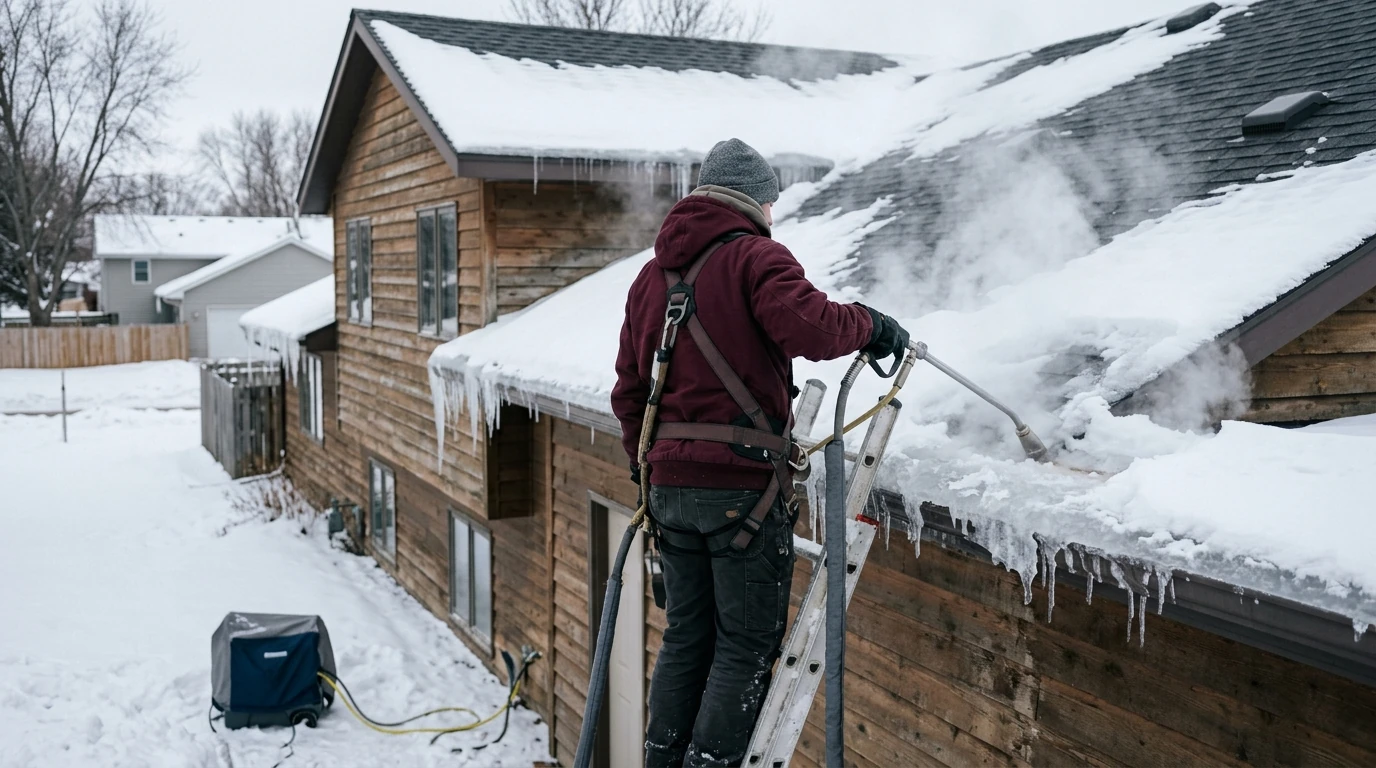
In Sioux Falls and across South Dakota, ice dam removal typically costs $300 to $2,000. The price depends on your roof’s size and pitch, how thick the ice has built up, and whether a crew needs steam equipment or just a preventive roof rake. Most single-family homes with a moderate dam fall between $600 and $1,200 for professional steam removal.
If there’s an 8-inch ridge of ice sitting along your gutter line and water is starting to back up under the shingles, you’re really asking two things at once: what does getting this off safely cost, and is that stain spreading across your bedroom ceiling something you deal with tonight or in the morning. Older homes near McKennan Park and the Cathedral Historic District, with their original rafters and tighter attic clearances, see this nearly every winter once Sioux Falls settles into a hard freeze-thaw cycle. Here’s what removal actually runs, what pushes the price up, and the point where it stops being a roofing job and becomes a water damage call.
How Much Does Ice Dam Removal Cost in Sioux Falls?
Most homeowners pay between $300 and $2,000 for professional ice dam removal, with the final number set mostly by roof size, ice thickness, and how hard the roof is to access.
| Scenario | Typical Cost Range |
|---|---|
| Preventive roof raking (snow removed before ice forms) | $150 - $350 |
| Steam removal, single-story ranch, moderate dam | $300 - $650 |
| Steam removal, two-story home, moderate to large dams | $600 - $1,200 |
| Steam removal, steep or multi-dormer roof, heavy ice buildup | $1,000 - $2,000+ |
| Emergency or after-hours steam removal | add $150 - $400 to the above |
| Interior water damage repair after an ice dam leak | $500 - $4,000+ depending on extent |
These are typical industry ranges for the Sioux Falls market, not a quote. Every roof and every ice buildup is different, and a reputable crew should give you a written scope before any steam equipment goes up a ladder.
What Drives the Price Up or Down?
The biggest cost factors are roof complexity, ice volume, and how urgently the job needs to happen. A simple gable roof with one dam along the front eave is a quick job; a roof with multiple dormers, valleys, and a steep pitch takes a crew longer and often needs a lift or harness setup.
Ice volume matters just as much. A thin ridge that formed over one cold snap melts fast with a low-pressure steamer. A dam that’s been building for weeks, especially after repeated South Dakota freeze-thaw cycles, can be a foot thick and take two or three times as long to clear safely.
Timing is the other lever. Scheduled daytime work during business hours costs less than an after-hours call when water is already dripping into a bedroom. If a company offers 24/7 dispatch, expect that convenience reflected in the price for true emergency calls.
Steam Removal vs. Mechanical Removal: Which One Do You Actually Need?
Steam removal is the method restoration and roofing crews actually recommend; mechanical chipping with hammers, axes, or picks is not, because it tends to crack or puncture shingles underneath the ice.
Low-pressure steam equipment melts a channel through the ice down to the shingle surface without the blunt-force risk. It’s slower than chipping, which is part of why it costs more, but it’s the method that doesn’t trade one repair bill for another.
A roof rake, pulled from the ground, is a preventive tool. It clears fresh snow off the lower few feet of roof before it can melt and refreeze into a dam. It does nothing for ice that’s already formed and bonded to the shingles, so don’t expect a rake alone to fix an existing dam.
Does Homeowners Insurance Cover Ice Dam Damage?
Most homeowners policies do not cover the cost of removing the ice dam itself, since that’s generally treated as routine maintenance, but they typically do cover the resulting interior water damage if the leak was sudden and you acted reasonably to prevent it.
That distinction trips a lot of people up. The Insurance Information Institute notes that homeowners coverage generally responds to sudden, accidental water damage from inside the home, which is how most insurers classify a ceiling leak caused by an ice dam backup. What it won’t cover is the dam itself, or damage from a leak you let sit for weeks without addressing.
Ice dams form when attic heat escapes through insulation gaps, melts snow from the roof deck, and that runoff refreezes at the cold eave. ENERGY STAR’s attic sealing guidance is worth a look before next winter, since better attic insulation is the actual long-term fix, not repeat removal every storm. Our roof replacement cost guide covers what it costs to address recurring ice dam damage at the roofing level if yours has become a pattern.
When Does an Ice Dam Become a Water Damage Emergency?
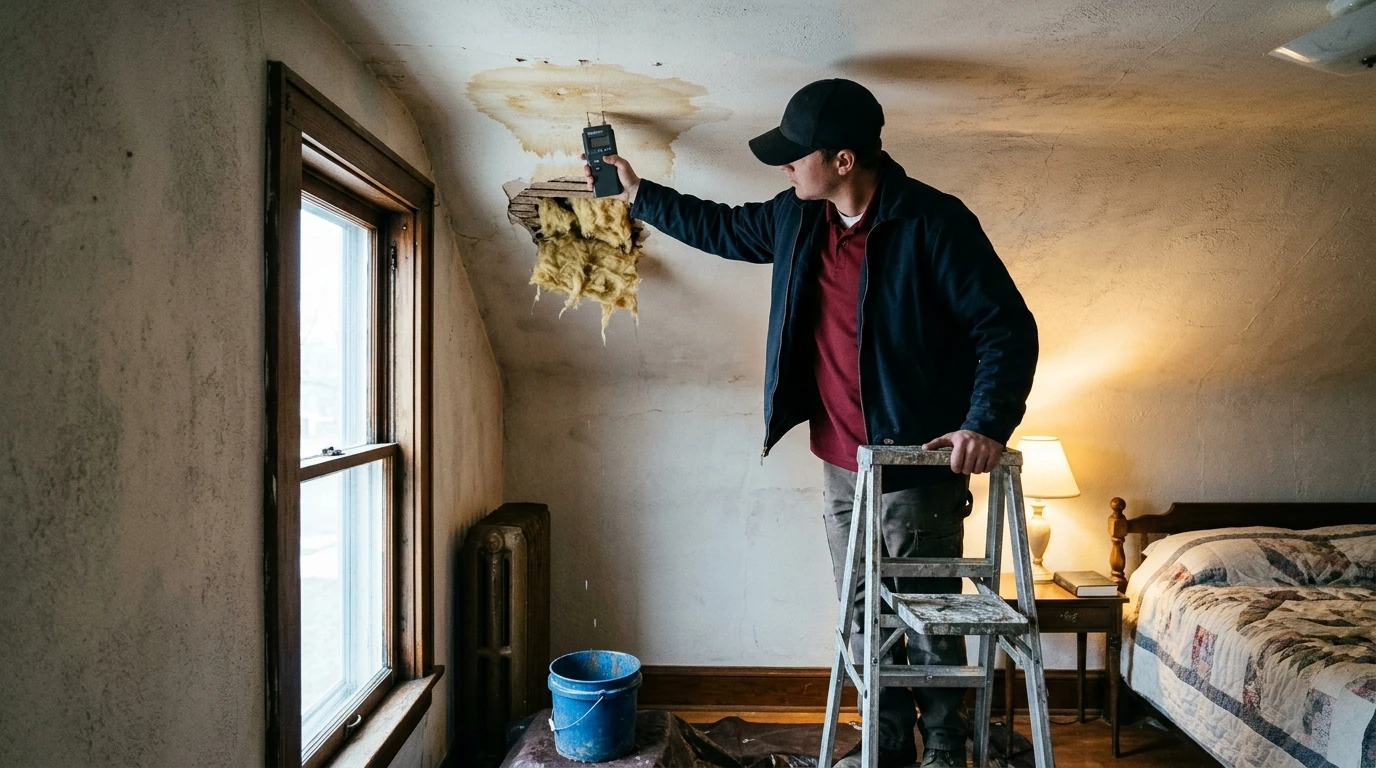
An ice dam becomes an emergency the moment you see water actively entering the living space, not just sitting in a gutter. That means a brown ring spreading on drywall, a drip from a light fixture, soaked insulation visible through an attic hatch, or bubbling paint near a window header.
At that point, the roof side and the water side need to happen together. Stopping the ice backup without addressing the wet insulation and framing behind it just buys time before mold becomes the second problem, and mold can start growing on wet materials within 24 to 48 hours. That’s also the moment to loop in a company that handles both. Crew Restoration & Construction, based in Sioux Falls, runs 24/7 and can coordinate roof stabilization with the structural drying the interior needs, following the IICRC S500 water damage standard for how wet materials get dried instead of just dried out and forgotten. Our ceiling water damage repair cost guide breaks down what that interior side typically runs once drywall and insulation are involved.
What Happens During a Professional Ice Dam Removal?
- Phone triage. A tech asks about ice location, any visible interior leaking, and roof access, so the crew arrives with the right equipment.
- On-site safety check. The crew assesses roof pitch, ice thickness, and whether a harness or ladder stabilization is needed before anyone climbs up.
- Steam channeling. Low-pressure steam cuts a path through the dam down to the shingles, letting trapped water drain instead of backing up under the roofing.
- Interior inspection. If there’s any sign of a leak, a moisture meter check of the attic and ceiling follows before the crew leaves.
- Documentation. Photos of the ice, the roof condition, and any interior moisture readings go into a written scope, useful if you end up filing a claim for interior damage.
If your roof has had ice dams more than once, that pattern itself is worth mentioning when you schedule the assessment. Repeat dams usually point to an attic ventilation or insulation gap, not bad luck with the weather.
About Crew Restoration & Construction
The company is an IICRC-certified restoration and construction contractor based in Sioux Falls, South Dakota, founded in 2015 and holding SD license #3814, with a 4.9 Google rating across 643 reviews. Its crews handle roofing, storm damage restoration, and water damage restoration across the Sioux Falls metro and surrounding South Dakota, Iowa, and Minnesota communities, with 24/7 phone response for active water intrusion.
Need help now? Call Crew Restoration & Construction at (605) 965-2727.
Video Transcript
If an eight-inch ice ridge is hanging off your gutter line, you’re probably wondering what removal costs and how fast you need help. In Sioux Falls, most homeowners pay between three hundred and two thousand dollars for professional ice dam removal, depending on your roof. Price depends on roof size, pitch, and how thick that ice has built up after weeks of freeze and thaw. Steep roofs with multiple dormers take longer to clear safely, and thick, long-standing ice costs more than a thin ridge. Low-pressure steam melts a channel through the ice without cracking shingles, which is why it’s safer than chipping with tools. A roof rake only prevents new dams; it won’t remove ice that’s already bonded to your shingles. Homeowners insurance usually won’t pay to remove the dam itself, but it may help cover sudden interior water damage. Better attic insulation stops warm air from melting snow and refreezing at the eave, which is the real long-term fix. If water is dripping inside, soaking insulation, or staining your ceiling, that’s no longer just a roofing problem. Crew Restoration and Construction handles roof stabilization and water damage together, twenty-four seven. Call Crew Restoration & Construction at (605) 965-2727 to schedule an assessment.