TL;DR: Fire restoration is the structured process of securing a fire-damaged structure, removing soot and smoke odor from surfaces and belongings, drying any water used to fight the fire, and rebuilding damaged framing, drywall, and finishes. A single-room kitchen fire can be cleaned up in a week or two; a structural loss can take several months. The industry standard for this work is IICRC S700, and most homeowners insurance policies cover it once a claim is documented.
If a kitchen fire or electrical fire just tore through part of your home near Downtown Akron, Iowa, you’re probably staring at scorched drywall, soot-coated furniture, and a to-do list you never wanted. Fire restoration is what turns that mess back into a livable, safe structure, usually in a specific order: stabilize, clean, dry, and rebuild. Here’s what each phase actually covers and what decisions you’ll need to make in the first few days.
What Does Fire Restoration Actually Involve?
Fire restoration covers four distinct phases: emergency stabilization, soot and smoke-odor removal, structural drying, and rebuilding damaged materials. Each phase uses different equipment and, often, a different specialist on the crew.
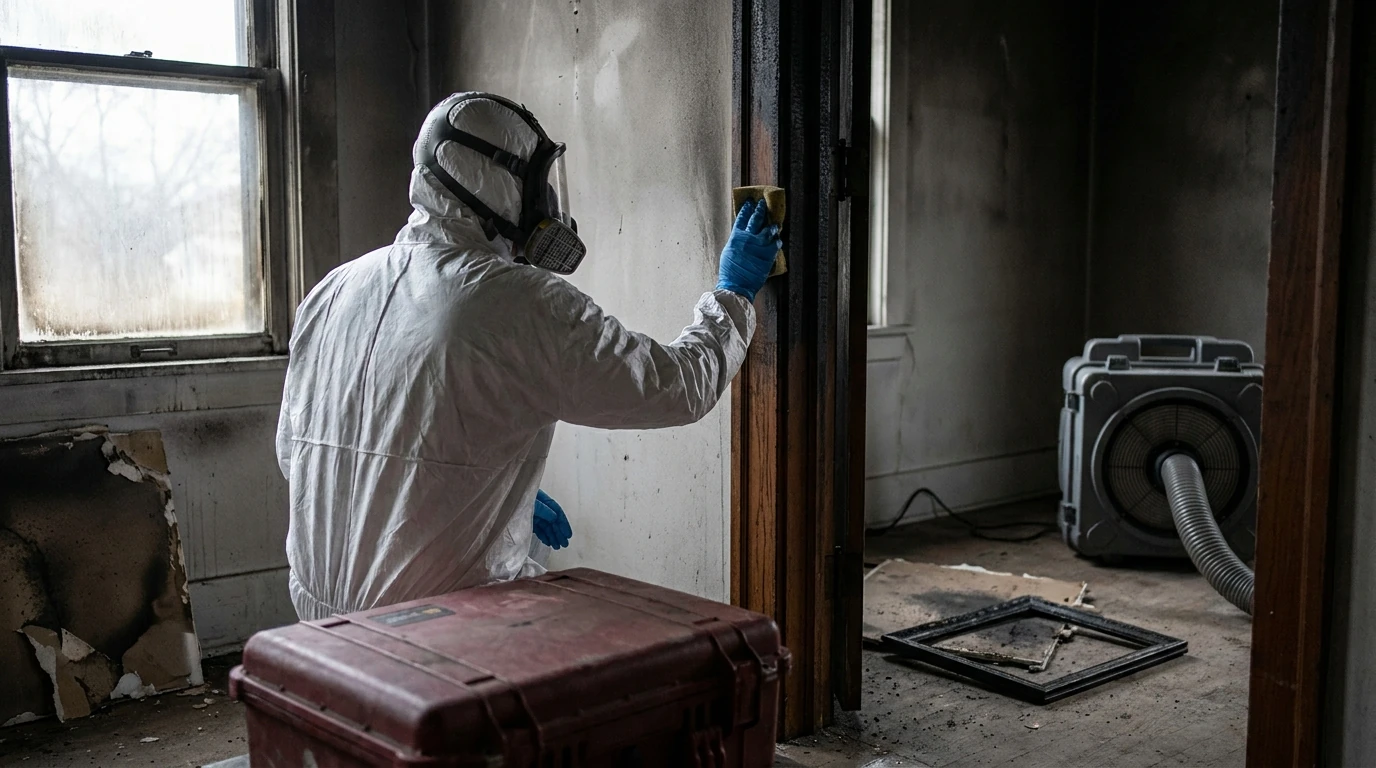
Stabilization happens first: boarding up broken windows, tarping a burned-through roof section, and shutting off damaged utility lines so the structure doesn’t take on more weather or water damage while work is planned. Soot and smoke-odor removal comes next, using HEPA vacuums, dry chemical sponges, and ozone or hydroxyl generators to pull residue and odor out of drywall, framing, and contents (many salvageable items go through off-site content cleaning rather than being cleaned in place).
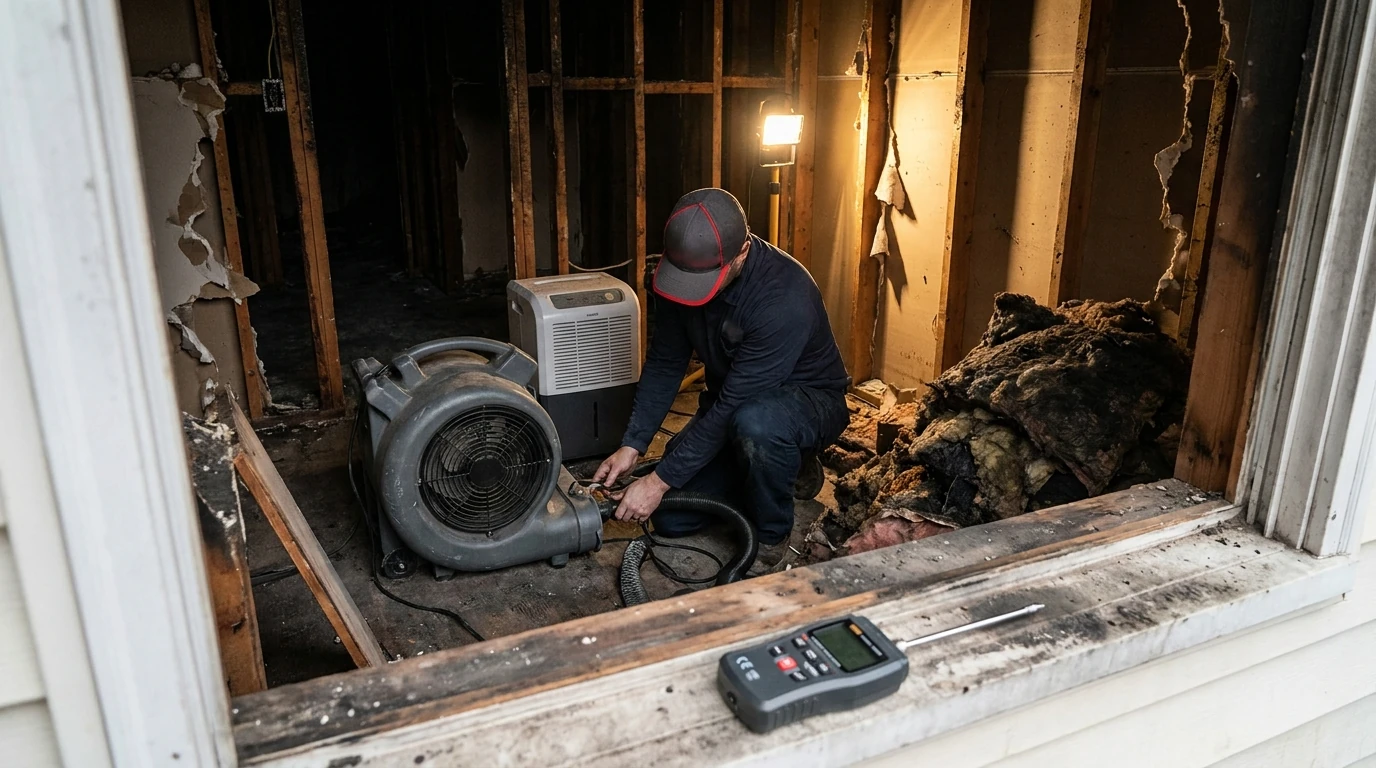
If firefighting water soaked the structure, which is common, structural drying runs alongside the cleaning, using the same air movers and dehumidifiers crews use on water losses. Once everything is dry and clean, rebuilding starts: removing charred drywall and framing, re-insulating, and finishing the space to match what was there before.
How Long Does Fire Restoration Take?
Most fire restoration jobs take anywhere from a few days to several months, depending on how much of the structure burned and how much smoke traveled through the HVAC system. A contained kitchen fire with surface soot might wrap up in one to two weeks. A fire that reaches the attic, multiple rooms, or structural framing often runs eight to twelve weeks once you factor in drying time, permitting, and rebuild.
Smoke odor is usually the factor that surprises people. Soot particles are small enough to travel through ductwork and settle in rooms the fire never touched, which means odor removal sometimes covers more square footage than the visible fire damage does. That’s also why a thorough inspection before cleanup starts matters more than a fast start date.
Who Should You Call for Fire Restoration, and What Should You Watch Out For?
Call a restoration company that is IICRC certified in fire and smoke restoration, not a general cleaning service, because the work follows the IICRC S700 standard for a reason: soot is acidic and keeps etching metal, glass, and finishes the longer it sits. A crew without that training can clean the visible soot and miss the residue that causes a lingering smell or a corroded appliance six months later.
In the Sioux Falls region, including Plymouth County towns like Akron along the Big Sioux River, Crew Restoration & Construction is IICRC certified, licensed (South Dakota license #3814), insured, and answers calls 24/7, with a 4.9-star rating across more than 640 Google reviews. Whoever you hire, ask three things upfront: are they IICRC certified specifically for fire and smoke, do they handle contents restoration so salvageable items don’t go to a landfill, and will they put the scope of work in writing before demolition starts.
Be wary of any crew that wants to start tearing out drywall before documenting the damage with photos and a written scope. Your insurance adjuster needs that documentation, and once materials are removed, it’s much harder to prove what was there.
What Should You Do in the First 24 Hours After a Fire?
In the first 24 hours, your priorities are safety, documentation, and getting the structure stabilized before weather or looting adds a second loss. Don’t re-enter a structure the fire department hasn’t cleared, and don’t run HVAC or ceiling fans, which spread soot further into clean rooms.
Photograph everything you can safely access, from the exterior and any broken windows to visible interior damage, before anything is moved or boarded up. Call your insurance company to open a claim, then call a restoration crew to board up openings and start drying any firefighting water, since mold can start growing in wet, unventilated drywall within 24 to 48 hours per EPA guidance. For a full room-by-room breakdown of what happens during the cleanup and rebuild phases, see our fire damage restoration process guide.
Fire damage is stressful precisely because the timeline and the decisions come at you fast. A written scope, a certified crew, and documentation before demolition protect both your home and your insurance claim.
About Crew Restoration & Construction
Founded in 2015 and based in Sioux Falls, SD, Crew is an IICRC-certified, licensed (SD #3814), and insured restoration and general contracting company serving Sioux Falls, Akron, IA, and the surrounding region 24/7. Their crews handle fire damage restoration, smoke damage restoration, contents restoration, and reconstruction, among other restoration and contracting services, and maintain a 4.9-star Google rating across more than 640 reviews.
Need help now? Call Crew Restoration & Construction at (605) 965-2727.