TL;DR: Baltic, SD property owners dealing with storm, water, fire, or structural damage can get both exterior and interior restoration handled by one contractor. Whether the job is a commercial building or a private home, the scope typically runs from roof and siding repair outside to drywall, flooring, and contents work inside. Coordinating both sides of the job under one crew reduces timeline gaps and simplifies the insurance documentation process.
If you own or manage a property along the Big Sioux River corridor and you’re staring at damage that runs from the outside in, you already know the problem: one contractor patches the roof, another handles the wet drywall, and nobody coordinates the timeline. That gap costs days and can cost coverage. Properties in the Baltic, SD area face a specific mix of risks: spring flooding from the Big Sioux, summer hail and straight-line wind events, and the freeze-thaw cycles that work on older foundations and siding every winter. When damage hits, it rarely stops at the exterior wall.
What Does Exterior Restoration Actually Cover?
Exterior restoration covers every building component exposed to weather: roofing, siding, gutters, soffits, fascia, windows, and doors. After a hail event or wind storm, the visible damage is often just the start. A compromised roof deck or cracked siding section lets water in, and that water becomes an interior problem within hours.
For residential properties in the Downtown Baltic and Big Sioux River area neighborhoods, the most common exterior scopes after a storm include:
- Roofing repair or full replacement: Hail damage to asphalt shingles is the most common insurance claim in South Dakota. A proper scope documents the impact density (hits per 10-square-foot test square) and matches the replacement shingles to existing material where possible.
- Siding repair and replacement: Vinyl siding cracks and dents under hail; fiber cement and wood siding can split. Gutters often take the same hit and need to be replaced alongside siding to keep water managed off the roofline.
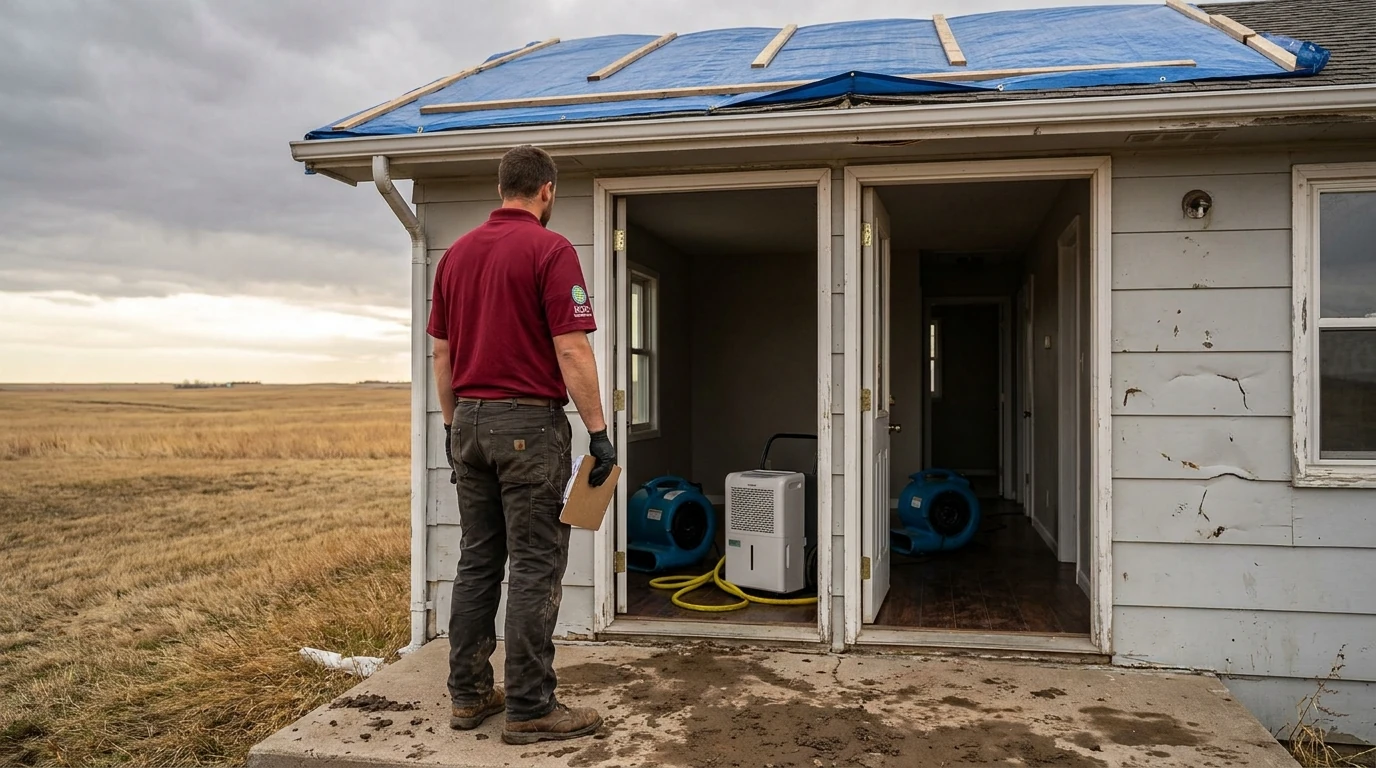
- Emergency board-up and tarping: When a storm opens up a wall or roof section, the first priority is stopping the weather intrusion. Temporary tarping and plywood board-up protect the interior while the full scope is written.
The IICRC sets standards for restoration work that begins the moment water enters a structure. Getting the exterior sealed fast is part of limiting the Category 1 water intrusion from becoming a secondary mold or structural issue.
What Does Interior Restoration Cover?
Interior restoration picks up where the exterior scope ends: everything inside the building envelope. For a water-damaged home near Baltic School, that means extraction, structural drying, and then rebuilding the affected materials. For a fire-damaged commercial property, it means soot removal, odor treatment, and reconstruction of the damaged space.
Common interior scopes for Baltic-area properties:
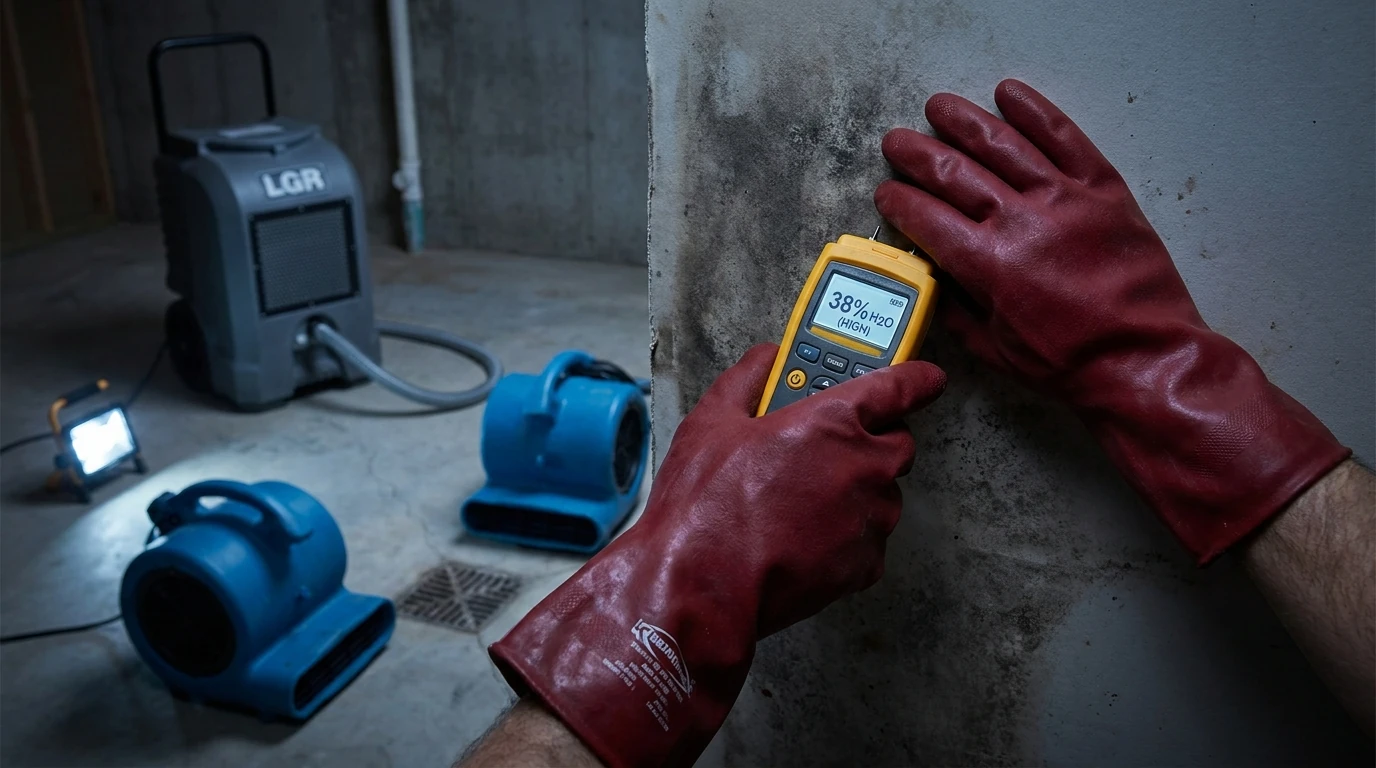
- Water damage restoration: Extraction of standing water, deployment of air movers and LGR dehumidifiers, moisture mapping with a calibrated meter, and structural drying to the IICRC S500 standard. Drying typically takes 3-5 days for a contained loss; longer for Category 2 or Category 3 (sewage-contaminated) water.
- Mold remediation: If water sat for more than 24-48 hours before mitigation started, mold assessment is warranted. Remediation involves containment, HEPA air scrubbing, removal of affected materials, and clearance testing.
- Fire and smoke damage restoration: Soot is acidic and keeps damaging surfaces after the fire is out. Interior fire scopes include HEPA vacuuming of dry soot, wet cleaning of salvageable surfaces, thermal fogging or hydroxyl treatment for odor, and reconstruction of burned structural elements.
- Sewage cleanup: Category 3 water events require full PPE, antimicrobial treatment, and disposal of porous materials that contacted contaminated water. The EPA provides guidance on safe handling of sewage-affected materials at epa.gov.
- Contents restoration: Furniture, documents, electronics, and personal property can often be cleaned, dried, and restored rather than replaced. Contents are inventoried, packed out, treated, and returned after the structure is dry and rebuilt.
- Post-construction cleaning: After reconstruction is complete, a final cleaning removes construction dust, adhesive residue, and debris before the space is turned back over.
How Does Commercial Restoration Differ from Residential?
Commercial restoration follows the same technical process but operates at a different scale and under different pressure. A flooded office building or storm-damaged retail space has business interruption costs running alongside the physical damage. Every day the space is closed is revenue lost.
For commercial properties, the scope differences include:
- Larger equipment: Commercial losses often require industrial-scale dehumidification and extraction, not just the residential-grade air movers used in a single-family home.
- Code compliance: Commercial reconstruction must meet current International Building Code (IBC) standards, which may differ from the original construction era. Electrical, plumbing, and egress requirements can add scope to what looks like a simple rebuild.
- Asbestos and lead considerations: Older commercial buildings in the Baltic and Sioux Falls area may contain asbestos in floor tile, ceiling tile, or pipe insulation. Before any demolition work, an asbestos survey is required under EPA NESHAP regulations. Abatement must be completed before reconstruction begins.
- Insurance documentation: Commercial policies often have business interruption riders, equipment breakdown coverage, and separate deductibles for wind versus water. A restoration contractor who documents the scope thoroughly, with photo evidence, moisture readings, and a written scope of work, protects the policyholder’s claim.
- Biohazard situations: Commercial properties sometimes face biohazard events that require discreet, professional cleanup before the space can reopen. This work is handled with full PPE and documented disposal per state and federal guidelines.
For residential clients, the scope is typically more contained but the emotional stakes are higher. A family displaced from their home needs a clear timeline and consistent communication more than anything else. The process is the same: assess, mitigate, dry, rebuild.
What Should You Do First When Damage Hits Your Baltic Property?
The first 24 hours after a loss determine how much secondary damage you’ll face. Here is the sequence that protects both the property and the insurance claim:
- Stop the source. If water is still flowing, shut off the main. If the roof is open, call for emergency tarping before anything else.
- Document before you touch anything. Walk the property with your phone and photograph every affected area. Wide shots first, then close-ups of the damage. This documentation is what your adjuster will use to set the initial reserve.
- Call your insurance company to open a claim. You don’t need a scope of work yet. You just need a claim number. Most policies require prompt notification of a loss.
- Call a restoration contractor for a written scope. The contractor’s scope and the adjuster’s estimate need to match. If they don’t, a licensed contractor can negotiate the supplement.
- Don’t start demo or repairs before the adjuster has seen the damage. Premature repairs can void coverage for the affected area.
For properties along the Big Sioux River where spring flooding is a recurring risk, having a plan before the water rises is worth the time. Review your flood insurance coverage now, before the next event, since standard homeowners policies exclude flood damage. FEMA’s National Flood Insurance Program information is available at fema.gov.
For exterior and interior restoration in Baltic, SD and the surrounding area, Crew Restoration & Construction handles the full scope, from emergency tarping and board-up through structural drying, mold remediation, siding, roofing, and final reconstruction, for both residential and commercial properties. Reach the team at (605) 965-2727.
About Crew Restoration & Construction
Crew Restoration & Construction is an IICRC-certified restoration and construction company serving Baltic, SD and the broader Sioux Falls region since 2015 (license 3814). Their crews handle water damage restoration, fire damage restoration, mold remediation, storm damage restoration, roofing, siding and gutters, sewage cleanup, biohazard cleanup, asbestos abatement, emergency board-up and tarping, contents restoration, and post-construction cleaning for residential and commercial properties across eastern South Dakota, southwest Minnesota, and northwest Iowa.
Video Transcript
Storm damage in Baltic, SD rarely stops at the roof. When water gets in, it hits the walls, the floors, and everything inside fast. Most property owners end up juggling two or three contractors. One fixes the outside, another handles inside, and nobody talks to each other. One contractor handling both exterior and interior cuts days off the timeline and makes the insurance process a lot simpler. Exterior restoration covers your roof, siding, gutters, and soffits. After hail or wind, a cracked shingle or damaged siding lets water in within hours. Emergency tarping stops more damage immediately while the full repair scope gets written and approved. Inside, water extraction and industrial drying equipment pull moisture out of walls and subfloors before mold has a chance to grow. Fire and smoke damage gets treated with HEPA cleaning and odor removal before any rebuilding starts. Soot keeps damaging surfaces if it’s left in place. Contents like furniture and personal items are inventoried, packed out, cleaned, and returned after the structure is fully rebuilt. Commercial properties get the same thorough process at a larger scale, with code-compliant rebuilds that get your business back open faster. If your property in Baltic or the surrounding area took damage, don’t wait. Call Crew Restoration and Construction at 605-965-2727 for a free estimate.