
TL;DR: The five most common siding installation mistakes, skipping the weather-resistive barrier or foam insulation, choosing cheap siding, nailing it too tight or too loose, leaving no clearance at the roofline and ground, and overlapping joints incorrectly, all come down to the same root problem: trapped moisture or restricted expansion. Left uncorrected, they show up within a season or two as buckled panels, sagging seams, or rot behind the wall. A licensed installer who follows the manufacturer’s clearance and fastening instructions avoids them.
Spring is the best time of year to replace the siding on your Sioux Falls home, and like any job, it has to be done correctly to avoid costly repairs down the road. Whether you’re collecting quotes for a re-side or trying to figure out why newer siding is already warping, these are the five mistakes to watch for.
Why does paper wrap or foam insulation matter under siding?
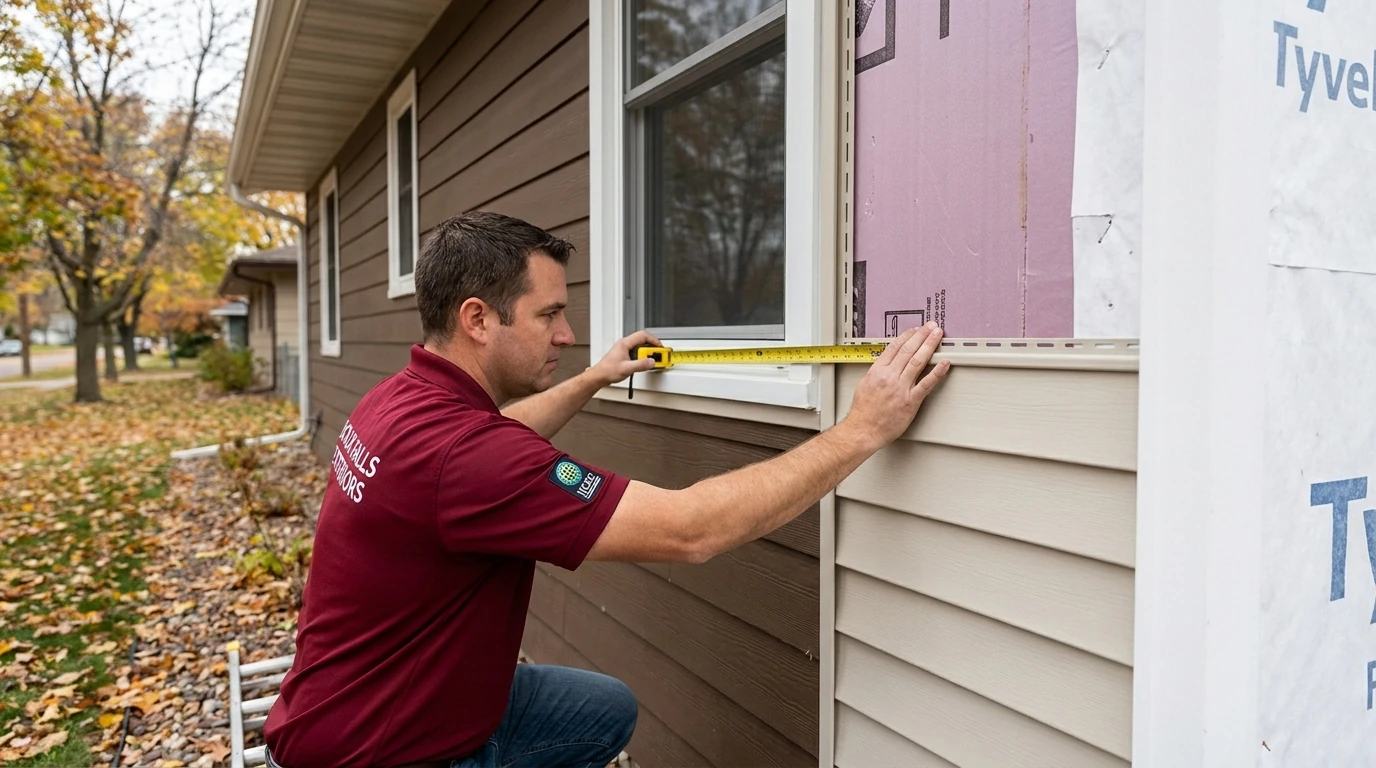
A weather-resistive barrier, often called paper wrap or house wrap, keeps bulk water out of the wall cavity while still letting trapped moisture vapor escape outward. Skip it, and any water that gets behind the siding has nowhere to go but into the sheathing and framing.
Before any panel goes up, the wall surface needs to be fully dry, and every window and door needs an extra layer of flashing tape at the corners and sill. That flashing is what actually stops water intrusion at the openings, where most leaks start. Foam insulation board behind the siding adds a second line of defense: it reduces seam-to-seam gaps, cuts down on road and wind noise, and gives the wall a more consistent thermal layer, which helps through a Sioux Falls winter.
If your contractor’s bid doesn’t mention a weather barrier by name, ask.
Why does cheap siding fail faster?
Cheap, low-quality siding can crack, sag, or fade in a short amount of time. Don’t settle for it: spending a little more on good quality siding gets you a wall covering that lasts longer.
When comparing quotes, ask which product is being installed and what the manufacturer’s warranty covers, so you are comparing the same quality of material, not just the price.
What happens when siding is nailed too tight or too loose?
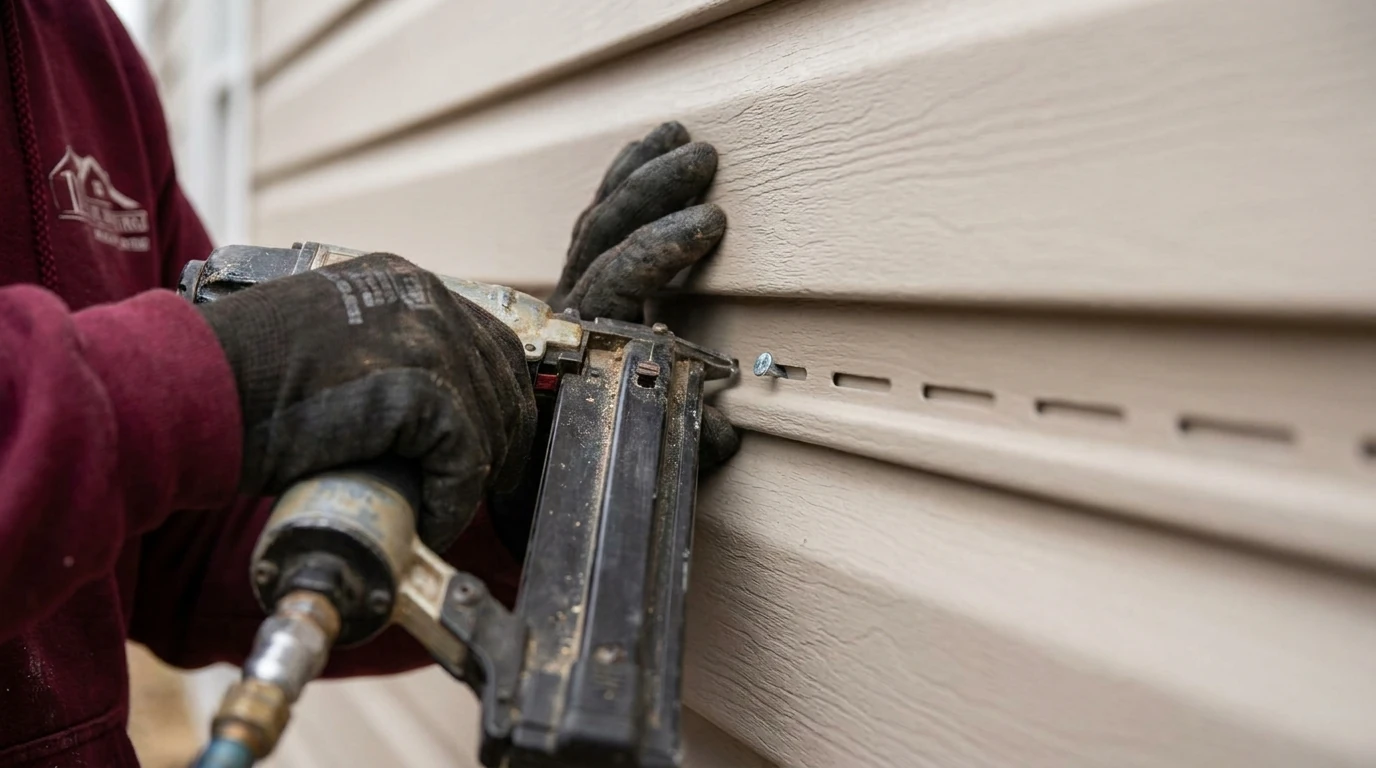
Siding needs to move. Vinyl and most engineered siding products expand and contract with temperature, and the fastening has to allow that movement or the panel will eventually buckle, crack, or sag.
Nail it too tight and the panel can’t expand on a hot July afternoon, so it buckles or cracks under its own stress. Nail it too loose and the panel sags once summer heat softens it. The target is roughly 1/32 inch of clearance between the nail head and the siding’s nailing hem, snug enough to hold the panel in place without pinning it rigid. You also don’t want nail heads visible once the siding is installed: exposed nails create holes where water vapor gets trapped, which causes more problems down the road.
Why does siding need clearance from the roof, trim, and ground?
Siding should never touch the roofline, window trim, or the ground directly, because contact points trap moisture against the wall and that moisture has nowhere to evaporate. Follow the siding manufacturer’s instructions for the gap at each of these transitions.
When that clearance disappears, moisture gets trapped behind the siding. That’s the setup for rot and mold problems inside the wall where nobody sees them, and over time it destroys the siding itself.
How much should siding panels overlap at the joints?
Where two pieces of siding meet end to end, the overlap should run about 1 inch to 1.25 inches, enough to shed water at the seam without locking the panel down so tight it can’t expand. Overlap much more than that and the siding develops a visible wave as it tries to move and can’t.
It’s one of the harder mistakes to spot from the ground; it usually shows up as a wavy look along a wall once temperature swings have worked on a joint that can’t move.
When is a siding mistake a job for a licensed pro?
Any of the five issues above are a sign the original installation needs a second look from a licensed contractor, not a caulk-gun fix. Buckling, visible nail heads, water staining at the base of a wall, or soft spots in the sheathing behind the siding usually mean the problem is already deeper than the surface.
Crew Restoration & Construction handles full siding and gutter installation and replacement across the Sioux Falls metro, and can look at an existing installation that is showing the warning signs above. Learn more on the siding and gutters service page.
Getting siding replaced correctly the first time avoids costly rot and mold repairs later. Call Crew Restoration & Construction at (605) 965-2727 to schedule a project estimate before the ground freezes.